Why Professional Real Estate Photography in NYC Makes All the Difference
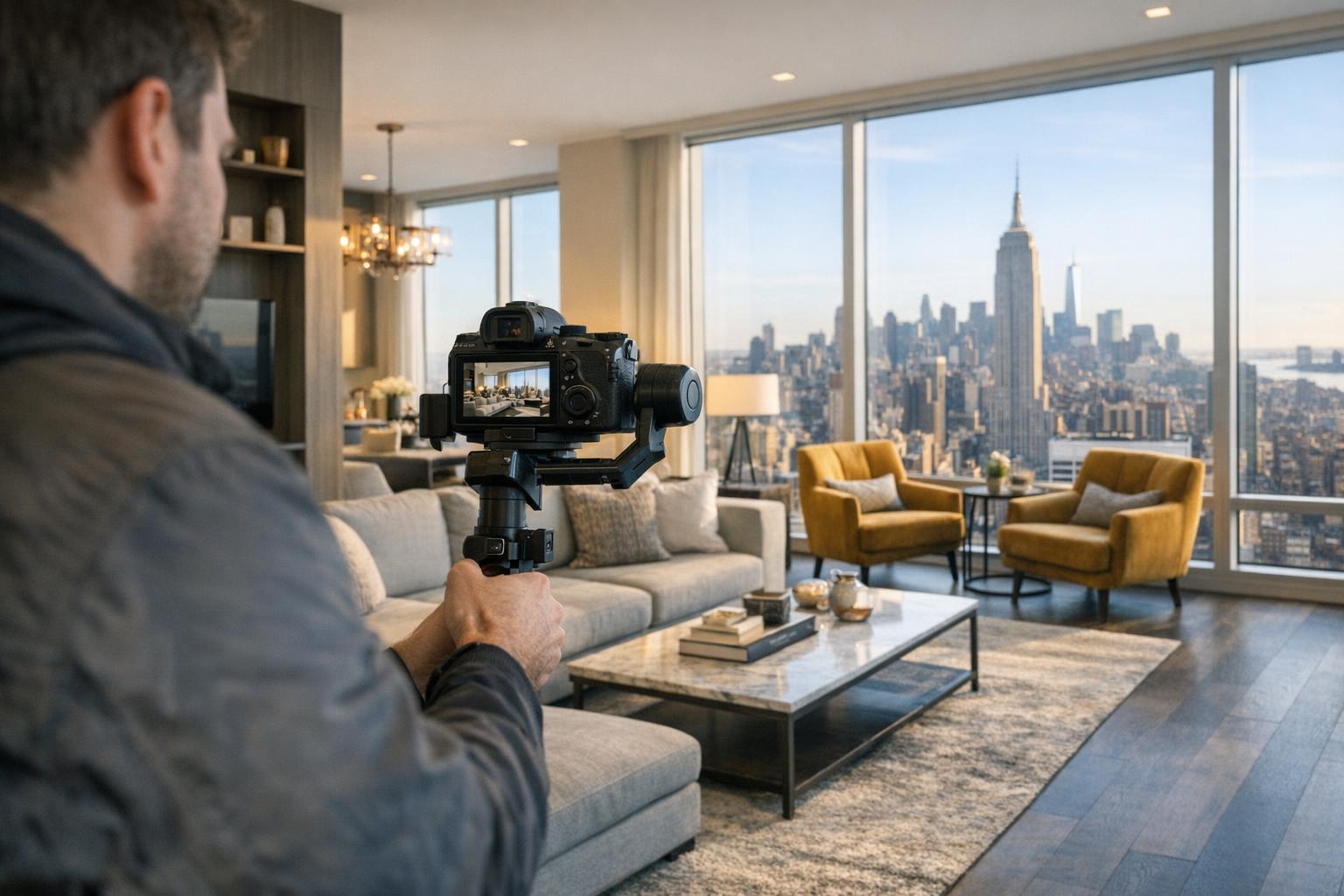
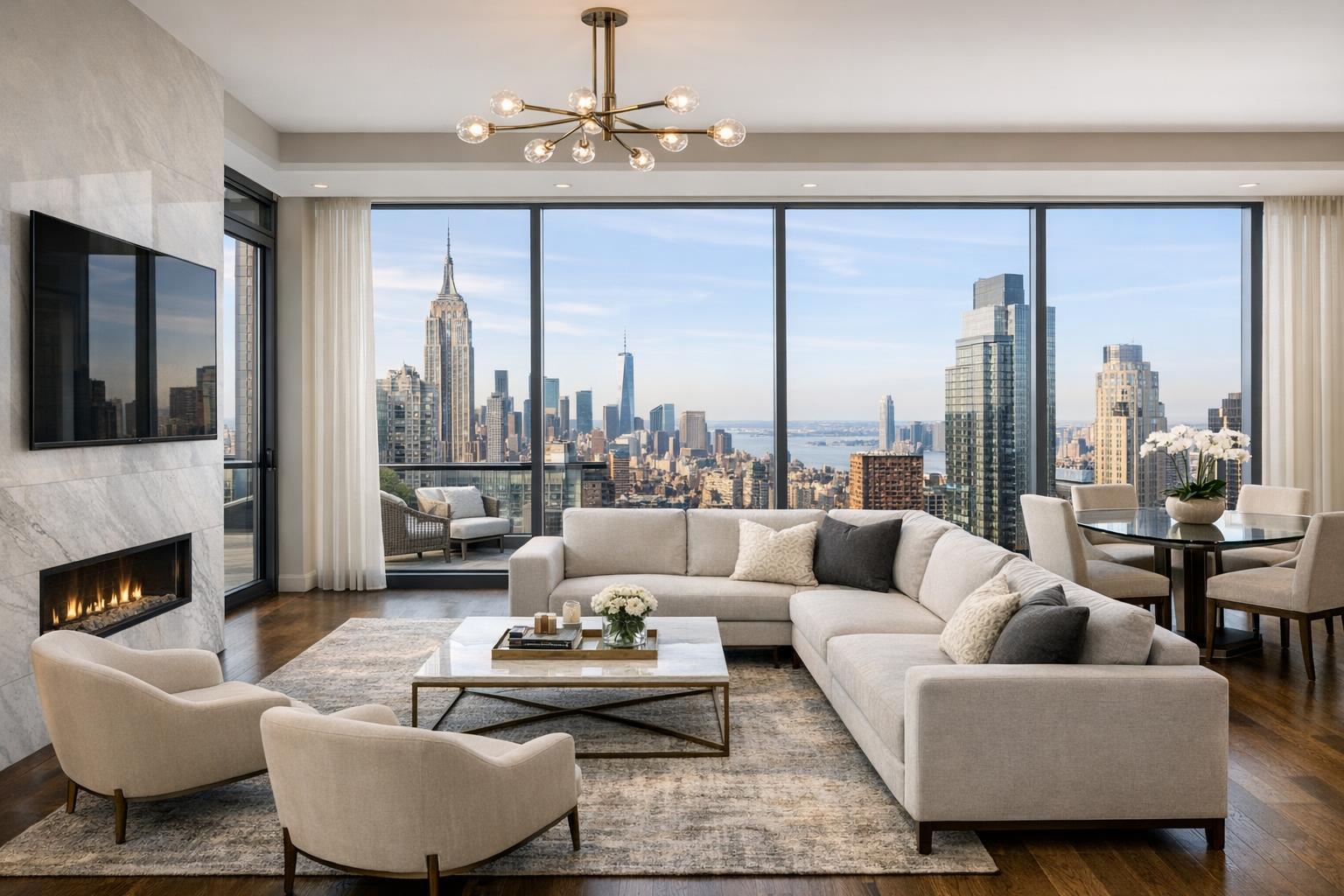
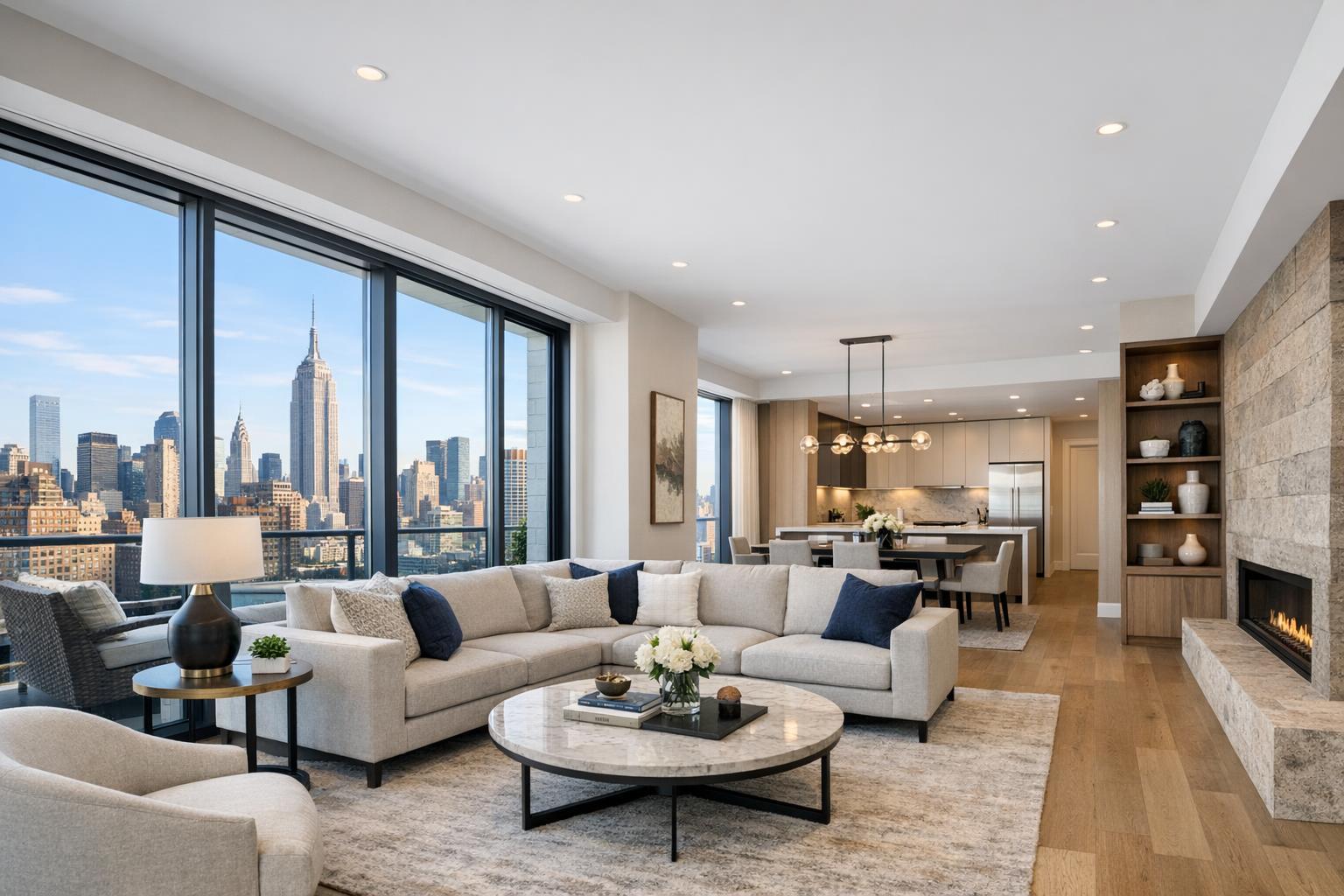
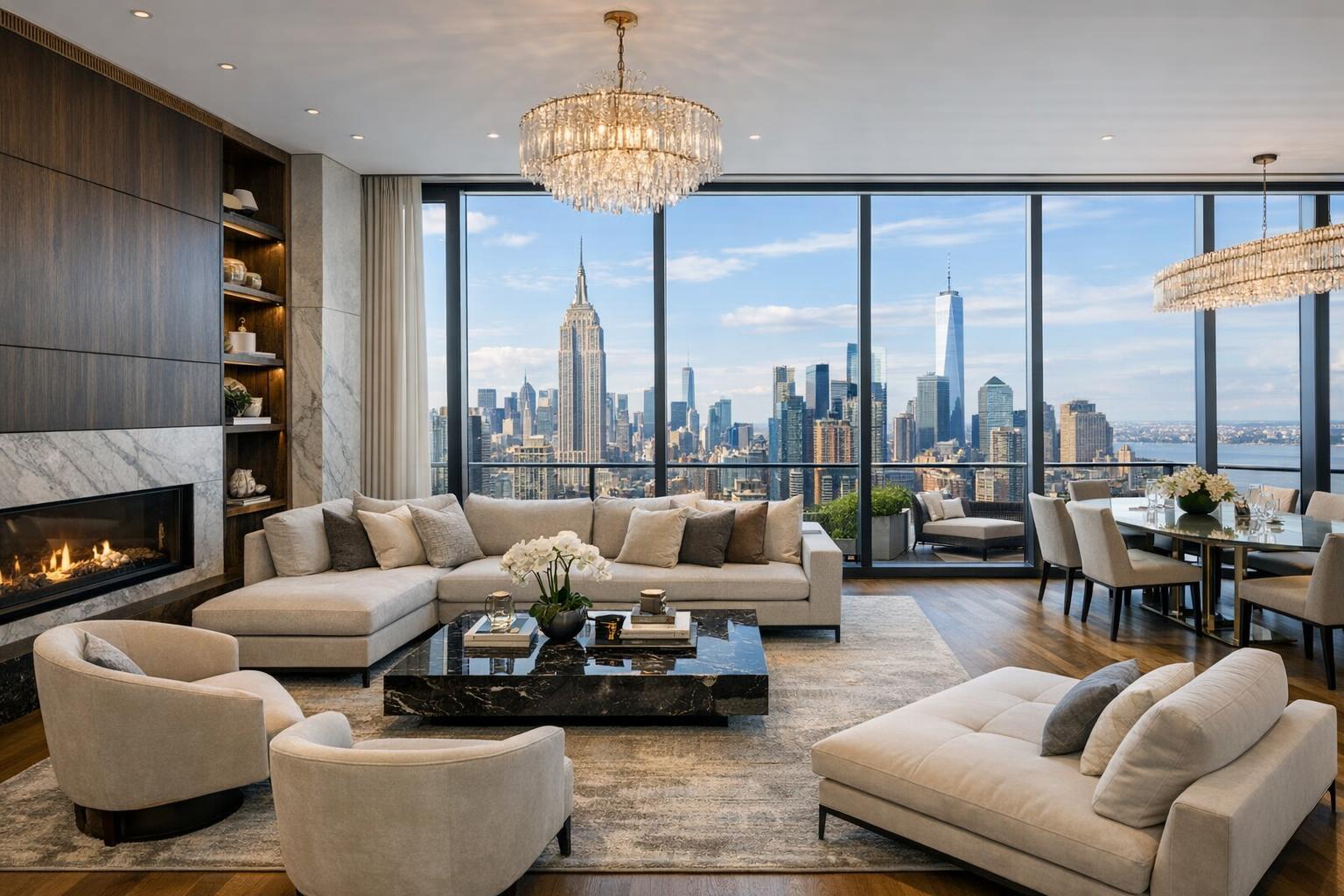
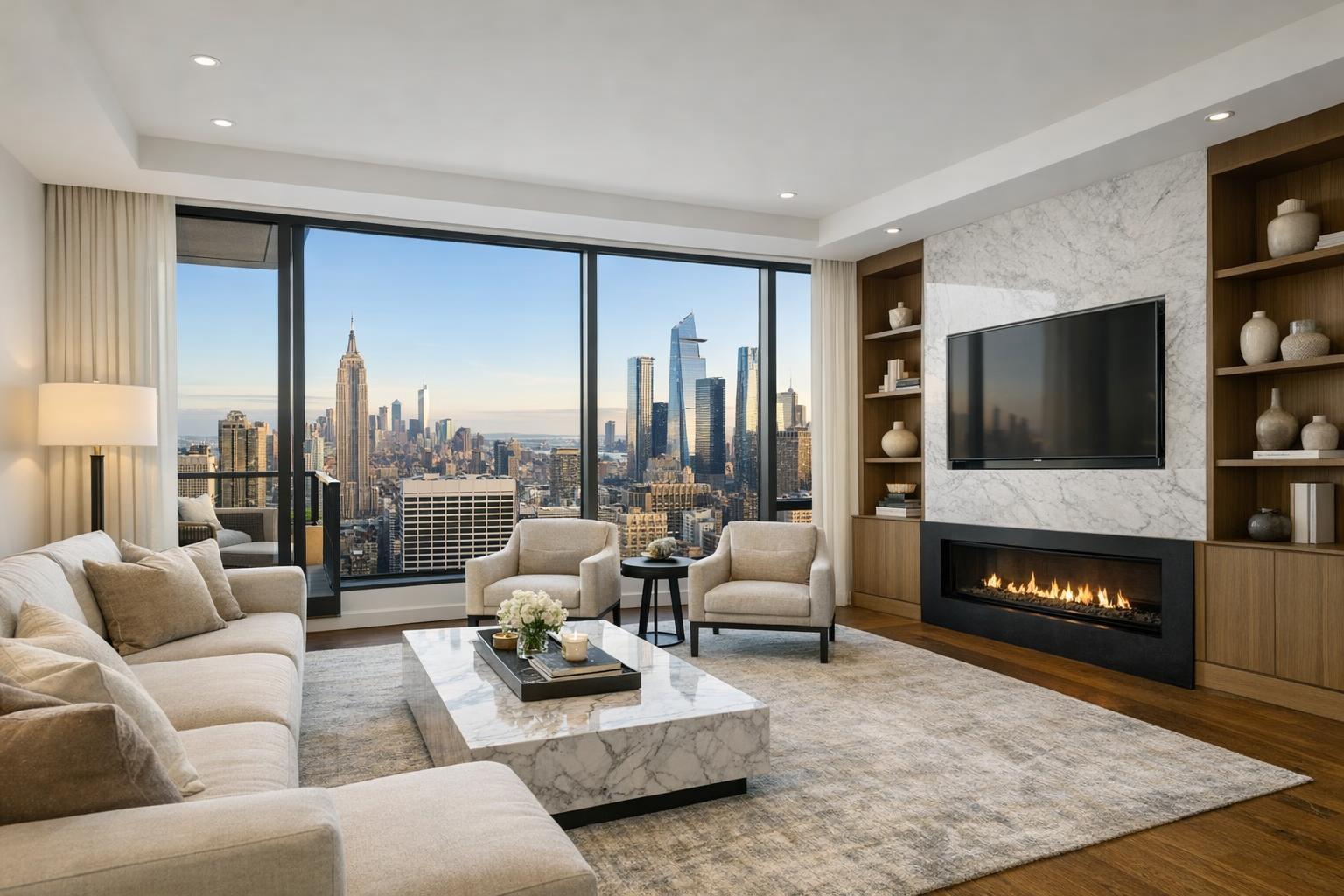
A luxurious living room with a modern fireplace and a stunning view of the NYC skyline showcases the elegance often highlighted in real estate photography NYC.
Why Professional Real Estate Photography in NYC Makes All the Difference
Real estate photography in NYC isn’t simply about taking a set of attractive pictures—it’s about providing clarity and confidence for buyers, renters, and commercial tenants navigating one of the world’s most competitive property markets. As a real estate media team working throughout New York City, New Jersey, and surrounding areas, we see firsthand how high-quality imagery shapes first impressions, influences decision making, and ultimately drives the success of a listing.
Professional Images: Your Listing’s First Conversation
Most property decisions in NYC begin online. Before anyone schedules a visit, they’re evaluating spaces from behind a screen—scrolling through listings, group chats, or brokerage sites, often making split-second judgments. Professional real estate photography helps those viewers answer crucial questions immediately:
- Does the space feel open, inviting, and well maintained?
- Are the rooms logically connected and easy to imagine furnished?
- Does the property offer functional, up-to-date amenities?
- How does the light, view, or setting support everyday life or business?
When done well, professional real estate media brings order and intention to these questions. Rather than delivering a random photo dump, a well-sequenced gallery creates a visual tour: starting from curbside or building entry, moving through primary spaces, and highlighting key details. Viewers aren’t left guessing. Instead, they receive a comprehensive, transparent look at what the property has to offer—which builds trust and can lead to more informed inquiries.
Quality Matters: Beyond Basic Snapshots
In NYC and New Jersey, listings compete on both presentation and substance. Amateur photos—often captured with a phone in unpredictable lighting—can make even impressive spaces feel dark, crowded, or confusing. Professional photography, by contrast, is shaped by countless technical and aesthetic decisions:
- Selecting lens angles that reveal a room’s true size and function without distortion.
- Carefully balancing window and interior light for natural, realistic results.
- Maintaining vertical lines so architectural details look correct.
- Removing temporary distractions (cords, clutter, personal items) from the frame.
- Capturing standout features: built-ins, views, ceiling height, or recent upgrades.
- Editing for consistent color and exposure to give every image a cohesive feel.
These choices make a difference in both perception and performance. In smaller Manhattan studios, a controlled approach keeps limited space from feeling cramped. In larger New Jersey homes, wide-angle scenes can show the flow and proportion that set the property apart from city apartments.
Tailoring Visual Coverage to the Property
Properties in the NYC metro area are remarkably diverse—condos, co-ops, brownstones, single-family homes, mixed-use retail, and more. Achieving strong results means matching the visual strategy to the property category.
- Residential Listings: For apartments, townhouses, or homes, the priority is helping viewers imagine daily life: not just showcasing impressive features, but illustrating the kitchen’s flow, bedroom scale, and available storage. Photos should provide a sense of how the spaces connect, while secondary images highlight specialty amenities, views, or outdoor space. Overshadowing essential rooms for the sake of a dramatic view or design detail shouldn’t leave buyers with unanswered questions.
- Commercial Listings: Here, function and use take center stage. Office properties, retail spaces, hospitality venues, and investment assets benefit from photos demonstrating work zones, circulation, street visibility, and customer experience. For restaurants, salons, or event spaces, atmosphere, lighting, and layout are often more important than decorative finishes. The right real estate media strategy prioritizes what prospective tenants or investors need to see to make a decision.
The Impact of Preparation
No matter how skilled the photographer, the physical preparation of a property makes a visible difference. Especially in dense city settings, background distractions—from packages and electrical cords to unmade beds or cluttered counters—can quickly overwhelm the qualities you want to present. Preparing every area in advance allows the camera to capture both beauty and function.
Practical pre-shoot tips:
- Declutter all visible surfaces and remove non-essential items.
- Ensure beds are neatly made and furniture is arranged thoughtfully.
- Swap any burnt-out bulbs for consistent lighting.
- Tuck away personal effects, documents, or valuables.
- Clear outdoor balconies or entranceways.
- Organize access, elevator procedures, and any required approvals for building amenities or common areas.
For more detail, RealtaSnap provides a step-by-step guide for property preparation: RealtaSnap real estate photography prep guide.
Complementary Real Estate Media
While professional photography drives property marketing, supporting media can offer crucial context:
- Video Tours: Useful for showing true flow and atmosphere. A video tour, when thoughtfully captured and edited, reveals how open spaces connect or how unique layouts function—providing a sense of movement that static photos can’t fully convey. This is especially helpful for larger homes, luxury condos, and commercial listings where space circulation is key. RealtaSnap’s video production is always completed on site, not by creating slideshows from still images. Explore real estate video options.
- 3D Tours: Interactive virtual walkthroughs give remote viewers the ability to explore a property at their own pace. Our Matterport 3D capture requires a dedicated on-site session—not a quick offshoot from photo capture—and makes a significant difference for out-of-area buyers or multi-party decision makers. Learn more about Matterport virtual tours.
- Floor Plans: Photos provide atmosphere, but floor plans clarify space relationships and scale. In NYC’s compact apartments or New Jersey’s multi-level homes, an accurate plan helps prospects understand how rooms connect and how their needs fit. All RealtaSnap floor plans are created with real on-site measurements, never from pre-existing PDFs or external designs. See our floor plan services.
- Virtual Staging: When a space is vacant and hard to visualize, AI virtual staging can show buyers what’s possible. However, to maintain realism and compliance with industry standards, virtual staging is best applied to empty or properly decluttered rooms. If a room is furnished, either the items must be physically removed before capture, or a paid clutter-removal edit must be completed before staging. This maintains transparency for buyers and avoids misleading visuals.
Dealing With NYC and New Jersey Practicalities
Every market brings unique considerations. In Manhattan high-rises, getting access to amenities or rooftops often requires advance approval—always confirm this before scheduling photographers or videographers. In New Jersey, substantial yards or multi-acre lots may demand a different visual approach, with greater emphasis on exterior and aerial coverage.
Drone media is a valuable asset for showing context, but flight feasibility in the city is determined by airspace conditions, building access, and applicable safety rules. Not every property can support drone operations, and RealtaSnap follows all FAA, local, and site-specific requirements.
Choosing the Right Real Estate Media Partner
Selecting a real estate photographer or media team isn’t simply about reviewing portfolio highlights. Look for providers who understand:
- Consistency: Can they deliver professional-quality results across lighting situations, property types, and settings?
- Transparency: Are preparation requirements, editing services, and deliverables clear before the shoot?
- Flexibility: Does their service allow you to select the right coverage level—photo quantity, video format, etc.—to match your property’s needs?
- Scope: Do they have experience handling both residential and commercial assignments, and can they build a media strategy that aligns with your goals?
- Compliance: Will their process adhere to New York and New Jersey access, safety, and building rules?
RealtaSnap provides scalable HDR photo packages (from 10 to 50 images), flexible add-ons like AI virtual staging, and on-site capture for floor plans, video, and 3D tours. Our service area includes all five NYC boroughs and statewide New Jersey. See all service options and book online at RealtaSnap Real Estate Photography NYC.
Making the Right Impression Starts With Coverage That Fits
Effective real estate photography in NYC is about matching the visual plan to your exact property—not just maximizing the photo count, but providing the coverage that answers buyer questions and builds confidence. Supplementary video, virtual tours, floor plans, and staging should be added strategically, enhancing the story rather than distracting from it.
By preparing your property thoughtfully and working with a knowledgeable real estate media partner, you ensure that every visual introduction is a powerful, authentic invitation to explore further.
For tailored real estate media across NYC, New Jersey, and neighboring markets, visit www.RealtaSnap.com and find coverage designed for your listing’s needs.
FAQ
Question: How do I know how many listing photos are necessary?
Answer: The right quantity is determined by your property’s size, layout, and the variety of important features. Smaller units in NYC may require 10–20 photos to cover primary spaces and notable details. Larger single-family homes or multi-room commercial spaces often need 30–50 images for comprehensive coverage. Avoid repeating nearly identical views—instead, focus on presenting functional spaces and essential amenities.
Question: Can professional photography make a small space seem bigger than it is?
Answer: Skilled property photographers use thoughtful composition, controlled lighting, and strategic camera angles to accurately showcase space and avoid distortion. While good images can help rooms feel open and inviting, they shouldn’t exaggerate the actual size. Proper preparation, like decluttering and organizing small apartments, also contributes to clearer, more appealing photos.
Question: Is virtual staging available for any room?
Answer: Virtual staging is best for vacant or fully cleared spaces. If a room still contains personal items or existing furniture, those need to be physically removed, or a paid clutter-removal edit is required before applying AI staging. This ensures the final image is realistic and professionally presented. For more about preparation and virtual staging, refer to the RealtaSnap real estate photography prep guide.