How to Choose Commercial Real Estate Photography for Offices, Retail, and Industrial Space
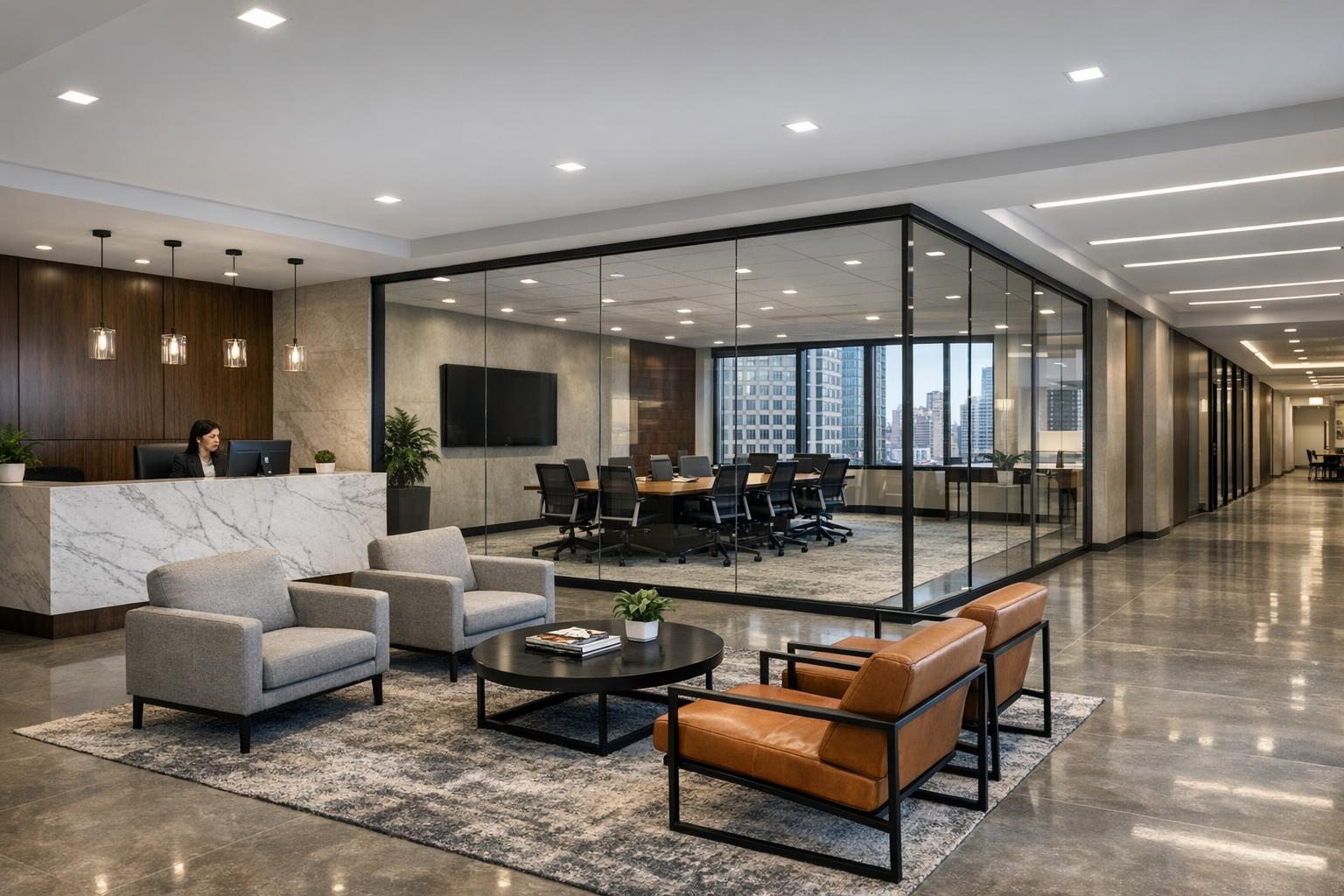
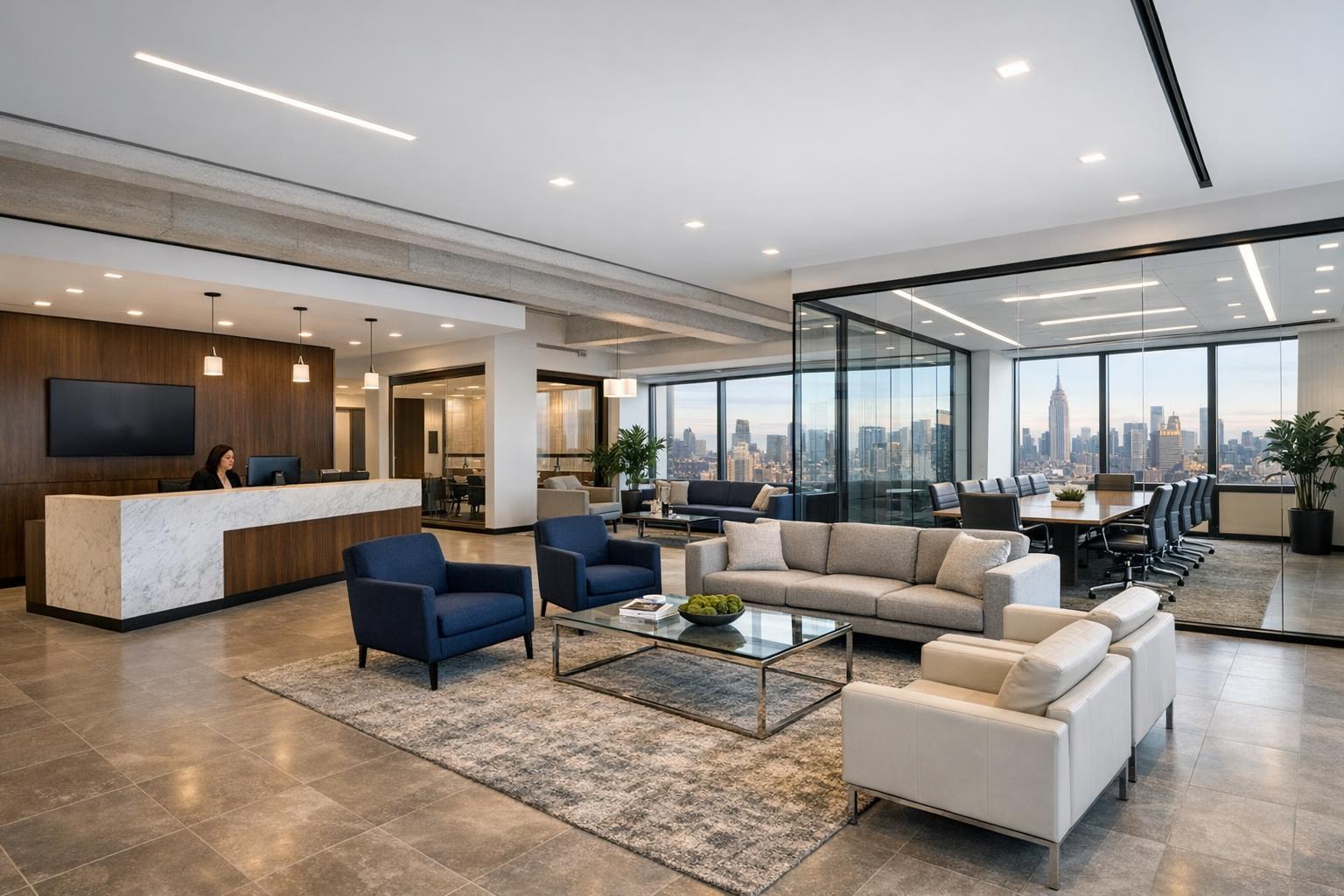
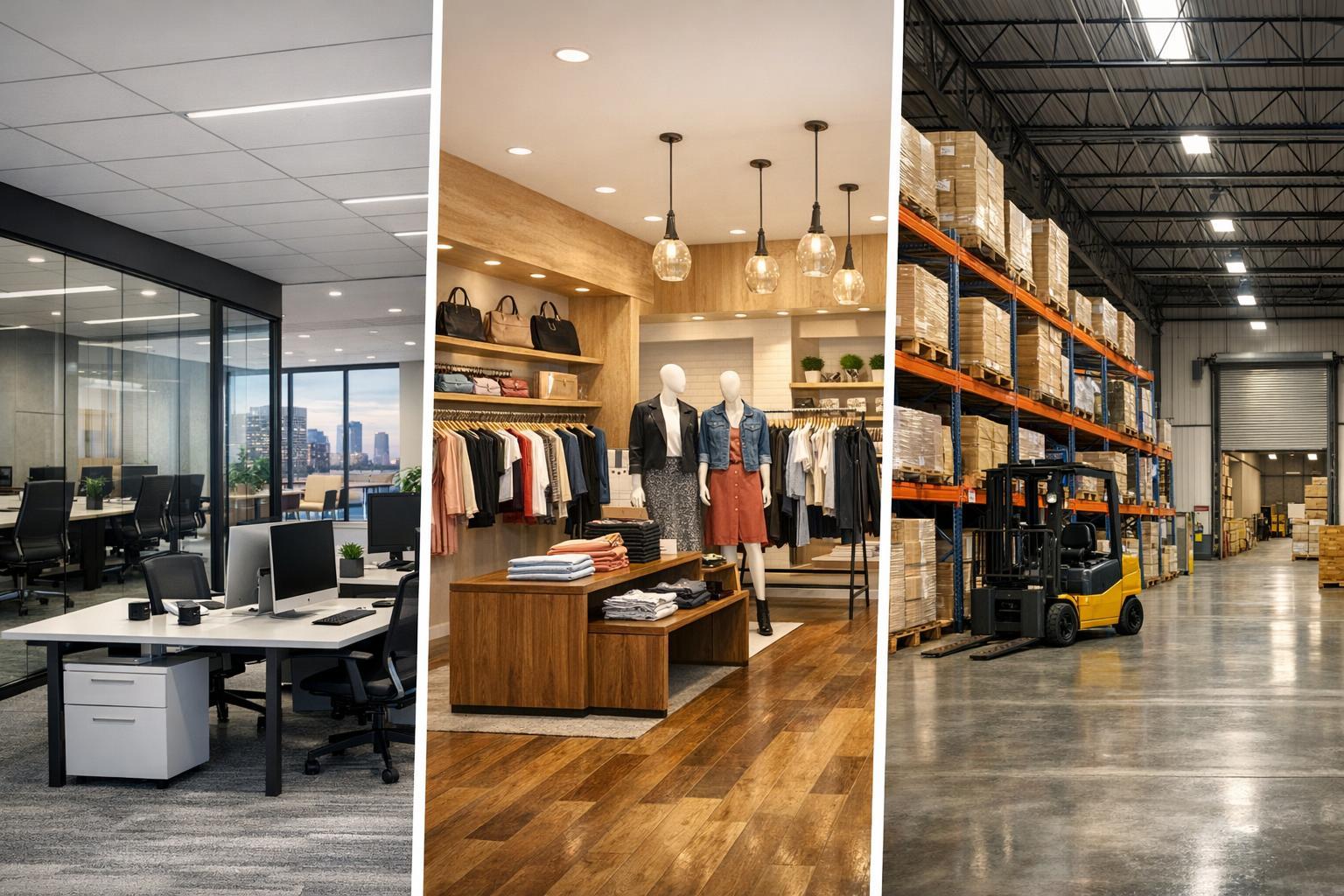
Featuring commercial real estate photography, the image showcases a modern office space, a chic retail clothing store, and a spacious warehouse facility.
How to Choose Commercial Real Estate Photography for Offices, Retail, and Industrial Spaces
Commercial real estate photography is a core tool for property professionals across New York City, New Jersey, and neighboring markets. For brokers, asset managers, developers, and business owners, the decision to invest in professional photography is rooted in necessity: listings and marketing packages must communicate more than just aesthetics. They must show how a space works, what makes it viable, and why it is an asset worthy of attention—well before a prospect ever steps inside.
What Makes Commercial Photography Different?
While residential listing photos focus on warmth and curb appeal, commercial property photography is built to address business realities. The images need to clarify not just how a space looks, but how it functions. Can an office suite support a productive team? Does the storefront stand out in dense urban streets? Is the loading access suitable for distribution? Are there operational or branding advantages worth highlighting?
When selecting a commercial property photographer, understanding what you actually need from your imagery is the foundation of a successful project.
Aligning Photography With Business Goals
In practice, every marketing assignment in the commercial sector is different. Before booking a photographer, clarify two things:
- Who is the audience for these photos—investors, tenants, partners, or a wider market?
- Where will the images be used—on leasing platforms, in investor decks, printed signage, company websites, or project updates?
These questions help define your shot list and priorities. For instance, a development under construction may need coverage of finished amenities, ongoing work, and context within the neighborhood. A retail package might split focus between exterior signage and the flexibility of merchandising areas. Industrial spaces typically require a function-forward approach: clear visuals of loading docks, yards, open span areas, and any supporting infrastructure.
Being intentional about the needs and intended presentation leads to photography that’s more than decoration. It creates property collateral that is both visually impressive and deeply informative.
Visual Priorities By Commercial Property Type
Office Space: Communicate Workflow and Usable Area
Effective office visuals go beyond empty rooms. They clarify how people circulate through the suite, leverage natural light, and utilize common or client-facing spaces. Reception areas, breakout zones, boardrooms, communal kitchens, and building amenities all have a part to play. For occupied spaces, preparation is critical—working desks don’t need to be empty, but stray cables, documents, or clutter can disrupt the final presentation.
Lighting is a technical challenge in many office environments. Large windows next to darker interiors require careful exposure control. Professionals balance these variables to keep both interior spaces and exterior views visible where practical, and architectural lines should always appear precise and straight.
Retail: Exteriors, Frontage, and Customer Experience
Retail photography must establish the property’s street presence, visibility, and adaptability. Exteriors should show signage areas, entry conditions, and connectivity to the surrounding block. Inside, coverage should focus on display zones, seating areas, counters, and flow through the space. For spaces located in busy commercial corridors, timing the shoot to avoid blocked views or crowding—such as during loading, rush hours, or maintenance—is often crucial.
Even when a retail unit is vacant, clear images that accurately represent proportions and layout are more valuable than a set of generic wide shots. Where feasible, including a marked-up floor plan can anchor the visual story for tenants or investors.
Restaurants and Hospitality: Balancing Atmosphere and Details
Capturing the essence of a restaurant or hospitality venue means holding onto both mood and function. A successful photo set typically documents dining rooms, bars, service counters, kitchens, and any exterior seating. Lighting can be complex—daylight from windows, ambient overheads, and decorative fixtures must all be balanced so that the space is inviting but the details aren’t lost.
When a venue is being marketed to a new operator, showing physical features clearly—such as installed equipment, built-ins, or patio setups—helps answer operational questions early in the process.
Industrial and Warehouse: Focus on Access, Volume, and Infrastructure
In distribution, manufacturing, or logistics, marketing visuals need to be practical above all. Wide, undistorted images help reveal the full span of the interior, key operational zones, and all loading or access points. Here, showing the path from entry to operation is often more relevant than capturing every architectural flourish.
A deliberate shot plan should include parking layouts, access routes, interior bays, and any office or support space attached to the property. Only spaces or features significant to the next user need to be highlighted.
Development and Redevelopment: Telling a Progress Story
For projects still in progress or repositioning, photography often serves a mixed audience: future tenants, capital partners, and internal stakeholders. On active construction sites, photodocumentation is shaped by accessibility, active work, finished phases, and visual safety concerns. Collaborating with project leads ahead of time clarifies which areas are ready to photograph and which are best left for later coverage.
Choosing the Right Commercial Property Photographer
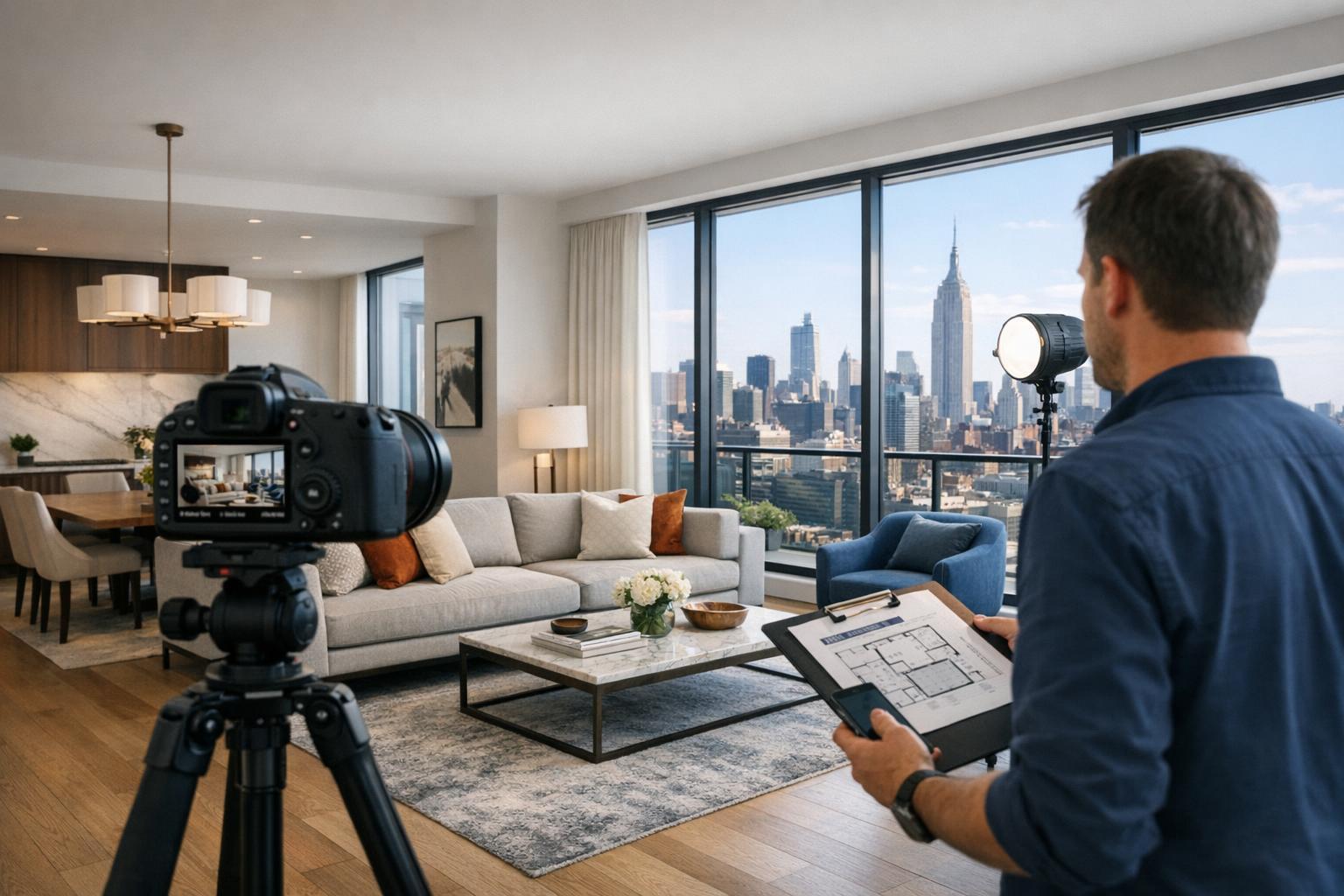
Working with commercial properties—especially in NYC and North Jersey—means the photographer must be more than technically skilled. They must manage timing, building policies, site logistics, and a shot plan that fits your marketing strategy.
What sets a capable commercial property photographer apart?
- Experience with architecture and lighting: Commercial spaces often have a mix of daylight, fluorescent, LED, polished floors, glass partitions, and more. Balanced exposures, straight verticals, and natural color should be evident throughout their portfolio.
- Coordination with building operations: Many shoots occur in spaces that are occupied or under limited access. Photographers should ask about hours, required permissions, photo policies for people or confidential materials, security, and any areas to avoid.
- Property-specific shot planning: There is no one-size-fits-all shot list. A professional will discuss which features matter most to prospective buyers or tenants and prioritize shot order accordingly.
- Editorial consistency and versatility: The final set should translate across marketing uses—websites, brochures, presentations, and listings—without losing clarity or impact.
When reviewing proposals, don’t just look at price. Assess whether the photographer understands property types similar to yours and ask whether deliverables will support all of your intended marketing channels.
Operational Considerations in NYC and New Jersey
Dense urban settings introduce unique practicalities. From Manhattan’s crowded avenues to North Jersey commercial parks, access windows, delivery schedules, building approvals, and local street activity all affect shoot logistics. In some cases, drone imagery can add valuable aerial context, especially when showcasing footprint, parking, or proximity to highways and transit—but drone operations are subject to FAA regulations, weather, and site-specific policies. Many Manhattan rooftops or busy city properties, for instance, limit aerial feasibility due to safety and regulatory restrictions.
Whenever exterior access is limited by street traffic or weather, planning with a media team who understands local patterns can prevent missed photo opportunities.
Property Preparation: Setting the Stage for Clarity
Commercial properties don’t need elaborate staging, but some advanced preparation goes far. Clearing unnecessary items from sightlines, tidying communal spaces, wiping down reflective surfaces, ensuring adequate lighting, and opening or closing window treatments as needed can all make a meaningful difference in how a property presents on camera.
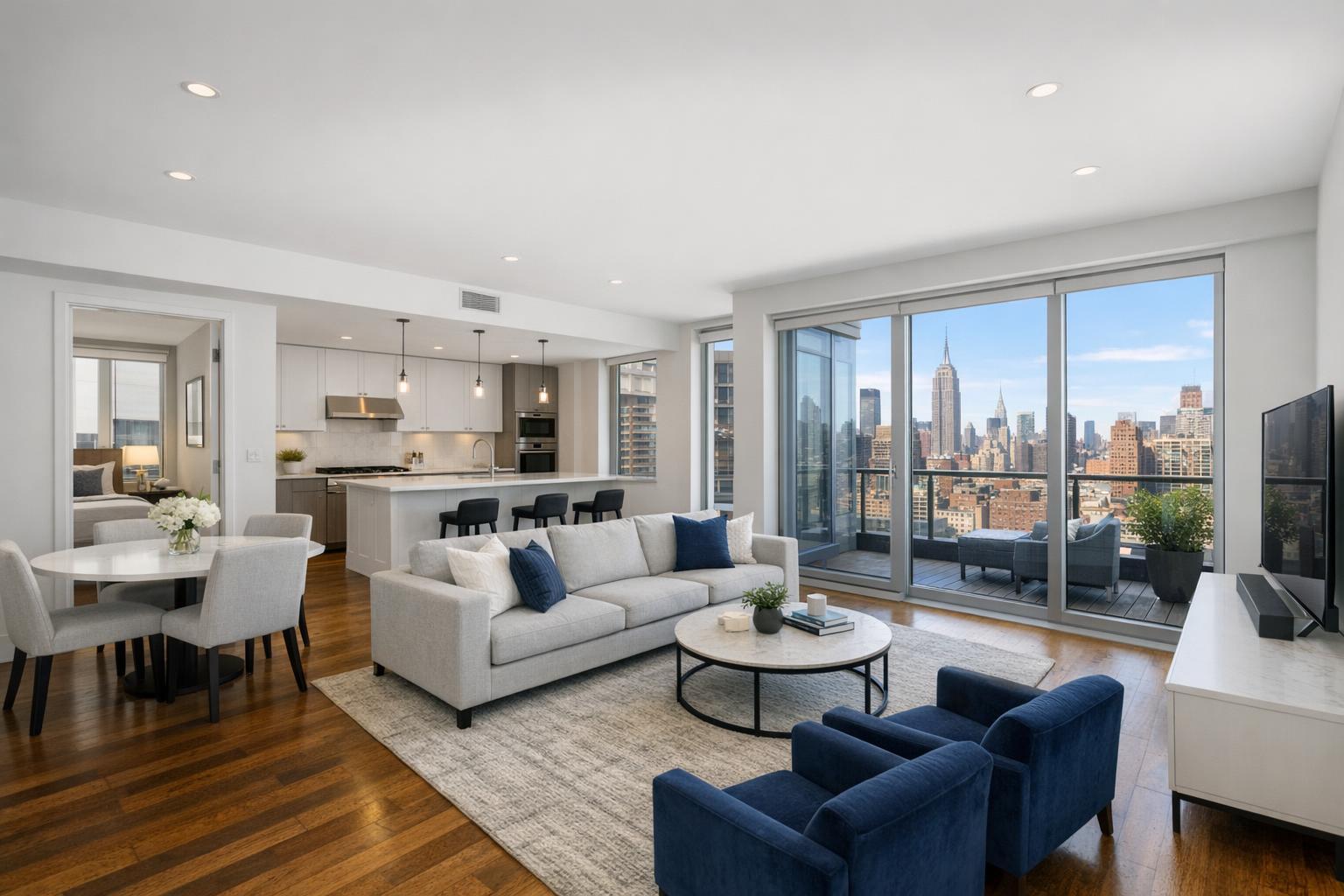
For vacant units, virtual staging might be worth considering—but only when the physical room is empty and ready for such enhancement.
It’s also wise to review in advance:
- Which spaces or rooms are to be prioritized
- Which areas, if any, should be excluded
- That the appropriate staff or building contacts are informed of the photography plan
These steps help ensure the session runs efficiently, respecting everyone’s time and resulting in more useful marketing imagery.
Evaluating Proposals and Portfolios
Price is only one factor. A commercial real estate photography provider should offer a clear scope, evidence of past work with similar property types, and enough flexibility to handle coordination and access. Look for clarity in:
- Portfolio relevance (office, retail, industrial, development, or hospitality experience)
- Image quality: balanced light, accurate color, architectural precision
- Understanding of the intended marketing use
- Scope of coverage—what is and isn’t included, including any additional media options (such as 3D tours or floor plans)
- Expectations for photo editing or any special requests
A strong commercial property photographer makes the process manageable, not more complicated.
Why Clarity in Commercial Imagery Matters
At the commercial level, your property story is ultimately about function, scale, and differentiation. Quality photography is not just a way to showcase the room—it is a tool to help prospects see what’s possible, understand layouts, and evaluate opportunities with confidence.
RealtaSnap provides professional real estate photography across NYC and New Jersey, with coverage and coordination built around genuine property needs and local market context. If you’re preparing to market an office, retail, hospitality, industrial, or new development property, learn more at www.RealtaSnap.com.
FAQ
Question: How many photos are needed to market a commercial property?
Answer: The number of photos depends on the property’s type, size, and the story you need to tell. Smaller spaces like a boutique office may be well-represented with focused coverage of key areas, while larger industrial or mixed-use sites benefit from more extensive documentation—capture of main interiors, amenities, points of access, and any distinctive features is often recommended.
Question: Can commercial space photography take place during business hours or active operations?
Answer: In many cases, yes. Advance coordination is useful to respect business activity, maintain privacy for workers or customers, and prepare spaces where photography might be disruptive. Scheduling sessions during quieter periods and clearing communications with staff helps ensure both efficiency and unobtrusive coverage.
Question: Is drone photography widely available for commercial properties in New York and New Jersey?
Answer: Aerial imagery can add substantial value, but not every property or location will permit safe or legal drone flight—especially in dense city areas. Feasibility depends on airspace, weather, building permissions, and pilot discretion. Where permitted, drone shots are often coordinated around rooftop access or exterior schedules.