Why Matterport NYC is Revolutionizing Real Estate Marketing
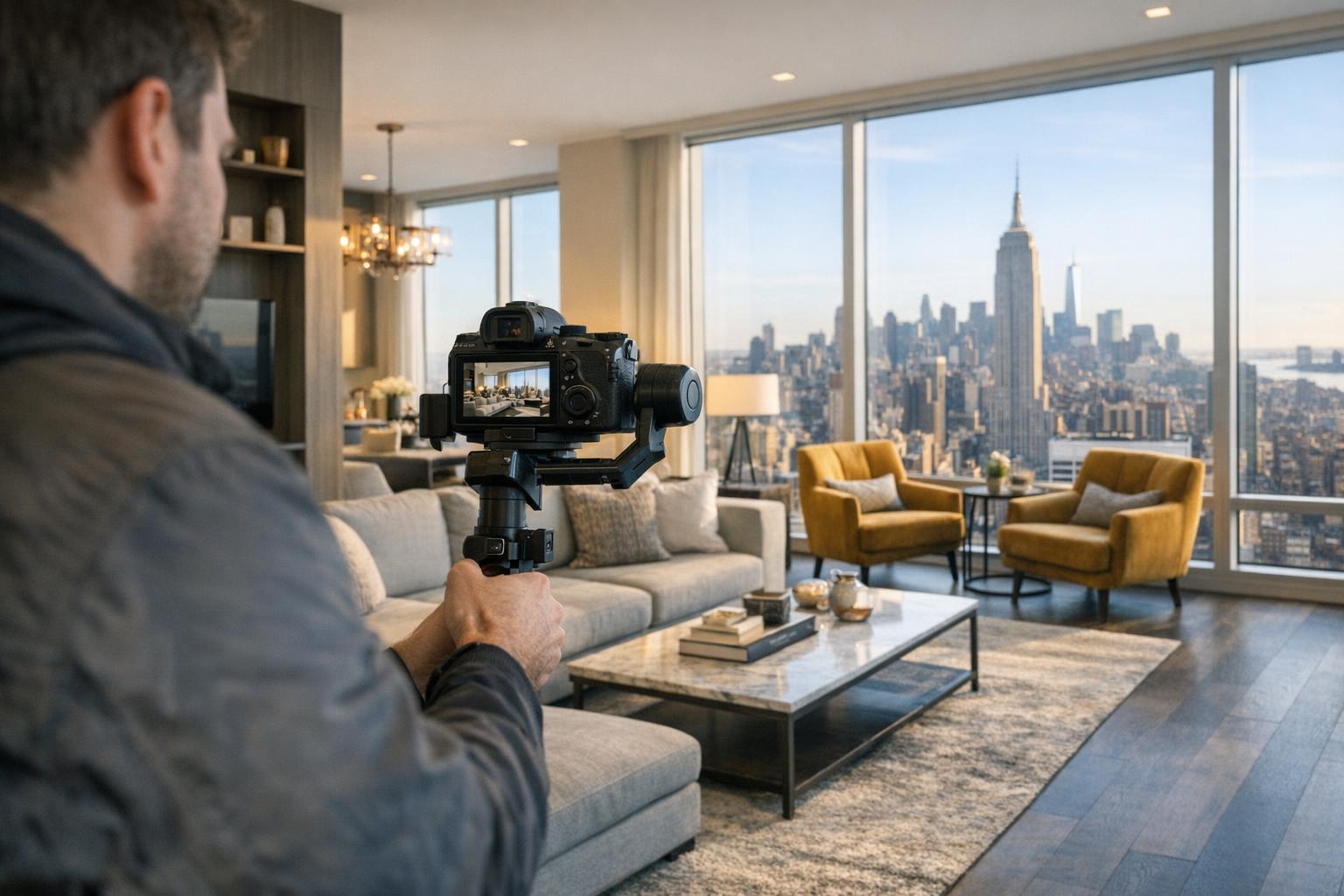
The luxurious Matterport NYC living room features modern furnishings, a cozy fireplace, and stunning city skyline views.

Why Matterport NYC Is Changing the Real Estate Game
Matterport NYC has shifted expectations for real estate marketing in ways that go well beyond simply adding a visual extra to a listing. For professionals working in New York City, New Jersey, and surrounding markets, the introduction of high-quality 3D virtual tours means buyers, agents, and sellers can now engage with properties in a format that provides clarity, context, and flexibility—whether that property is a classic Manhattan apartment, a compact Queens condo, a Brooklyn brownstone, or a commercial space in Jersey City.
A virtual walkthrough turns listing media from a passive experience into something interactive. No longer are viewers limited to scrolling through a linear set of photos curated by someone else; instead, they get tangible insights into a property’s spatial flow, unique features, and overall functionality before ever booking a showing.
Why 3D Virtual Tours Go Beyond Static Photos
Photography remains essential for presenting key details, but even strong listing photos can fall short. The problem is particularly noticeable in NYC, where unconventional layouts are the norm. New Yorkers are accustomed to alcove studios, railroad layouts, long connected rooms, split-level brownstones, and buildings where the line between public and private space isn’t always obvious. A gallery of still photos might produce striking images, but it rarely answers the most common questions:
- How does the bedroom relate to the living space?
- Where does the hallway actually go?
- How far is the kitchen from the entry?
- Can you see the living room from the dining area?
- Is there any separation between different parts of the home?
- What’s just out of frame in that otherwise perfect photo?
A Matterport tour, built from a series of on-site scans, allows anyone to move through a property virtually. The viewer decides where to pause, which rooms to revisit, and how much time to spend studying a particular area. For multifloor properties, they can navigate staircases, check the relationship between floors, and see real views out of windows—so long as the space is prepared and appropriately scanned.
Practical Benefits of Self-Guided Exploration
The real impact of a 3D virtual tour comes from the ability to answer practical layout questions during the decision-making process. Buyers relocating to NYC, investors reviewing commercial assets, or renters comparing multiple units often need more than photos and floor plans. An interactive 3D tour provides several advantages:
- Viewers control their virtual path and revisit spaces as needed.
- Long hallways, unusual room connections, or multi-level transitions are easier to follow.
- Features like outdoor terraces, balconies, or roof decks are incorporated with a sense of place.
- Compact apartments can be experienced in full, helping differentiate between similar listings.
- Commercial properties can showcase entrances, open areas, private rooms, and key access points.
In a dense urban market where time is tight and competition for attractive units is fierce, the ability to remotely pre-tour a listing doesn’t just save time. It can also result in more productive in-person viewings, as buyers arrive with a more realistic understanding of what’s on offer.
Virtual Walkthroughs vs. Listing Videos: Understanding the Difference
Both listing videos and 3D tours enhance property marketing by adding movement and flow, but they play fundamentally different roles. A listing video is a guided, cinematic experience shaped by the editor’s vision—music, scene selection, and camera movement are all curated to tell a deliberate story about the property. This format works well for highlighting atmosphere, dramatic views, and curated transitions.
A Matterport or similar 3D virtual tour, on the other hand, hands control over to the viewer. This is particularly effective when the property’s layout, functional flow, and unique physical features are among its greatest strengths. For Manhattan apartments with unusual rooms, Brooklyn brownstones with multiple staircases, or commercial spaces where circulation is key, virtual walkthroughs make it easy for prospective buyers to draw their own conclusions.
Professionals often combine both approaches for comprehensive marketing: video sets an emotional tone and introduces the property, and the 3D tour answers deeper logistical questions about how spaces connect and how the property actually “lives.”
The Role of Preparation for a Quality 3D Tour
Operationally, a successful Matterport scan depends on having a well-prepared property. Because viewers can move through any accessible area and see each room from multiple angles, anything left out—boxes, clutter, personal items, poorly lit corners—will be visible. Here’s how experienced teams like RealtaSnap approach preparation:
- Remove clutter from countertops, dining tables, and vanities.
- Open blinds or shades to provide natural light, unless a window view should be blocked.
- Straighten bedding, pillows, and towels for a tidy appearance.
- Put away pet supplies, cords, and miscellaneous objects.
- Turn on all appropriate interior lights for balanced brightness.
- Confirm with the agent or owner if there are spaces that should be excluded before the scan starts.
- Ensure clear pathways between rooms. Even minor obstacles can disrupt the virtual experience.
Occupied homes don’t need to be impersonal, but they should read as intentional—and navigable, both in person and virtually. If a property is going to make use of virtual staging, empty rooms are generally best.
Bringing Clarity to NYC and NJ Listings
Traditional floor plans remain important as they show dimensions and basic spatial relationships, but the 3D tour takes that a step further by converting architectural diagrams into something tangible. Agents, sellers, and developers often find that pairing interactive virtual tours with floor plans and quality photos results in a stronger understanding among potential buyers. This is especially true for:
- Townhouses and brownstones with multiple levels or garden access
- Split-level or loft apartments
- Listings where the circulation between rooms defines the property’s flow
- Commercial spaces with specialized requirements for layout and access
When a buyer, tenant, or investor can visualize both the technical blueprint and a real-life experience of moving through the property, they make more confident decisions—often sooner and with fewer misunderstandings.
Local Considerations: NYC and New Jersey Expertise
The challenges of capturing accurate, market-ready 3D virtual tours aren’t the same in every context. In NYC, getting access to buildings can involve scheduling with doormen, confirming elevator usage, reserving service elevators, or navigating densely populated neighborhoods. In New Jersey, properties are often larger or include more exterior features, so the scan may incorporate expansive yards, driveways, or multiple entrances.
At RealtaSnap, tours are built from on-site scanning, which means physical access to every area that requires coverage. The company does not create 3D tours from photos or architectural plans; accuracy and navigability come from actually capturing the space as it exists at the appointment.
When Virtual Tours Are Most Valuable
There are certain scenarios where a Matterport 3D tour isn’t just helpful—it’s almost essential:
- Apartments with efficient or unusual layouts where photos cannot tell the full story
- Properties where buyers are likely to start their search remotely
- New developments and model units that need to stand apart
- Rentals where tenants are comparing multiple options online
- Commercial spaces requiring a clear demonstration of structure and access
The media professionals choosing how to present these properties must be strategic. Not every room or angle needs to be highlighted; what matters most is showing the real connections between spaces and allowing discovery.
What a 3D Tour Shows—and What It Can’t Replace
A transparent 3D tour puts the physical property on display as it actually is, flaws and all. It allows viewers to check sightlines, room size, and natural light—if a window is bright or a room is unusually compact, that comes through. However, certain aspects are still best experienced in person: subtle details in finishes, how natural light shifts through the day, the feel of different floor surfaces, noise levels, and the ambiance of building common areas.
For these reasons, most agents use 3D tours in combination with professional photos, traditional floor plans, and listing videos. Each asset does something the others cannot:
- Photography: Creates polished visual highlights.
- 3D Virtual Tour: Enables independent, self-guided exploration.
- Floor Plan: Clarifies layout and spatial relationships at a glance.
- Video: Provides movement and storytelling.
- Agent remarks and showings: Fill in context no media asset can capture alone.
How RealtaSnap Fits Into the Modern Listing Process
As a local provider, RealtaSnap delivers Matterport 3D virtual tours for properties throughout NYC and New Jersey. The process is straightforward: clients schedule online, select services (including optional add-ons like floor plans or hosting transfer), and receive detailed guidance about preparing the property to ensure that the end result is clear, accurate, and market-ready. RealtaSnap’s workflow emphasizes practical capture over digital mockups—what’s seen in the tour is what’s really there.
For agents and sellers, this integration of comprehensive visuals helps listings stand out in a crowded market and enables more productive conversations with prospective buyers who have already engaged with the property remotely.
Ready to see how a virtual walkthrough could give your next listing an edge? You can find out more or book directly at www.RealtaSnap.com.
FAQ
Question: What makes a 3D virtual tour with Matterport different from photos or video?
Answer: A Matterport 3D tour provides an interactive, on-demand walkthrough where viewers can navigate at their own pace. Unlike photos (which are pre-selected stills) or video (which is a guided story), a 3D tour lets users explore the property independently and revisit spaces from multiple angles.
Question: How should a property be prepared for a Matterport scan?
Answer: The property should be clean, clutter-free, and well-lit. Clear pathways, tidy surfaces, and removing personal items make the virtual experience more consistent and inviting. Discuss in advance if there are specific areas you’d like included or excluded.
Question: What types of properties benefit most from a virtual walkthrough?
Answer: 3D tours are especially useful for listings with unusual or multi-level layouts, compact city apartments, new developments, rental units marketed online, or commercial spaces that need to demonstrate flow and access. They’re valuable wherever physical layout is a key consideration for buyers or tenants exploring properties remotely.