Why Every NYC Listing Needs Virtual Staging: Benefits for Sellers and Agents
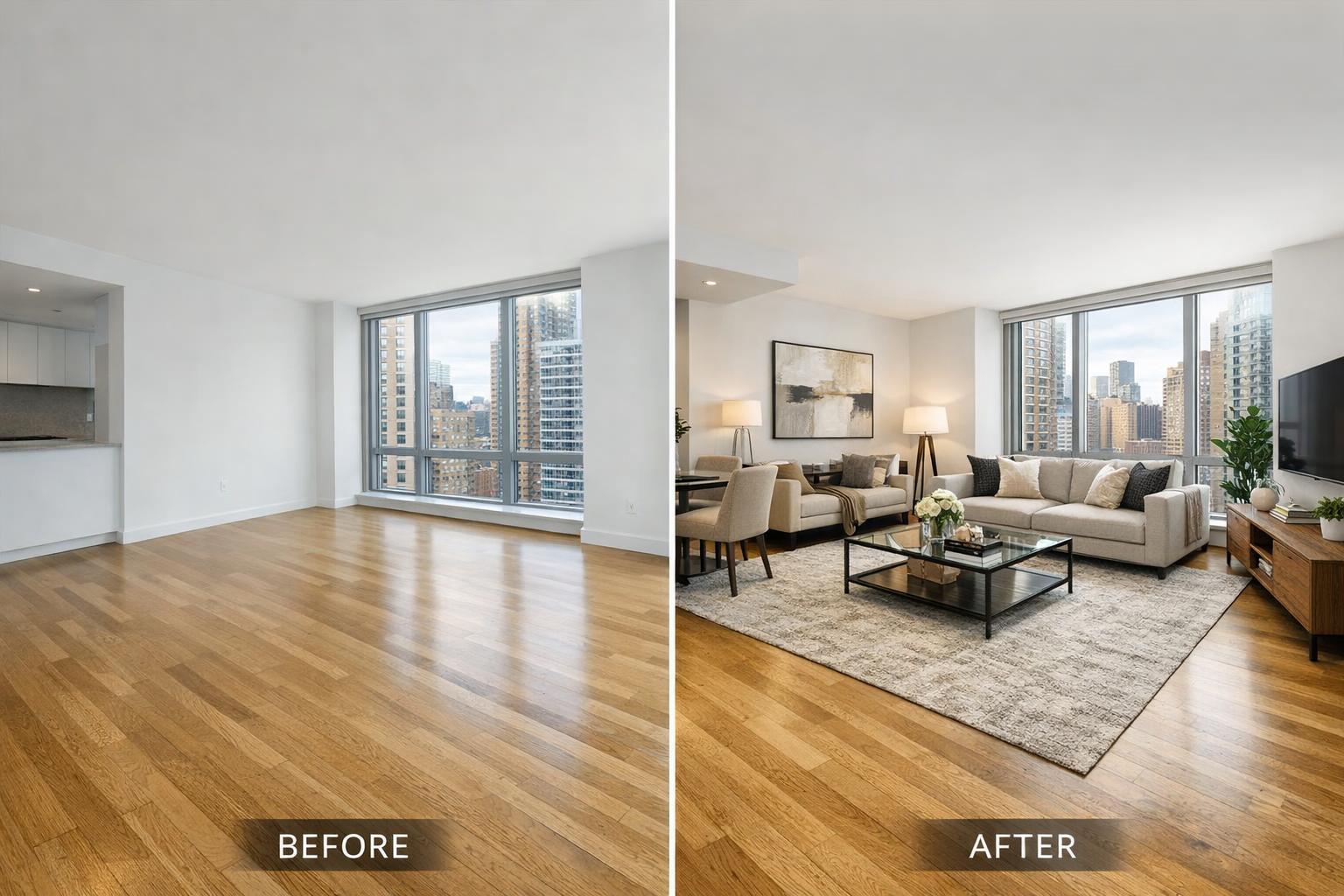
The image showcases a before-and-after comparison of an empty room and its transformation through virtual staging in NYC, featuring modern furniture and decor.
Why Every NYC Listing Needs Virtual Staging: Benefits for Sellers and Agents
Virtual staging in NYC is more than just a technological trend—it’s become a practical essential for modern real estate marketing. For sellers and agents contending with everything from compact prewar apartments to expansive new developments, showcasing a property’s possibilities visually can make all the difference when buyers are swiping quickly through dozens of listings online.
Unfurnished spaces pose a real challenge: even the most well-sized rooms can look uninviting or confusing in photographs. Without furniture to provide a sense of scale and use, buyers frequently struggle to picture daily life in the apartment, condo, or townhouse you’re trying to sell. Well-executed virtual staging fills this gap, offering clear, accurate visuals that help buyers connect with your listing faster.
Why Empty Spaces Don’t Tell the Whole Story
When we’re out in the field photographing vacant properties, we see the same issues crop up again and again. A room may feel generous during a walk-through, but in a photo, it can come across as small, sterile, or ambiguous. With tight city layouts, unique floor plans, and the variety of property types across NYC and New Jersey, unfurnished rooms often raise more questions than they answer:
- Will the living area fit a full-size sofa and dining table?
- Can a second bedroom work as a home office?
- How should furniture flow through a long, narrow prewar space?
- Is there room for a child’s play area or a den in the flex room?
Virtual staging—when applied thoughtfully—gives each room a clear purpose and proportion. Instead of leaving buyers to imagine how they might arrange their space, staged photos offer a clear and realistic reference point. For buyers evaluating listings in a borough like Manhattan, Brooklyn, or Jersey City, this extra clarity is often what makes one property stick in their mind over dozens of others.
Digital Staging that Fits the Local Listing Cycle
Traditional home staging has its place, but it’s not always realistic. Physical furniture involves delivery, installation, removal, coordination with building staff, and sometimes even additional insurance in NYC buildings. In busy markets, agents and sellers need flexibility—especially when a property might only be vacant and available for a short window before the next tenant, homeowner, or renovation project.
Virtual staging, especially when paired with professional photography, speeds up the entire process. With RealtaSnap, for example, AI virtual staging is available as a $10-per-photo add-on. You can pick just the most important rooms to stage (living areas, bedrooms, or flex spaces) without having to furnish the entire property. This selective approach helps keep costs down and delivers clear, immediate results for listings that need to get online quickly.
When is digital staging especially practical?
- Apartments that have just been vacated and need fresh, quick listing media
- Developer units that are finished but unfurnished
- Estate sales and empty homes where moving in rental furniture isn’t feasible
- Investment properties waiting for tenants
- Sellers who’ve already moved out with their own furniture
This tool is also flexible enough for audience-specific messaging. A second bedroom can be showcased as a nursery, guest room, or sleek work-from-home option, depending on who’s likely to buy in that area or building.
Better Listing Images Make a Lasting Impression
The reality is that nearly all NYC and New Jersey buyers begin their search on screens, poring over gallery images on major platforms. Listings that visually communicate room size, function, and design possibilities keep buyers’ attention and are far more likely to prompt in-person showings.
- Furnished rooms are easier to interpret at a glance: A bed in a bedroom, a sofa and coffee table in the living space, or a rug that marks a dining area instantly gives viewers reference points for scale and use.
- Consistent visual stories help properties stand out: Rather than presenting a jumbled collection of empty rooms, staged hero images make it easier for buyers to understand how the spaces relate and flow together.
- Media versatility supports agent marketing: Staged images can be repurposed for email campaigns, social posts, and digital brochures—provided they accurately reflect the space and are labeled as virtually staged where required.
Where Digital Staging Makes the Most Impact
Not every photo needs (or benefits from) virtual staging. Overuse can make the listing feel repetitive and distract from actual property details. In our experience, the best results come from selectively staging rooms where furnishing clarifies a practical use or creates a stronger first impression.
Here’s where we tend to prioritize staging for NYC and NJ listings:
- Primary living areas: Show seating, conversation zones, and how the space connects to the kitchen or dining area.
- Dining spaces or open kitchens: Clarify whether a compact or uninspired area can accommodate a proper dining set.
- Primary bedrooms: Help viewers see bed placement, nightstand potential, and storage possibilities.
- Flex rooms, dens, or second bedrooms: Demonstrate potential as an office, child’s room, or guest retreat.
- Outdoor spaces: Show how a terrace or balcony could accommodate furniture, even in a photo with tricky angles or tight exposure.
Operationally, virtual staging works best when the original images are captured with the staging plan in mind. Rooms should be empty or professionally decluttered, lighting managed to allow for overlays without losing details, and composition planned so furniture looks natural and proportional on delivery.
Realism is the Priority
A well-staged photo doesn’t invent a fantasy version of the room—it gives the buyer an honest visual reference for how the space could work. If digital furnishings are out of scale, poorly matched to the room’s style, or block key features (windows, built-ins, finishes), buyers often distrust the image or overlook the potential altogether.
Our guidelines for realistic, effective virtual staging:
- Select furnishings that naturally fit the space’s size and architecture
- Don’t let staged items block permanent property features or light sources
- Avoid crowding small rooms—less is usually more with compact layouts
- Maintain a consistent style through key images to support the property’s inherent character
- Be transparent about virtual staging when publishing on listing services and in marketing materials
And preparation pays off: for best results, rooms should be captured vacant or fully decluttered. RealtaSnap’s AI Virtual Staging is designed for empty spaces—virtual furniture is not digitally layered over existing furnishings. If a space still contains furniture, agents should plan for a physical removal or request a Clutter Removal edit before ordering staging.
Combining Staged Images with Thoughtful Marketing
Virtual staging is one of several tools in a complete property marketing strategy. It’s powerful, but buyers still want honest, comprehensive information: kitchen details, bath finishes, amenities, storage, and true-to-life room layouts.
For many listings—especially vacant or recently vacated ones—a mix of professional photography and a few key staged photos is a cost-effective and visually complete approach. Floor plans, video, or 3D tours can provide buyers and renters with a better understanding of layout and dimension, complementing the staged visuals.
For an easy booking experience, RealtaSnap photoshoots and AI Virtual Staging can be scheduled through their online booking system. The process is straightforward: choose your photography package, select staging as an add-on for chosen images, and pick an available time from the real-time calendar. Preparation tips and guidance are available to help you get the best results before the shoot.
The Value of Virtual Staging for NYC and NJ Listings
A vacant listing doesn’t have to look unfinished or difficult to interpret online. Virtual staging quickly and affordably answers the questions buyers actually have when scrolling through listings: “How will I use this space? Will my sofa fit? Where could a workspace go?” It adds clarity for the buyer, marketing materials for the agent, and cost-effective flexibility for the seller.
To learn more, schedule your next photoshoot, or add virtual staging to your media plan, visit www.RealtaSnap.com.
FAQ
Question: Is virtual staging appropriate for occupied properties in NYC or New Jersey?
Answer: It can be, but for the most realistic results, the room should be fully decluttered and emptied. RealtaSnap’s AI Virtual Staging is only applied on vacant or decluttered spaces and won’t digitally overlay furniture onto existing pieces. For furnished rooms, plan to remove items physically or use a Clutter Removal edit first.
Question: How many listing photos should I virtually stage?
Answer: Usually, a selective approach works best. Prioritize core spaces like the primary living room, main bedroom, dining area, and any flex room that needs a clear purpose. The number depends on the property type and how many rooms need help communicating their function in photos.
Question: Does virtual staging mean I don’t need professional photography?
Answer: Professional photography remains essential. Virtual staging only works well when the original photos are high-quality, well-lit, and professionally composed. Staged images are most impactful when built on a solid visual foundation.