What to Look for in Real Estate Photography Services
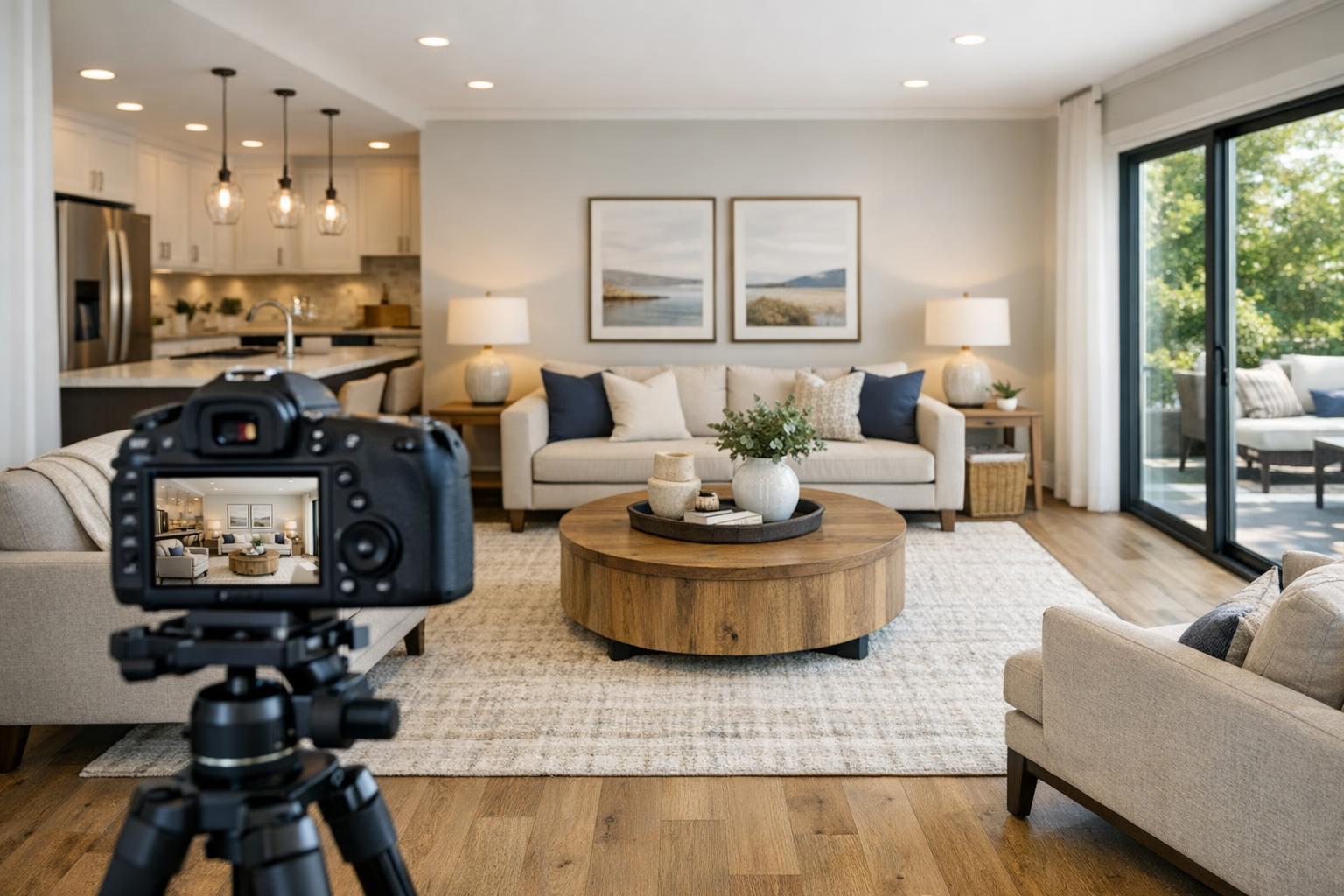
A living room is being captured by a camera on a tripod, showcasing modern furniture and decor with a view into a kitchen area.
What to Look for in Real Estate Photography Services
Real estate photography in NYC and New Jersey is about much more than snapping a few attractive images—it’s a specialized workflow that helps agents, property owners, and marketers present spaces accurately and persuasively. Whether it’s a brownstone in Brooklyn, a compact Manhattan condo, or a sprawling home in the New Jersey suburbs, choosing the right real estate photography services can be the difference between clear, compelling listings and a gallery that leaves buyers guessing.
Understanding What Professional Property Photos Should Achieve
Professional real estate photography is first and foremost about making the property understandable. Viewers—potential buyers, renters, or interested parties—should be able to interpret the layout, appreciate the key features, and get a sense of flow between rooms. This is more nuanced than aiming for “wow” moments; it’s about building trust by offering a true-to-life representation.
A typical session involves:
- Identifying the best angle(s) for each room, balancing the need to show space without exaggerating scale or distorting proportions.
- Accounting for available light, whether that means leveraging daylight or skillfully balancing bright window exposures with darker interiors.
- Paying attention to architectural lines, keeping door frames, corners, and cabinetry visually level to avoid a rushed look.
- Composing images that make sense in sequence, often starting with exteriors or primary rooms, then walking viewers logically through the rest of the space.
No amount of post-production magic can fully compensate for poor preparation on-site. Ideally, a professional photographer works with agents to ensure spaces are tidy, personal items are minimized, and each room is ready to be shown as it truly exists.
Looking Beyond the Portfolio Highlight Reel
Many providers showcase their top photos—often from large, sun-filled, renovated homes or staged developments. While this assures you of their technical skill, it’s only the first step in evaluation. Consistency matters more than a few headline shots because not every listing will offer perfect conditions.
When reviewing a provider’s work, try to access full galleries from a variety of listings:
- Do photos feel like accurate representations? Wide-angle shots are helpful, but excessive stretching or distortion sets false expectations.
- Is each important space well covered? A truly useful gallery covers living areas, bedrooms, kitchens, bathrooms, and any unique or value-adding features—especially for homes with complex layouts.
- Are interiors as carefully presented as exteriors? It’s common for exteriors to be visually impressive, but inside shots often do the heavy lifting in describing how the home functions.
In metropolitan areas like NYC, even a small apartment’s effective presentation can require extra attention to spatial relationships and the impact of natural light at different times of day. For suburban listings in New Jersey, a gallery might need to knit together large, open rooms as well as porch, yard, or pool spaces in a way that conveys usable scale.
Planning and Preparation: Questions Worth Asking
If you want your listing photography to actually help your marketing strategy, it’s important to understand what your provider does before, during, and after the shoot. Before booking photography services, consider asking:
- How much time will be set aside based on the property’s size and complexity?
- Are there pre-shoot recommendations (decluttering, lighting checks, staging tips)?
- Can the provider handle occupied properties, strict building access, or tight scheduling windows?
- How do they handle special features or amenities (rooftops, gyms, unique views)?
- What is the delivery timeline for finished photos?
- How are requests for changes or extra services (like floor plans or virtual staging) integrated?
Experienced teams will also ask you about building rules, Certificate of Insurance requirements, and any appointment restrictions—especially for co-ops or managed communities. If a property’s best feature is a city view at a certain time, or amenities are accessible only with advance notice, sharing this up-front can shape a stronger result.
A quick operational insight: rooms that are organized, free of excess personal items, and professionally staged usually photograph better and make for more useful images. Even simple adjustments, like opening curtains or ensuring all lights work, can have a tangible effect on the final product.
Matching Service Approach to Property Type
There’s no off-the-shelf checklist for every property. Real estate photography should be flexible enough to adapt based on the kind of listing you’re representing.
Apartments and Condos
Urban markets like Manhattan, Jersey City, or Hoboken often feature limited square footage but high-value details. For these spaces:
- The focus should be on showing how living, dining, and sleeping areas function.
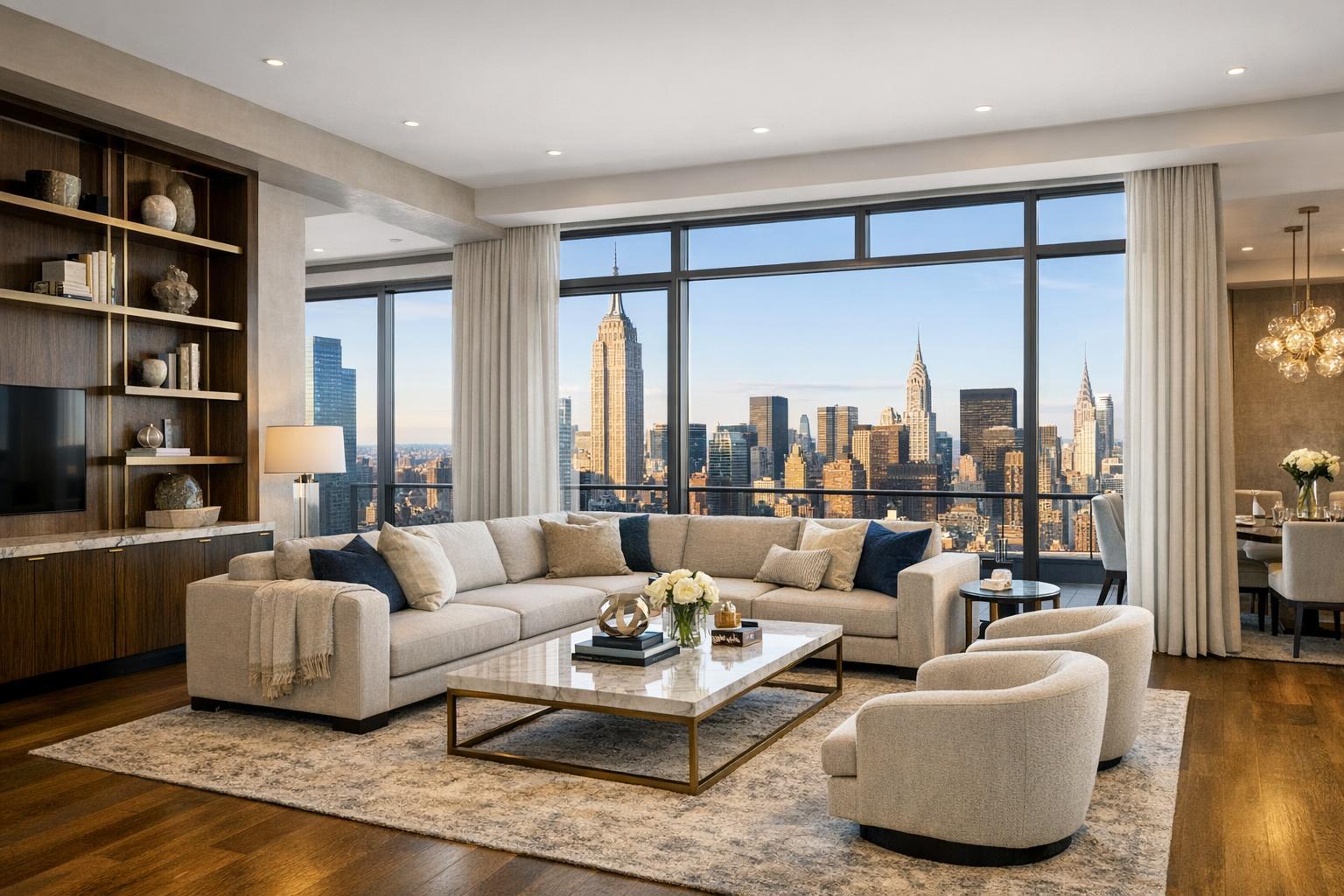
- Key storage elements, built-ins, and city views should be composed thoughtfully.
- Kitchens and bathrooms benefit from minimal visual clutter.
- Amenities—gyms, shared lounges, roof decks—add value only if captured when clean and accessible.
Brownstones, Townhouses, and Pre-War Homes
Older homes offer distinct architectural details—millwork, fireplaces, original floors, and decorative plasterwork—all of which matter to buyers. The artistry is in showing how these elements unify a space, not just in shooting every detail as a feature on its own.
Larger New Jersey Listings
For larger homes, coverage needs to balance scale with clarity. More images are not always better if the gallery becomes overwhelming or repetitive. Instead, the sequencing should bring viewers from exterior context (yard, driveway, porch) into the flow of living spaces, highlighting outdoor living features only when they’re clean and seasonally aligned.
Add-Ons: Strategic, Not Standard
Media add-ons like walkthrough video, floor plans, virtual tours (e.g., Matterport), drone shots, and virtual staging should be chosen carefully, with the property and marketing plan in mind. They’re not universal requirements:
- A simple layout may shine with strong still photography alone.
- Video walkthroughs are especially useful for properties where room-to-room flow or scale is difficult to capture in photos.
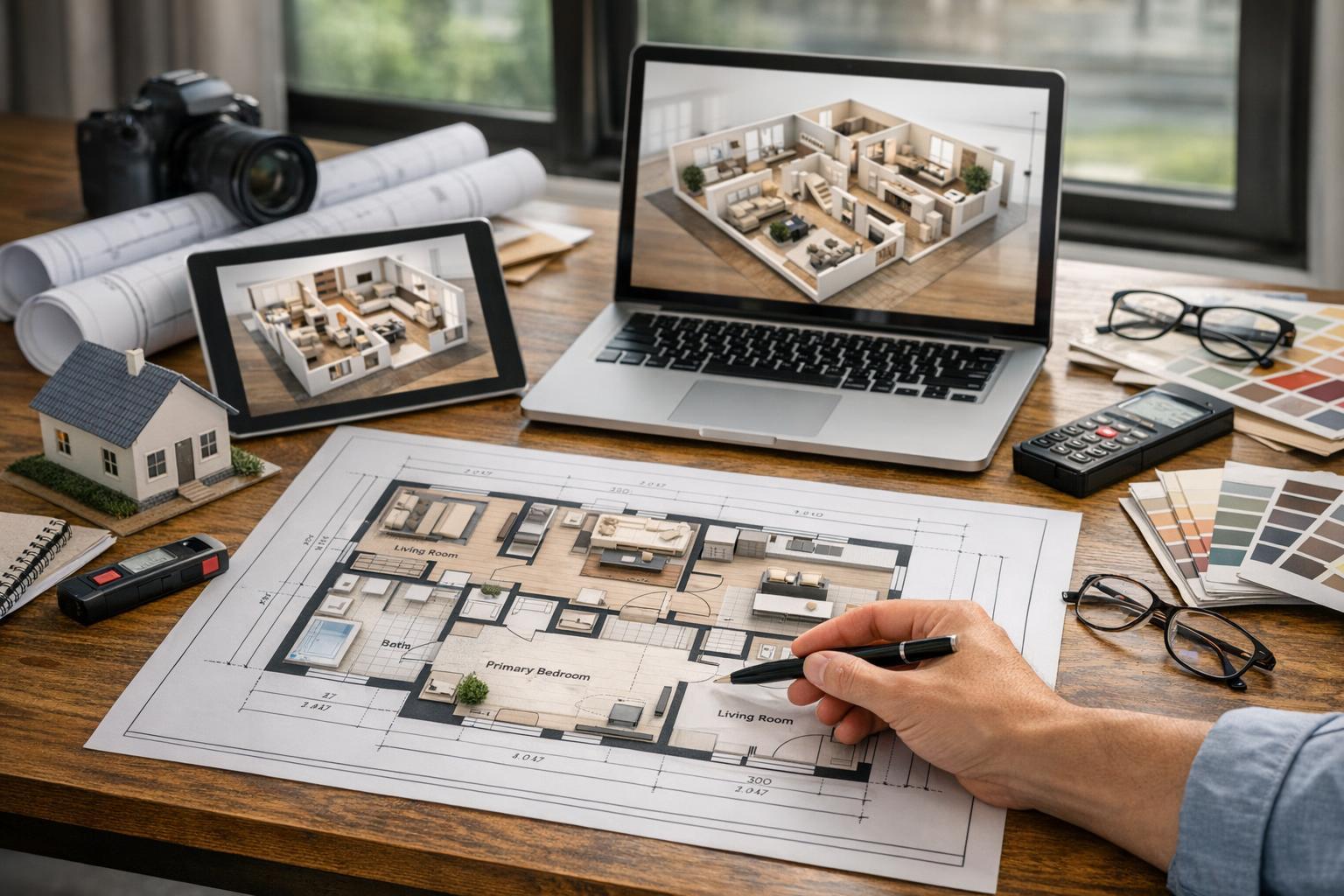
- Floor plans are practical for large, multi-level, or unusually configured homes.
- Drone images are best when location, lot size, or nearby amenities (like water, parks, or view corridors) are crucial and when airspace, weather, and local regulations permit.
- Virtual staging should be reserved for empty rooms, using it sparingly to keep presentations believable. For furnished but cluttered spaces, digital decluttering is a prerequisite if staging is necessary.
Some property types benefit from multiple add-ons, while others are better served by restraint.
Editing and Delivery: Enhancing Reality, Not Rewriting It
Retouching and editing are part of the professional process, but the result should never misinform viewers about the property. Professional editing typically:
- Corrects brightness and color so the space looks natural.
- Adjusts for perspective or lens-induced distortion to keep rooms proportional and lines straight.
- Removes minor distractions (scuff marks, temporary clutter) when requested and appropriate.
Over-saturated lawns, impossibly blue skies, and unusually large-appearing spaces are visual red flags. The intent should always be to help buyers or renters feel that the photography gave them a fair preview before seeing the property in person.
Communication, Consistency, and the Value of Reliability
A smooth photography process is built on clear expectations and steady follow-through. Agents, brokers, and marketing teams benefit when their photo partner is transparent about:
- What’s included in each service package
- The process for scheduling, confirmation, and pre-shoot preparation
- Typical on-site timeframes for different property types
- When and how finished photos will be delivered
- The channels for requesting edits or add-ons
- Whom to contact if property access or needs change at the last minute
For clients managing multiple listings, consistent photography, editing, and delivery times are invaluable. It streamlines marketing and helps listings appear professional across platforms—without having to reinvent the process for every property.
RealtaSnap’s Approach in NYC and New Jersey
At RealtaSnap, our focus is on delivering listing-oriented photography and real estate media that helps properties make sense at a glance. We work throughout NYC and New Jersey, adapting our approach based on the context, type, and needs of each property. Our workflow emphasizes on-site capture, balanced HDR photography, thoughtful composition, and editing that clarifies rather than transforms.
If you’re evaluating providers or curious how our real estate photography services fit your next listing, we encourage you to browse our service pages or schedule online for detailed information.
Great real estate photography starts with understanding the property, proceeds with careful capture and editing, and finishes by delivering a true, market-ready gallery. Add-ons should support—rather than distract—from the core goal: helping buyers, renters, or stakeholders appreciate the property’s potential.
For additional details on preparation, add-ons, or practical workflow tips, explore our Real Estate Photography Prep Guide or start your next booking at www.RealtaSnap.com.
FAQ
Question: How many photos does a typical real estate listing actually need?
Answer: The number of images should be based on the property’s size, layout, and unique features. Smaller apartments or condos often need a focused set of photos to ensure every space is represented, while larger houses may require broader coverage for multiple living areas, bedrooms, and outdoor spaces. The most important rule is that every image should provide distinct value, rather than repeating similar views.
Question: Is virtual staging possible for rooms with furniture?
Answer: Virtual staging works best for empty or properly decluttered rooms. If there’s existing furniture, that may need to be digitally removed first for results to look believable—a step that can be requested as part of a multi-stage process but should be planned in advance. Clean, unfurnished rooms offer the most realistic virtual staging results.
Question: Can every property have drone photos or aerial video?
Answer: Not all properties are suitable for aerial media. Factors like airspace restrictions, weather, safety, and property access will determine if a drone shoot is feasible. In dense city areas or nearby airports, drone service is evaluated case by case, and flights are only scheduled when all conditions are favorable and allowed.
If you have a specific question about photography, media add-ons, or what we can do for your property, our team is happy to help at www.RealtaSnap.com.