What to Look for in Real Estate Photography for Your Next Listing
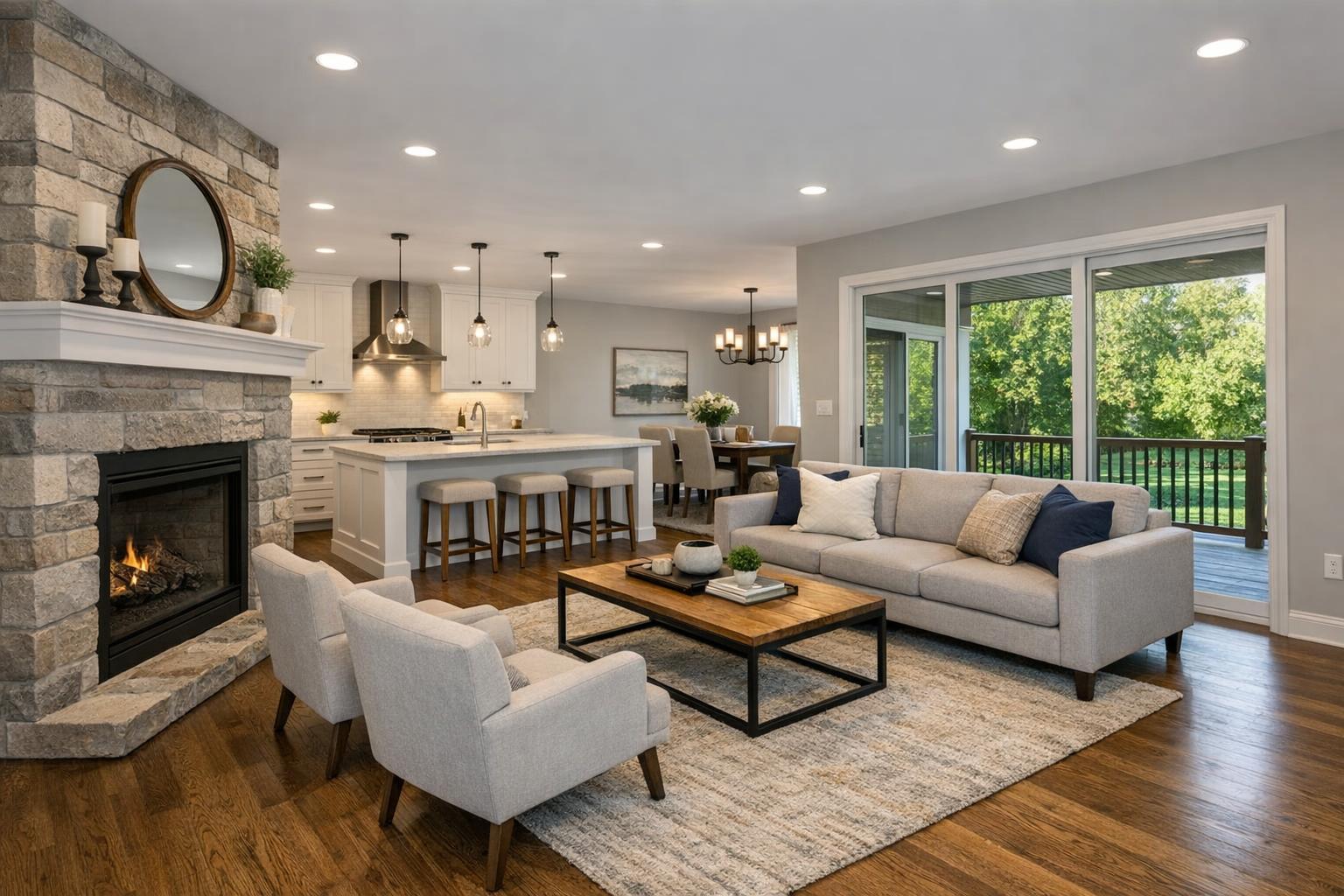
A beautifully staged open-concept living space features a stone fireplace, modern kitchen with bar seating, and a cozy lounge area, perfect for real estate photography showcasing the home's inviting atmosphere.
What to Look for in Real Estate Photography for Your Next Listing
Real estate photography is more than just producing bright, attractive images—it’s about guiding buyers and renters through a property visually, helping them understand its boundaries, features, and flow before ever scheduling a visit. For real estate professionals in NYC, New Jersey, and surrounding areas, the difference between generic photos and professional property photos often determines whether a listing attracts serious interest or leaves prospects confused about what the space really offers.
This guide lays out what practical decision-makers—the agents, brokers, property managers, and owners—should look for in real estate photography services. We're sharing operational insights from our experience capturing everything from Manhattan apartments to New Jersey homes, aiming to help you select photography that makes every space both inviting and true to life.
Why Accurate Real Estate Photography Matters
Savvy clients know that listing photos aren’t simply about decoration. They need images that tell the story of the property: its scale, light, and layout. The best real estate photography services supply visuals that answer common questions: Where does the kitchen sit in relation to the living room? How does natural light move through the main rooms? Is the home’s standout feature—the terrace, the fireplace, or the skyline view—given proper emphasis?
Clear and intentional photography brings clarity to these details, making a listing feel accessible and organized, which ultimately saves time for both agents and buyers.
Telling the Story of the Space—Not Just the Decor
It’s easy to take pretty photos, but genuinely useful listing images help a potential viewer mentally “walk through” the space. In a typical NYC apartment, that means the gallery should explain how rooms connect—such as the transition from an entryway to the main living area, or how a terrace links to a bedroom. A series filled with only tight vignettes or an overabundance of wide shots can miss the mark.
We recommend looking for these elements:
- Main living spaces photographed from angles that reveal their proportions and context
- Clear coverage of kitchens, bathrooms, and bedrooms
- Features that add value—outdoor spaces, storage, or distinctive finishes
- Logical sequencing from one area to the next
Effective coverage means editing ruthlessly. Each photo should have a purpose and avoid unnecessary repetition.
Composition: More Than Wide Angles
Composition is often the first sign of a professional approach. It’s about guiding the viewer’s attention, not misleading with exaggerated perspectives. For example, in compact Manhattan apartments, composition should clarify how limited square footage is actually used—separating zones for living, dining, and sleeping—rather than overemphasizing size.
In Brooklyn brownstones, composition should celebrate unique architecture: staircases, fireplaces, or tall parlor ceilings. Every composition should introduce the room, then help the viewer intuitively understand its relationship to other spaces.
Good composition also considers what enters the frame—avoiding stray furniture, out-of-place objects, or disorganized sightlines that pull the eye away from what matters.
Managing Light So Photos Stay True
Most interiors present lighting challenges. There may be a mix of daylight from windows, artificial fixtures, and shadows in corners. A professional photographer balances these elements so the resulting photos look natural—windows don’t turn into empty white boxes, and interior details aren’t muddied by darkness.
Useful operational tips:
- Balance indoor and window light, so important outdoor views remain visible without underexposing the room
- Avoid strong color casts from artificial lighting
- Keep white walls looking neutral—not blue, green, or orange
- Preserve detail in both shadows and bright highlights
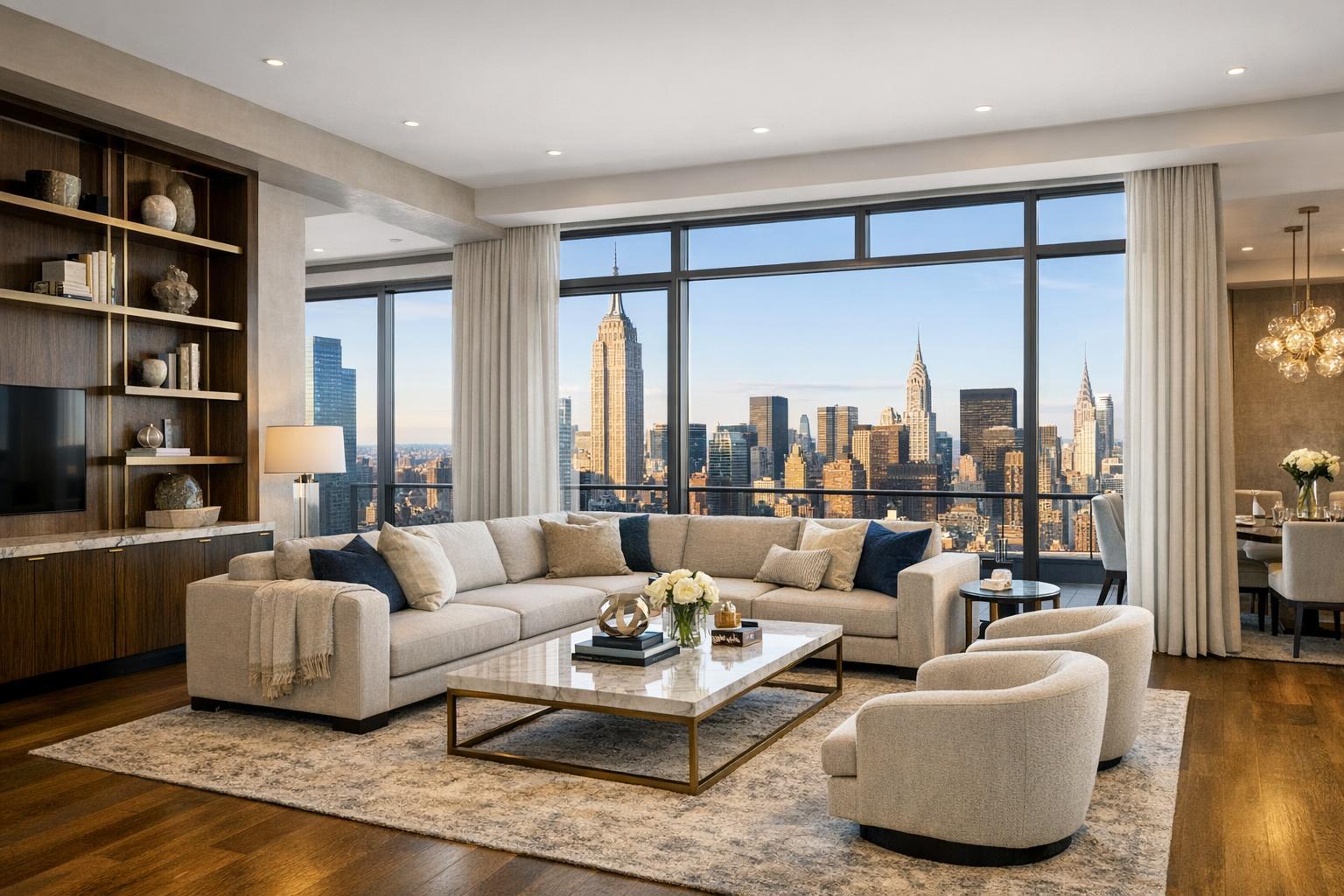
Sometimes, prioritizing a window view makes sense (e.g., a Manhattan skyline or backyard landscape). Other times—such as with a ground-floor apartment facing an alley—the interior is the priority, and window exposure is less important.
Keeping Lines Straight and Perspective Honest
Wide-angle lenses are essential in tight NYC spaces, but it’s easy to overdo them—making a living room look twice as large, or giving cabinets and doorways unnatural lines. Buyers expect a professional gloss, but also expect the home they visit to feel as it did online.
In reviewing sample galleries, watch for:
- Vertical lines that remain upright, unless the architecture itself is unusual
- Proportional furniture—sofa and bed sizes shouldn’t be distorted
- A realistic sense of space, not images that feel “stretched” or warped
Getting these right builds trust and helps ensure that in-person visits align with pre-visit expectations.
Editing That Refines, Not Rewrites
Nearly every photo benefits from editing. In real estate, that means correcting exposure, balancing color, cleaning minor distractions, and creating visual consistency. But there’s a line: heavy-handed edits can misrepresent the home. Neon-green grass, excessively bright interiors, or dramatic retouching of wall finishes may make a photo pop, but they disconnect the listing from reality.
Professional property photos should look:
- Clean, tidy, and bright, but believable
- Consistent in color and exposure, from room to room
- Free of minor, temporary distractions (e.g., stray cords, countertop clutter if requested as an edit)
Editing should never alter permanent features or mislead about what physically exists. At RealtaSnap, edits such as clutter removal or AI virtual staging are available as add-ons, and are delivered in line with approved service guidelines.
Preparing a Property for the Best Photos
No matter how skilled the photographer, preparation before the shoot sets the baseline for quality. Professional composition and editing have limits—they can’t substitute for unmade beds, personal items, or general disarray.
A basic pre-shoot checklist:
- Clear countertops, shelves, and vanities
- Remove personal photos, pet items, toys, and soap bottles
- Make beds, straighten pillows, and tidy throws
- Limit what appears on refrigerator doors and sinks
- Turn on interior lights if requested
- Open blinds or curtains for window/view shots
- Move vehicles, bins, and delivery packages from prominent exterior spots
This is also the time to clarify priorities: which features must be highlighted, which can be skipped, and how to sequence the shoot in relation to time of day or occupant schedules.
For a comprehensive preparation guide, see RealtaSnap's real estate photography prep guide.
Matching Photo Coverage to Property Type
Not every property benefits equally from every media service. The essential question is: what will help buyers or renters best understand the space?
Some examples:
- In a Manhattan co-op or condo, focused still images can clarify usable square footage, built-ins, and natural light. A well-designed floor plan might be warranted for a unit with a complex or atypical layout.
- Brooklyn brownstones often benefit from photo coverage that connects parlor levels, stairwells, bedrooms, and patios—sometimes video is worth considering when room-to-room flow is part of the story.
- New Jersey homes frequently warrant more images for bedrooms, lower levels, garages, gardens, or pools—sometimes supported by floor plans, drone media, or video, depending on the scale or visual appeal of the property.
The priority isn’t to add every possible media type, but to choose the mix that best explains the space in a way that feels coherent and honest.
For more details about local service options, visit NYC real estate photography or New Jersey real estate photography.
When to Consider Complementary Visual Tools
Still images remain the core of most listings, but certain add-ons can provide added context or help specific listings stand out:
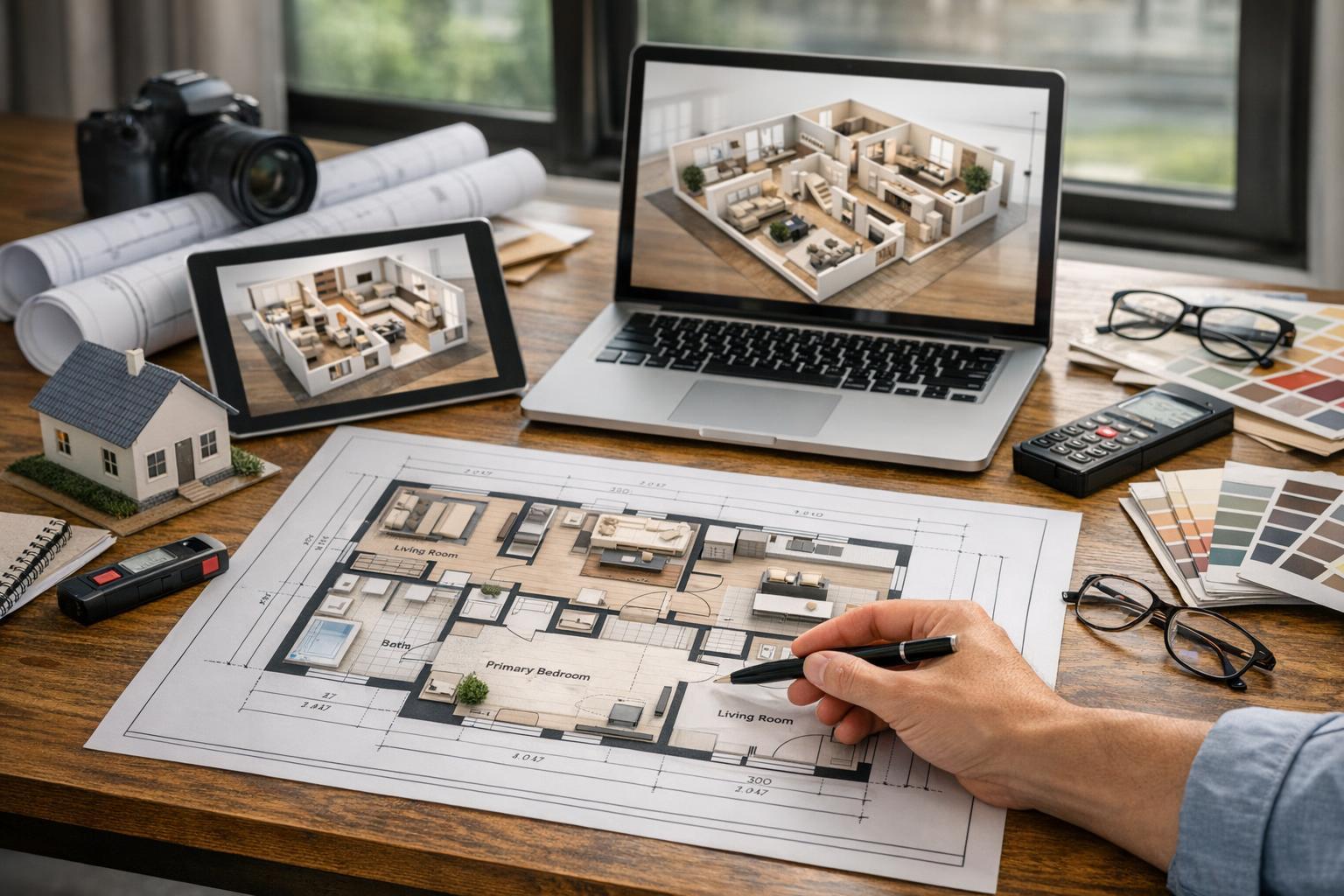
- Floor plans: Valuable for unusual or multi-level layouts, or when square footage needs explanation. These require on-site measurement.
- Video: Useful for demonstrating movement and flow, especially in larger or multi-level homes. RealtaSnap’s listing videos are captured on site—not reassembled from photos—so they feel grounded and intentional.
- 3D Virtual Tours: Matterport and similar tours are especially helpful for remote buyers or when pre-screening interest from a distance. Like floor plans, these require on-site capture.
- Drone Media: Appropriate for properties where setting, land, or outdoor amenities are selling points. Flight feasibility always depends on airspace, weather, pilot discretion, and access.
- Virtual Staging: Only applies to empty rooms or spaces that have been physically or digitally decluttered beforehand—never simply overlaid on existing furnishings.
For more on these services: RealtaSnap’s NYC real estate floor plans, Drone photography and video, and Virtual staging.
Key Questions to Ask Before Booking
Before you book real estate photography services, a brief, practical conversation saves time and sets expectations. Here are a few questions that help align coverage with your listing’s needs:
- Can I review completed galleries from similar properties?
- How do you handle compact apartments, multi-level homes, or tricky lighting?
- Which rooms and features do you recommend emphasizing?
- Are floor plans, video, drone, or virtual staging available, and how do you determine when they’re worthwhile?
- What should owners/occupants do to prepare, and how are special editing requests managed?
At RealtaSnap, you can view work samples and check service options directly at www.RealtaSnap.com.
Bringing It All Together
Listing photos should work hard—not just look good. They need to organize information, reflect the real property, and guide buyers or renters toward prioritizing your space. In a market where every viewer has options, professional property photos that tell a clear story give your listing a tangible edge.
For agents and owners in NYC and New Jersey, getting full value from professional media means combining thoughtful coverage with honest preparation and smart add-ons only when they truly help the listing. As always, you can learn more or schedule your next shoot at www.RealtaSnap.com.
FAQ
Question: How many images should a listing typically include?
Answer: The right number varies by property size and complexity. A smaller apartment often needs a focused set of images highlighting all major rooms, while a larger home might warrant additional coverage for bedrooms, bathrooms, outdoor areas, and unique amenities. Each image should serve a purpose—avoid repetition, and be guided by what helps viewers understand the space.
Question: Is a floor plan always necessary along with photos?
Answer: Floor plans are especially valuable for properties with complex layouts, multiple levels, or unconventional arrangements. If the photos alone don’t fully clarify how rooms connect or the overall flow, consider adding a professional floor plan created through on-site measurement.
Question: Can virtual staging be used in furnished rooms?
Answer: Virtual staging by RealtaSnap is designed for empty rooms or those that have been properly decluttered first. If a room already has furniture, either the furnishings need to be removed before the shoot or a declutter edit ordered as an add-on. This keeps the final result clean and believable.