What Real Estate Media Services Does Your Listing Actually Need?
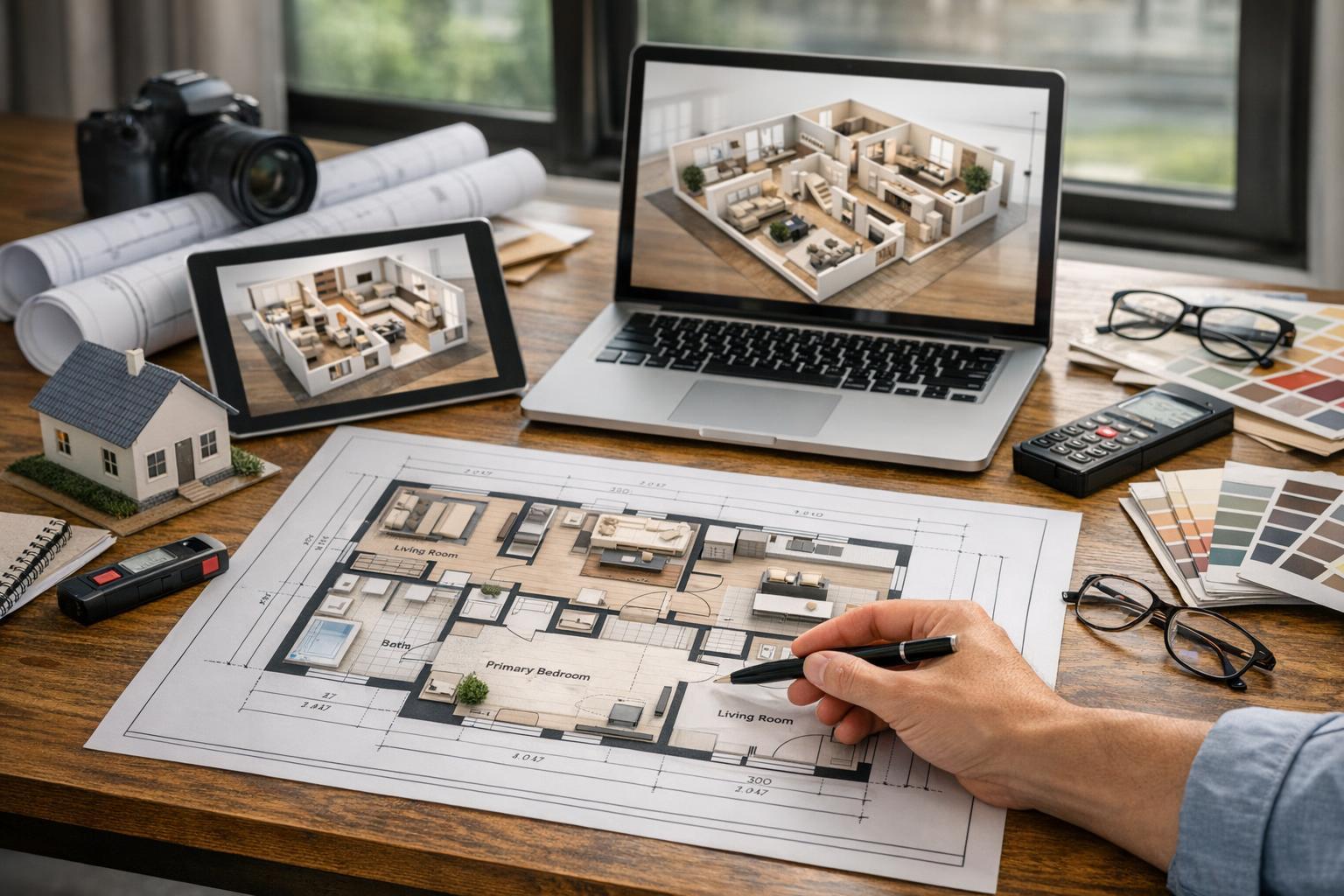
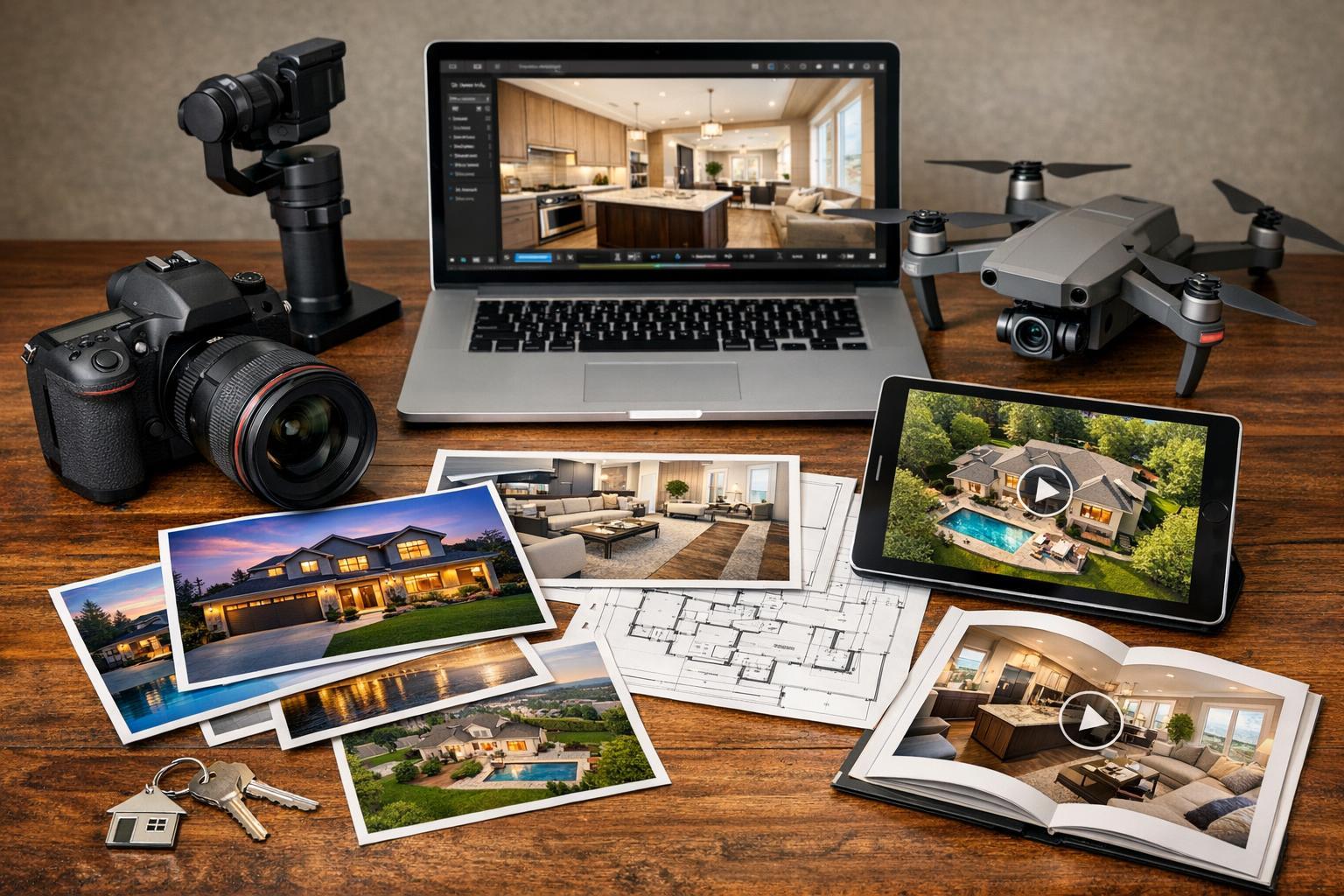
A collection of real estate media tools and photos are displayed on a wooden table, featuring a laptop, camera, drone, blueprints, and images of homes and interiors.
What Real Estate Media Services Does Your Listing Actually Need?
Real estate media is most valuable when it clarifies what makes a property unique and helps buyers or renters truly understand the space. In the New York City and New Jersey markets, every listing asks its own set of marketing questions. A compact Manhattan apartment, a Brooklyn brownstone, a Jersey City condo, or a larger New Jersey home each deserves a visual game plan that matches its real-world features—not just a generic checklist of services.
If you’re deciding which real estate media services to use, it pays to start with a practical look at the property, weigh what the viewer needs to see, and select the visual assets that tell the most honest and complete story.
Begin With the Property, Not a Package
The art and science of property marketing visuals begins by asking: what will make this space clear to someone seeing it online for the first time? A polished media plan doesn’t treat every listing identically. Instead, it considers:
- How large is the property and how many rooms does it have?
- Is the layout intuitive, or do you need a roadmap to understand it?
- What architectural details, finishes, or features deserve emphasis?
- How does light travel through the space?
- What’s the occupancy and condition during the shoot—vacant, staged, lived-in?
- Does the exterior setting, lot size, or neighborhood matter for this listing?
- Which platforms and materials will showcase the media?
- What budget is available for professional visuals?
For some listings—say, a studio or one-bedroom with a simple layout—photography may cover nearly all the essential material. But when a property has multiple floors, additions, special features, or unconventional relationships between rooms, adding options like floor plans, video, or 3D tours can help make the listing feel transparent and complete.
Photography: The Foundation of Every Listing
Professional photography remains the single most important service in real estate media. Listing photos are the public’s first impression, landing on websites, third-party portals, social channels, and printed pieces. The quality and composition of those images set the tone for everything that follows.
Good photography answers practical questions:
- What’s the size and shape of each room?
- Where does the light come from, and how are the finishes presented?
- How do major living areas connect?
- What’s the condition of the kitchen, bathrooms, and any amenities?
- Are there exterior views, terraces, or unique building features?
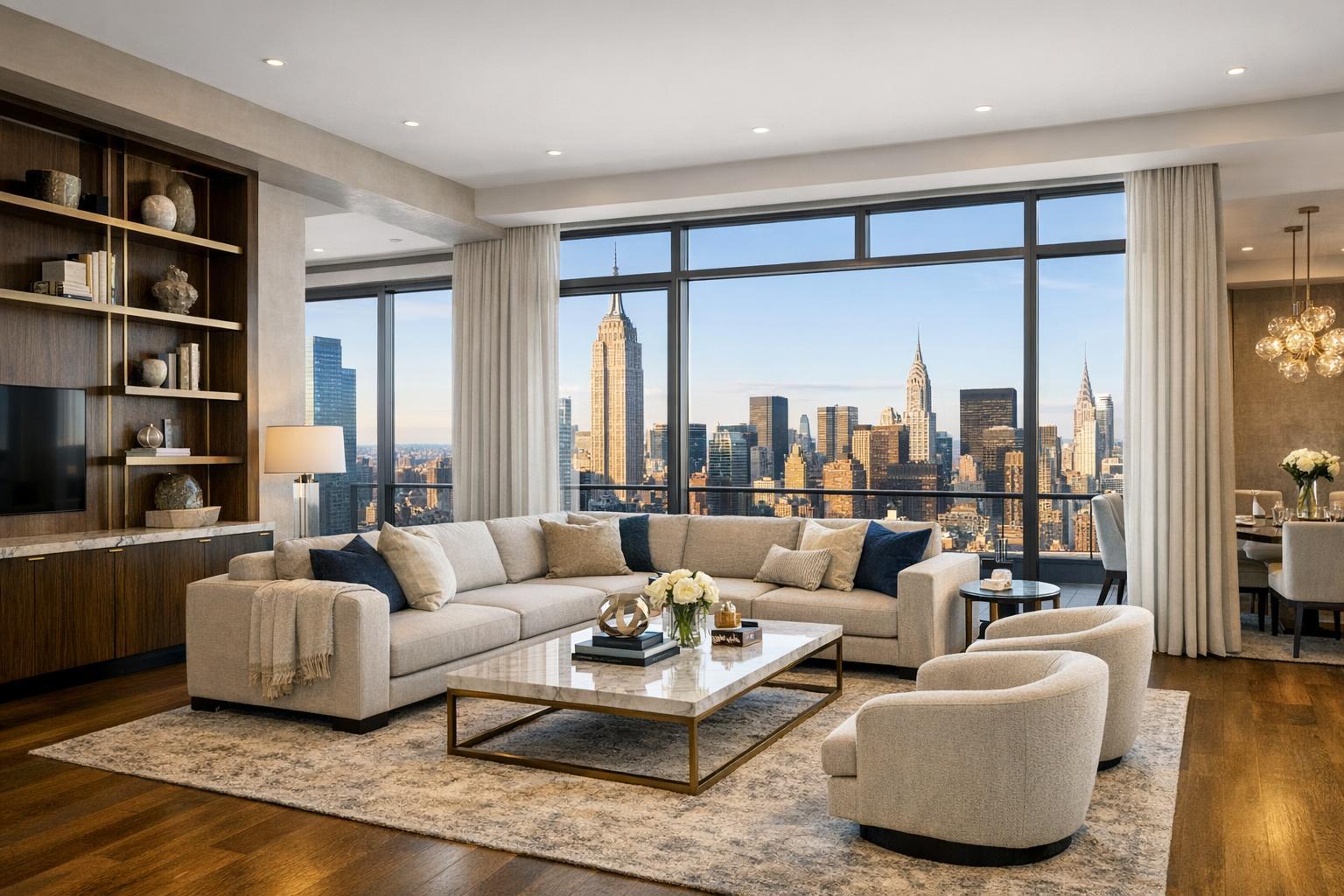
When photographing a pre-war Manhattan apartment, for example, it’s often important to show ceiling height, detailed woodwork, or original flooring—details that make the property memorable. In a Brooklyn brownstone, capturing the sequence from stoop to parlor can help buyers understand how the home flows in real life. For a Jersey City condo or a North Jersey house, it might be clean interiors, light, and shared amenities that take priority.
A few production notes from our team:
- Preparation is key. Decluttering surfaces, removing personal items, and making sure shades or lights are appropriately set can give every photo a purpose.
- Balanced exposure matters. In NYC, window views and natural light often compete for attention. Professional techniques help keep both interior details and exteriors visible.
Great photos don’t need to show every angle equally. The most effective image series is one that creates a natural, viewer-friendly tour of the property’s strongest spaces.
When Video Adds More Than Photos Alone
Not every listing demands a full video—but certain properties benefit when you can show real movement. Video can walk the viewer from the front entry through open living spaces, up stairs, out to the backyard, or into special amenities. Properly executed, it’s about more than stringing together moving images; it’s about communicating the layout and flow in ways stills can’t always achieve.
Consider video when:
- The property has multiple levels or a complex layout.
- Vertical transitions—like those in brownstones or townhouses—tell an important story.
- There are distinct living areas, both inside and out, that matter to the buyer.
- The arrival experience or shared amenities of a condo are a selling point.
At RealtaSnap, videos are always captured onsite—as part of the property session, not as later add-ons or photo slideshows. This approach makes for smoother, more intentional results and allows for planning sequences that align with the actual experience of moving through the space.
The Floor Plan: Visual Structure and Buyer Clarity
Photography answers “what does it look like?” A floor plan answers, “how does it fit together?”
For buyers scrolling through multiple listings, a floor plan helps untangle room relationships, multiple levels, or situational questions—how bedrooms relate to living spaces, where a home office fits, or how a duplex is split across floors. It’s especially valuable for:
- Unusual or nonstandard layouts
- Duplexes, triplexes, or properties with additions
- Homes with several bedrooms and unique living zones
- Condos where spatial relationships or dimensions affect the buyer’s decision
Floor plans require physical, onsite measuring—there’s no shortcut through remote editing or working from old plans. For real transparency (and to avoid confusion with combined units or altered layouts), every area shown must be scanned or measured as it exists.
3D Tours: When Interactive Matters
A 3D tour, such as a Matterport scan, lets buyers or renters step through the property virtually, navigating at their own pace. This is especially effective for:
- Larger homes with many rooms or multiple floors
- Listings targeting remote or time-constrained viewers
- Homes with complicated or segmented layouts (offices, recreation spaces, finished basements, etc.)
3D tours and floor plans work best as complementary tools: one offers navigable immersion, the other clean visual structure from above. As with video and floor plans, interactive tours require physical access—remote creation isn’t possible.
Let Drone Media Answer Exterior Questions
Aerial photography or video earns its place when exterior context is a core part of a property’s story. Drone imagery can show lot size, gardens or outdoor extras, proximity to water or parks, architectural scale, or the position of a home within its surrounding neighborhood.
Good candidates for drone media include:
- Large homes with substantial grounds
- Waterfront, view-oriented, or amenity-rich properties
- Listings where the exterior setting is difficult to appreciate from the ground
Drone work is subject to airspace rules, weather, safety, and local feasibility—especially in dense urban parts of NYC. Roof access or open lots can help, but there’s never a 100% guarantee for drone availability.
Virtual Staging: Creating Context for Empty Rooms
Empty rooms can feel ambiguous online, making it tough for viewers to gauge scale or function. AI virtual staging demonstrates what’s possible, showing a plausible furnished arrangement—an office, bedroom, dining area—without physically bringing in furniture.
Virtual staging works best when:
- The space is vacant or newly completed
- The purpose of a room isn’t obvious
- Large areas need some definition to help buyers imagine possibilities
Staging is designed for clean, empty rooms. If furniture or clutter is present, it must be addressed before the digital staging process. We don’t layer virtual furniture over existing items, as the result rarely feels convincing.
Thoughtful use of staged images means also providing unstaged photos to preserve honesty about what’s really there.
Matching Property to Media: Real-World Scenarios
There’s no one-size-fits-all formula, but certain patterns emerge across NYC and New Jersey listings:
Compact Manhattan Apartment
- Professional photography is almost always enough
- Add a floor plan if the layout could use clarification
- Virtual staging if the space is empty and difficult to visualize furnished
Brooklyn Brownstone
- Photography plus video to show vertical and horizontal flow
- Floor plan for clarity, 3D tour for complex or high-value scenarios
- Consider drone media only when exterior context and regulations make it viable
Jersey City Condo
- Quality photography as the base
- Floor plan for room-to-room clarity
- 3D tour or video for larger or premium condos, especially with views or amenities
Larger New Jersey Home
- Photography, video, floor plans, and 3D tours can each play a role
- Drone media for substantive outdoor features or large lots
- Virtual staging for empty rooms needing purpose
Each asset should do a specific job: photography captures the finish and feel, video shares movement and flow, floor plans provide structure, and 3D tours or drone shots add context that’s otherwise hard to convey.
Build Your Media Plan Around What the Viewer Needs
Coordinating property marketing visuals is simpler when you can work with a single provider. RealtaSnap offers photography, video, floor plans, 3D tours, drone media, and virtual staging throughout NYC and New Jersey—making it easy to schedule, plan, and deliver what a listing genuinely needs.
For most properties, start with strong photography. Add video, floor plans, interactive tours, or drone media to fill in the gaps—especially when layout, flow, exterior context, or room function could otherwise remain unclear.
If you’d like to see your options or schedule a property shoot, you can view service details or book online at RealtaSnap’s website.
FAQ
Question: Should every property include a floor plan?
Answer: Floor plans are most helpful when potential buyers need clarity about layout, bedroom placement, or room relationships—especially in larger, multi-level, or unconventional homes. Simple studios or straightforward one-bedrooms might not require a floor plan if the photos tell a complete story.
Question: Can a 3D tour, video, or floor plan be created from photos after the fact?
Answer: These assets all require physical, onsite capture. RealtaSnap does not create video from photos or remote floor plans from PDFs—so it’s best to decide which assets you need before the shoot and include them in the booking.
Question: Is drone media available for every listing in NYC or New Jersey?
Answer: Drone feasibility depends on several factors, including airspace, weather, pilot discretion, roof access, and property location. Suburban New Jersey homes usually pose fewer restrictions than dense urban sites, but each case is reviewed individually for safety and regulatory compliance.
For practical guidance and a full overview of real estate media services, visit www.RealtaSnap.com.