What Is a 3D Virtual Tour and When Does Your Listing Need One?
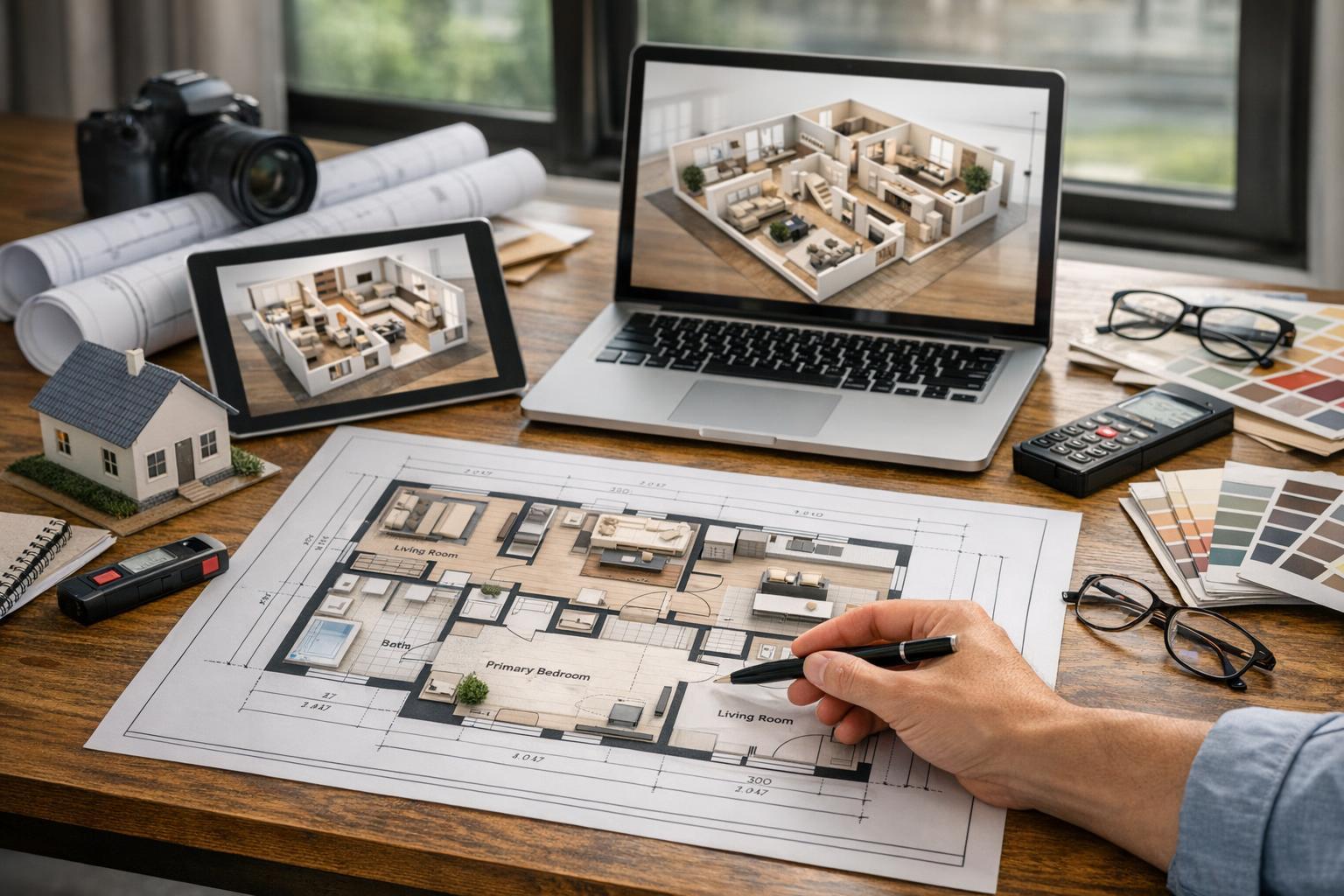
A modern living room with a cozy fireplace and open kitchen area is showcased, offering an immersive experience through a 3D virtual tour.

What Is a 3D Virtual Tour and When Does Your Listing Need One?
A 3d virtual tour is more than the latest listing “extra.” It’s a hands-on viewing tool that can shift how buyers, tenants, and decision-makers understand a property—especially in regions like NYC and New Jersey, where spaces often defy simple layouts or conventional descriptions. At RealtaSnap, we’ve seen how the right interactive property walkthrough can bridge the gap between what can be shown in static media and what a viewer needs to truly navigate a home, condo, or commercial space from afar.
Understanding the 3D Virtual Tour Experience
Before deciding whether a Matterport tour belongs in your next listing, it helps to understand what makes it different from more traditional visual media. A 3D virtual tour is built on-site: a technician scans the property, capturing a network of connected viewpoints. Once compiled, viewers can move virtually through the resulting digital model, exploring at their own pace—peering into rooms, retracing their steps, and seeing how spaces connect from almost any angle.
This level of freedom matters. Unlike a gallery of photos or a polished video, a 3d virtual tour allows each viewer to choose their own path. That difference is especially important in properties with unusual layouts, several levels, or details that can get lost in photo highlights alone.
Tours vs. Photos, Video, and Floor Plans
Each type of listing media pulls its own weight:
- Professional photos are curated to showcase each room, key finishes, and the best lighting. They’re nearly always a must but will naturally guide attention to a property’s strongest features rather than its full context.
- Video draws viewers through a sequence chosen during editing, great for mood and flow but not for hands-on navigation. The viewer is along for the ride, not driving.
- Floor plans give a bird’s-eye view of relationships between rooms and levels. They’re a practical way to explain core organization, but they don’t allow buyers to experience spaces “from the inside.”
- Slideshows, even with transitions and music, are simply a set of still shots—without interactive movement or on-demand access to any portion of the property.
A 3d virtual tour isn’t created by re-arranging photos or generating a slideshow. It demands on-site capture, recording what’s truly there, and offering a brand of digital navigation that’s as close as current technology gets to walking the space yourself.
Where 3D Tours Deliver Real Value
Not every property requires a Matterport tour. But certain kinds of listings see clear benefits:
- Multi-bedroom, multi-bath, or multi-level homes, including classic New York brownstones or spacious New Jersey townhouses
- Apartments, condos, or co-ops with nontraditional layouts, long entry galleries, alcoves, or flex spaces
- Open-concept designs where buyers may question how sightlines and foot traffic work in real life
- New developments or full renovations, where orientation and flow are part of the appeal
- Commercial spaces featuring suites, shared amenities, or complex office arrangements
- Listings targeting remote buyers, relocating professionals, or out-of-area investors
- Rental and leasing units where tenants need a feel for the layout before committing to a visit
Take a compact Manhattan apartment, for instance. Floor plans and photos may hint at function, but only an interactive tour can show how the entry, kitchen, main space, and alcove relate. Larger homes in North Jersey routinely benefit as well, since viewers can see how lower levels, offices, and suites all come together in a way even a well-designed floor plan may not fully communicate.
The NYC & New Jersey Context
Local markets shape the value of a 3D virtual tour. In NYC, listings often feature pre-war details, converted lofts, or vertical layouts that are tough to explain via photos alone. A garden-level brownstone with multiple staircases, for example, or a compact two-bedroom with a narrow entry gallery, may make far more sense when buyers can virtually “walk” from room to room.
New Jersey homes, often larger and multi-level, see similar wins. Townhomes, homes with finished basements, and commercial properties with complex internal navigation all benefit when viewers can truly explore. The added orientation helps to set realistic viewing expectations and can drive better interest from buyers who can’t easily visit in person.
Preparation and Practical Considerations
Production matters. Because a 3D tour records the actual, on-site condition of a property, preparation is essential. Here are a few proven tips for optimal results:
- Clear and clean every visible surface: floors, countertops, mirrors, and furniture
- Declutter and depersonalize: remove excess items and unnecessary décor where possible
- Maximize natural light, but balance it—open blinds if the view supports it, and turn on interior lights for consistency
- Prepare bedrooms, closets, and storage spaces if they’ll be part of the tour
- Secure pets and make arrangements so there won’t be disruptions during capture
Access is key. The entire area intended for the tour—common spaces, amenities, lower levels, and outdoor sections—must be accessible and staged appropriately. If a lobby, rooftop, or garage is vital to the story of the listing, plan ahead so it can be included in the scanning process.
3D Tours: Real Limitations to Know
While 3D tours excel at presenting existing, real-world spaces, they are not design tools. They cannot be built from photos or architectural blueprints—physical access is a non-negotiable requirement. Nor should they be used in lieu of professional cleaning or after move-out chaos. The tour will capture and display whatever’s there on capture day—whether that’s a pristine listing or a space mid-renovation.
Virtual staging remains a separate service, best suited for vacant rooms after physical furnishings have been removed or edited out. If a space isn’t fully ready, it’s usually better to wait before scanning for a virtual tour to ensure the result matches your marketing intent.
Building a Balanced Media Mix
A Matterport tour is rarely the only asset a listing needs. In practice, strong marketing relies on a mix of visual tools, tailored to the property:
- Photography delivers sharp first impressions and highlights
- Floor plans give immediate layout context
- 3D tours enable self-guided exploration, supporting more detailed understanding
- Video delivers mood and a curated flow for high-end or narrative-driven listings
For commercial spaces, the balance may shift toward showing office arrangements or customer pathways, integrating video, photos, and 3d tours into a coherent visual strategy. The best blend is driven by how your audience is likely to view and evaluate the property—not simply by adding every available feature.
Matterport Virtual Tours and RealtaSnap’s Professional Approach
For listings in NYC, New Jersey, and surrounding markets, RealtaSnap offers professional Matterport virtual tours based on physical on-site scanning. Tours are available for properties up to 3,000 square feet and in larger formats for 3,001 to 6,000 square feet, with options for 2D floor plan add-ons or hosting transfer if needed. Every tour is built as a direct digital representation of the property—no remote assembly, no recycling existing images.
Preparation is handled in advance so that the end result aligns with your intended presentation. For detailed service info or booking, visit Matterport virtual tours NYC, or browse all real estate media services to find the most suitable mix for your next listing.
When Photos and Floor Plans Are Enough
Not every property calls for a full 3d virtual tour. A single-room studio, a basic one-bedroom, or a listing where the main value is an outdoor feature may be well served by high-quality photos and a well-crafted floor plan. In some cases—such as tight marketing windows or listings with straightforward layouts—the added investment of a virtual tour may not yield proportionate returns.
A practical rule: Ask whether a hands-on, interactive walkthrough would substantially improve buyers’ understanding of the space. If the answer is “yes,” or if remote orientation is a factor, then it’s worth considering. If not, stick with foundational media that supports the story you want to tell.
Give Buyers a True Sense of the Space
The real power of a 3D virtual tour is its ability to fill the gap between viewing and visiting. For properties with layered layouts, multiple levels, unique circulation, or distant audiences, giving viewers this kind of digital access can make your online presentation both more transparent and more persuasive.
If you’re preparing a listing in NYC, New Jersey, or the surrounding region and want to explore the potential of a professional interactive property walkthrough, you can find full details and booking options at www.RealtaSnap.com.
FAQ
Question: How do I prepare my property for a 3D tour scanning appointment?
Answer: Ensure all living areas, amenities, and included spaces are clean, clutter-free, and ready to be captured as they will appear to buyers. Open window treatments if light is good, turn on all interior lights, and secure pets or plan for their care during the appointment. Confirm access to every intended area in advance.
Question: Can a 3D tour include building amenities or outdoor spaces?
Answer: Yes, as long as those areas are accessible and relevant to your listing. Before your scanning appointment, let your media provider know which non-unit spaces (like rooftops, lobbies, basements, or garages) should be part of the tour, and coordinate access as needed.
Question: What’s the difference between virtual staging and a 3D virtual tour?
Answer: Virtual staging adds digital furniture to photographs of empty rooms, helping buyers envision different uses for a space. A 3D tour, by contrast, is an interactive digital model that records the property as it actually exists on the day of scanning. For virtual staging, rooms must be vacant or decluttered; for a 3D tour, the captured presentation will reflect all visible conditions and items.