How to Choose Real Estate Photography Services in NYC for Your Next Listing
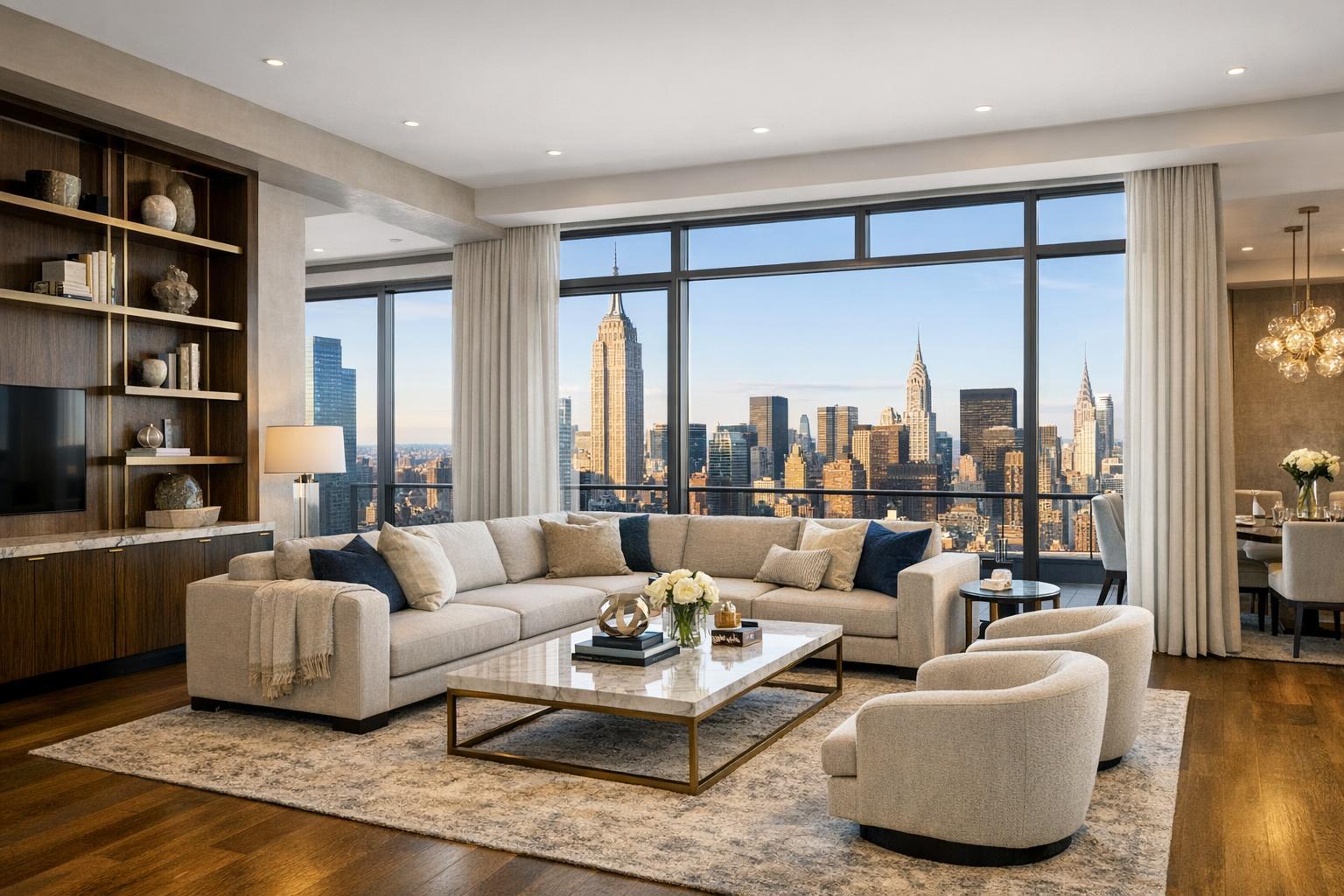
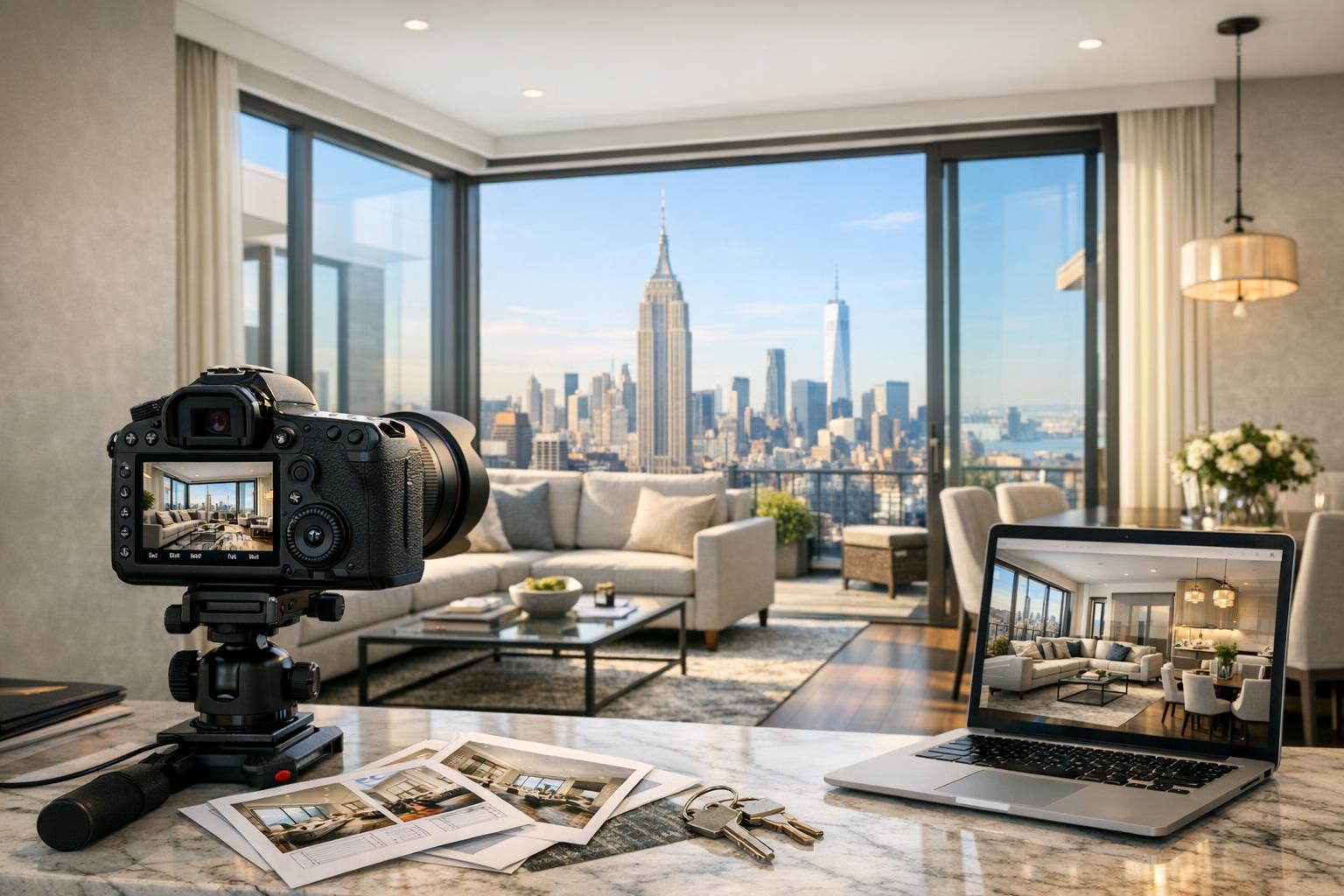
The photo captures an elegant apartment interior with a camera and laptop set up for real estate photography NYC, featuring a stunning skyline view including the Empire State Building.
How to Choose Real Estate Photography Services in NYC for Your Next Listing
Real estate photography in NYC is not merely a line item on a marketing checklist—it’s a critical step in bridging the gap between a property's physical reality and how buyers or renters first encounter it online. With NYC's spectrum of property types—compact studios, pre-war apartments, high-rise condos, brownstones, and everything in between—the right photography service can make the difference between a listing that feels inviting and one that leaves questions unanswered.
For agents, brokers, property managers, and owners used to comparing sample images and price points, the field can feel crowded and commoditized. But in practice, selecting the right real estate photography service in NYC is about matching experience, process, and visual clarity to the nuances of your specific listing.
What Effective Listing Photography Actually Delivers
The way a home photographs isn’t just about brightness or wide angles—it’s about coherence. Professional property photography should reveal practical answers to viewers:
- What does the space actually look like?
- How do the rooms connect?
- What are its most important or distinguishing features?
- Where does the natural light come in?
- How does this home relate to its surroundings?
When reviewing a photographer’s portfolio, look for these fundamentals:
- Clear, accurate representation of rooms and space without misleading distortion.
- Balanced exposure so both interiors and views (especially windows with city or skyline looks) read naturally.
- Consistent architectural lines—verticals in walls, doors, and cabinetry shouldn't tilt perilously or create visual confusion.
- Composed frames for a reason—not just boxes checked, but images that explain layout, features, and transitions.
- Cohesive sequencing—the image set should take the viewer on a logical walkthrough, not a clumsy hop from one angle to the next.
Successful real estate photography makes it easier for a buyer or renter to imagine themselves in a space—without hiding its real proportions or introducing confusion.
The Real-World NYC Challenge: Tailoring Visuals to the Property
NYC listings bring specific quirks that impact both the process and the outcome. Not every visual approach fits every home, and experience working across local housing types matters. Here are some practical contexts that come up again and again for NYC photography services:
Compact Apartments and Awkward Layouts
Studio and one-bedroom apartments, especially in Manhattan or Brooklyn, can prove deceptively tricky. Overly wide lenses might make a room look much larger, but at the expense of realism. A well-composed set clarifies a layout, helping prospective viewers distinguish between a sleeping area and a kitchen, or see how a narrow hallway connects different rooms. Watch for images in a provider’s portfolio that explain tight layouts without confusing placement or amplified awkward corners.
Highlighting Architectural Character
Properties with historic or architectural elements—a classic Upper West Side pre-war, a Brooklyn brownstone, or a townhouse—require a nuanced eye. Details such as millwork, fireplaces, high ceilings, and bay windows add value, but should be integrated naturally into the entire visual set, not isolated into disconnected close-ups. The challenge often includes communicating vertical flow: stairs, landings, garden levels, and terrace access, so the viewer understands how to navigate the home.
Showcasing High-Rise Homes and Views
In NYC, apartments with cityscape or water views are common, but capturing them effectively is an art. Quality photography balances the exposure between a bright exterior and an often darker interior—a technical demand that separates seasoned professionals from generic providers. Not every window needs to be treated as a hero shot, but where the view is a genuine asset, it shouldn’t get lost to blown-out highlights or underexposed rooms.
Occupied vs. Vacant Properties
Homes that are currently lived in require a thoughtful approach to both preparation and photography. Everyday items—appliances, pet supplies, personal effects—can compete for attention or create visual clutter. The photographer’s job is to represent what physically exists, but the results are always better when clutter is minimized and spaces are clean. Virtual staging is a solution for empty rooms, not as a fix for lived-in spaces. If de-cluttering isn’t complete prior to photography, make sure you discuss realistic editing options or advanced clutter removal rather than relying on basic touch-ups.
How Professionals Review Portfolios—And What to Look For
A diverse and consistent portfolio reveals more than a few glossy “hero” images. Instead of just scanning for the most photogenic property, compare sample work to listings similar to yours. For example, if you’re marketing a modest apartment, check for clear, undistorted coverage of smaller spaces and hallways, not just sunlit penthouses. If you have a brownstone, look for evidence of thoughtful transitions across levels, and coverage of both architectural features and everyday rooms.
Ask yourself as you review:
- Are the tones natural, or overly filtered?
- Are vertical and horizontal lines straight?
- Do images of different rooms feel visually consistent?
- Are windows and views believable, or washed out?
- Does the photographer document normal homes or only staged showcases?
Portfolio depth is about presenting spaces as they are, across conditions and property types, rather than producing a handful of postcard-perfect shots.
Communication and Workflow: Practical Considerations
The technical skill behind the camera matters, but so does how a provider interacts—before, during, and after the shoot. Professionals can explain:
- How they manage building access (security desks, lockboxes, owner or broker entry)
- Preparation and scheduling requirements, especially for occupied homes
- Whether specific amenities or common areas need special coordination
- What is included in the final package, and what’s considered an add-on
- Turnaround expectations and the delivery process
- How retouch requests or alternate edits are handled
A streamlined workflow, with clear instruction for property entry and scope, avoids last-minute confusion and helps keep production moving as planned. When comparing providers, don’t just price-shop—compare how prepared you’ll be to hand over your listing for a photo session.
Matching Photo Coverage to Property Needs
The number of images isn’t a rule written in stone—it should depend on the real space and features being presented. More photos do not always equate to a better listing. For a small studio, focused coverage of the main room, kitchen, bath, and any view or closet may be enough. Larger apartments or townhouses might require more to document multiple bedrooms, baths, transitions across floors, significant details, and key amenities.
Agents and owners should consider:
- What will help a prospective buyer or renter understand the layout and unique features?
- Which rooms, angles, or details genuinely support the sales story?
- Is there an outdoor area or amenity that should be documented?
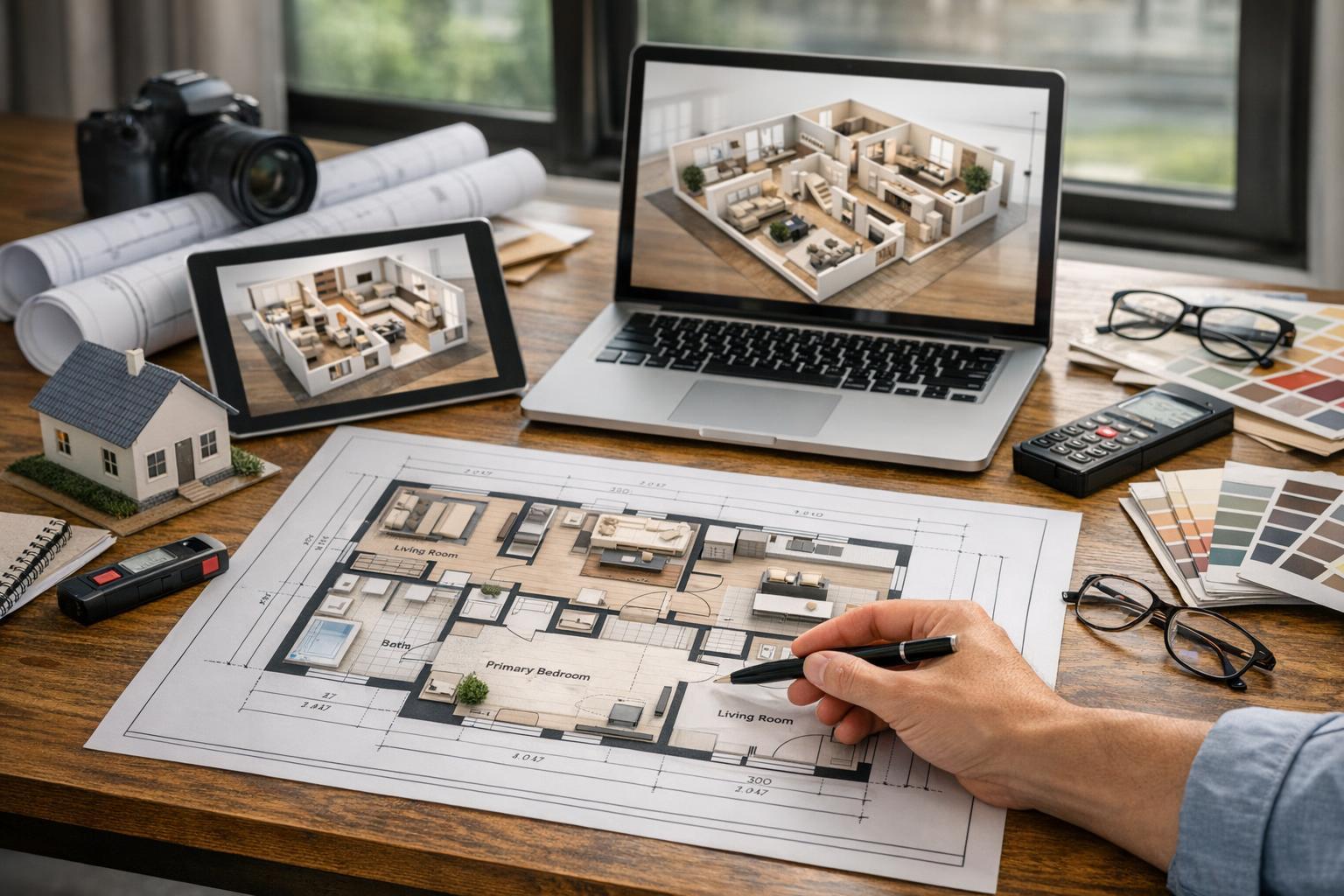
Additional media such as floor plans or listing videos can help in cases where spatial understanding or movement through larger homes is critical. Both require on-site capture and advance planning.
Preparation: A Shared Responsibility
Even the most skilled photographer can’t compensate for rooms that are unready for capture. A simple, targeted preparation checklist can have a major impact:
- Remove clutter and clear off counters
- Make beds with tidy, neutral linens
- Open shades to take advantage of daylight (when practical)
- Put away pet items and plan for pets to be out of view
- Turn on lights if requested for the shoot
- Confirm access to all areas you want photographed
If a property is occupied, prioritize visible, high-impact rooms—the main living area, kitchen, primary bedroom, and baths. Smaller storage spaces can often be deprioritized unless they are major features.
For more on getting a space ready for photos, see the RealtaSnap prep guide.
How to Compare Providers Without Getting Lost in Sales Language
A fair comparison focuses on more than surface-level differences. Use these questions with every photography service you consider:
- Does their portfolio reflect properties like yours?
- Can they explain how many images are included and why?
- Is their communication proactive and clear?
- Do they understand the logistics of your building, neighborhood, and property type?
- Are add-ons like floor plans, video, or drone offered where useful, with clear instructions and policies?
- Do they provide realistic timelines for scheduling and delivery?
Following the same comparison process each time means you’re less likely to be swayed by marketing alone.
RealtaSnap’s Approach
RealtaSnap provides professional real estate photography across all five boroughs of NYC and in adjacent markets throughout New Jersey. The booking process is fully online, allowing you to select services, add-ons, and custom instructions at checkout. Most standard shoots are available for booking with 24-hour notice, pending calendar availability.
When planning a session with RealtaSnap, start by identifying which features and spaces are essential to communicate—then select a photo count or package that gives adequate coverage without overcomplicating the presentation. Our workflow keeps the process clear, with online booking and turnaround typically within one business day for standard coverage.
If you need floor plans or listing video, note that these require physical on-site capture and should be included when scheduling.
For more information, visit RealtaSnap’s NYC photography page or our FAQ.
Takeaway
Clear, accurate, and thoughtfully sequenced listing photography sets expectations and creates momentum for your NYC or New Jersey property. The process should feel organized and practical—not stressful. If you want straightforward, market-ready images and a process that handles NYC logistics, schedule a shoot with RealtaSnap.
FAQ
Question: How many listing photos should I book for my NYC apartment?
Answer: The right number depends on the property’s size, layout, number of rooms, baths, and special features. Studios might need a focused group of images, while larger homes benefit from additional shots to explain room relationships and amenities. Coverage should capture distinct spaces rather than strictly following square footage.
Question: What if my apartment is small or oddly shaped? Can photography still help?
Answer: Yes—skilled real estate photography can clarify even compact or unconventional layouts by using carefully chosen angles, clean composition, and logical sequencing. The result should be a set of photos that help viewers orient themselves without distorting the true space.
Question: Should I request a floor plan or video with my listing photography?
Answer: Add a floor plan when the layout is complex or you want to make spatial relationships clear at a glance—often valuable for multi-bedroom units or brownstones. Video is worth considering for larger properties or listings where movement and flow are selling points. Both options require an on-site appointment and are easiest to schedule with your photo shoot.
Learn more or schedule your next shoot at www.RealtaSnap.com.