How to Choose Real Estate Photography Services for Your Next Listing
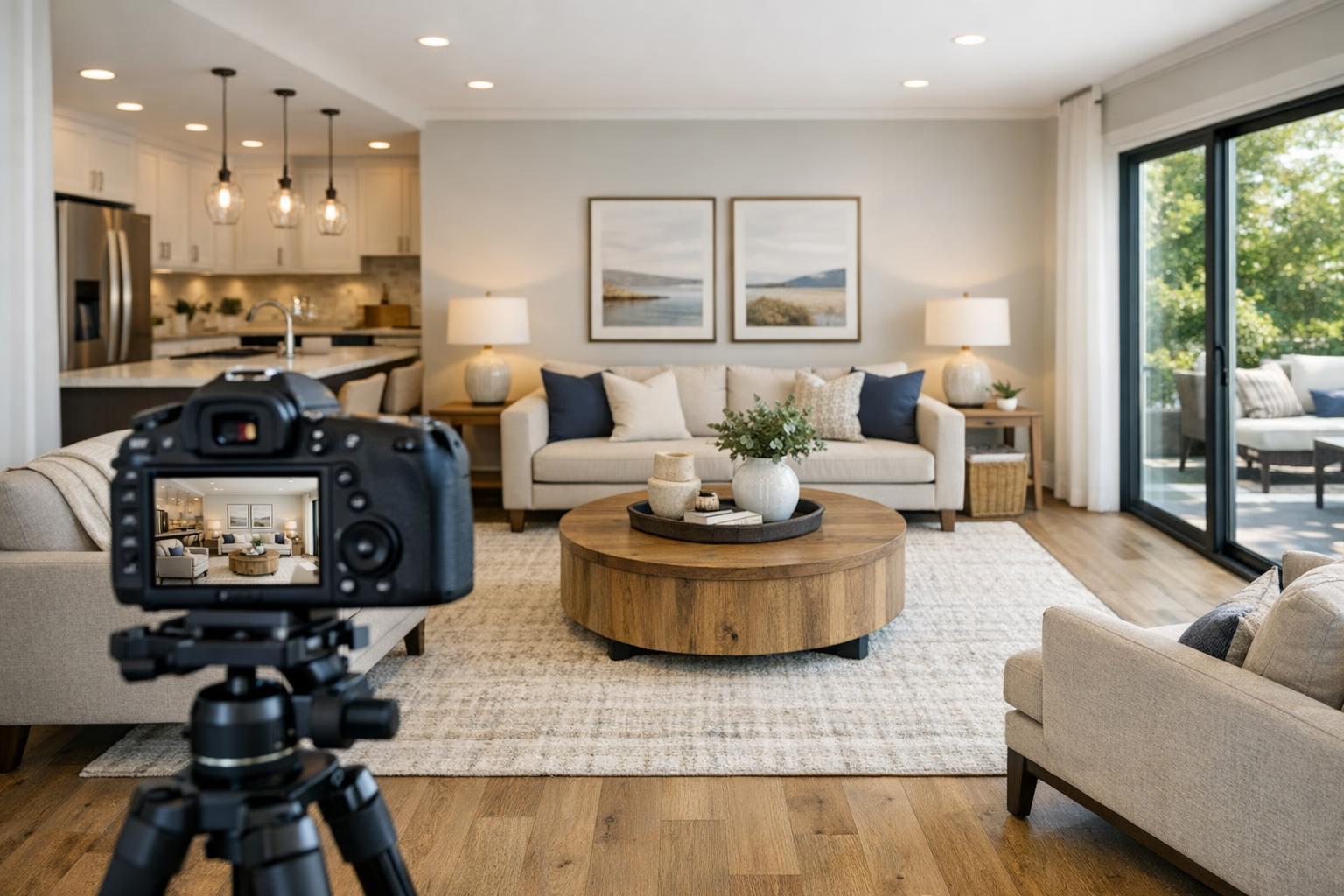
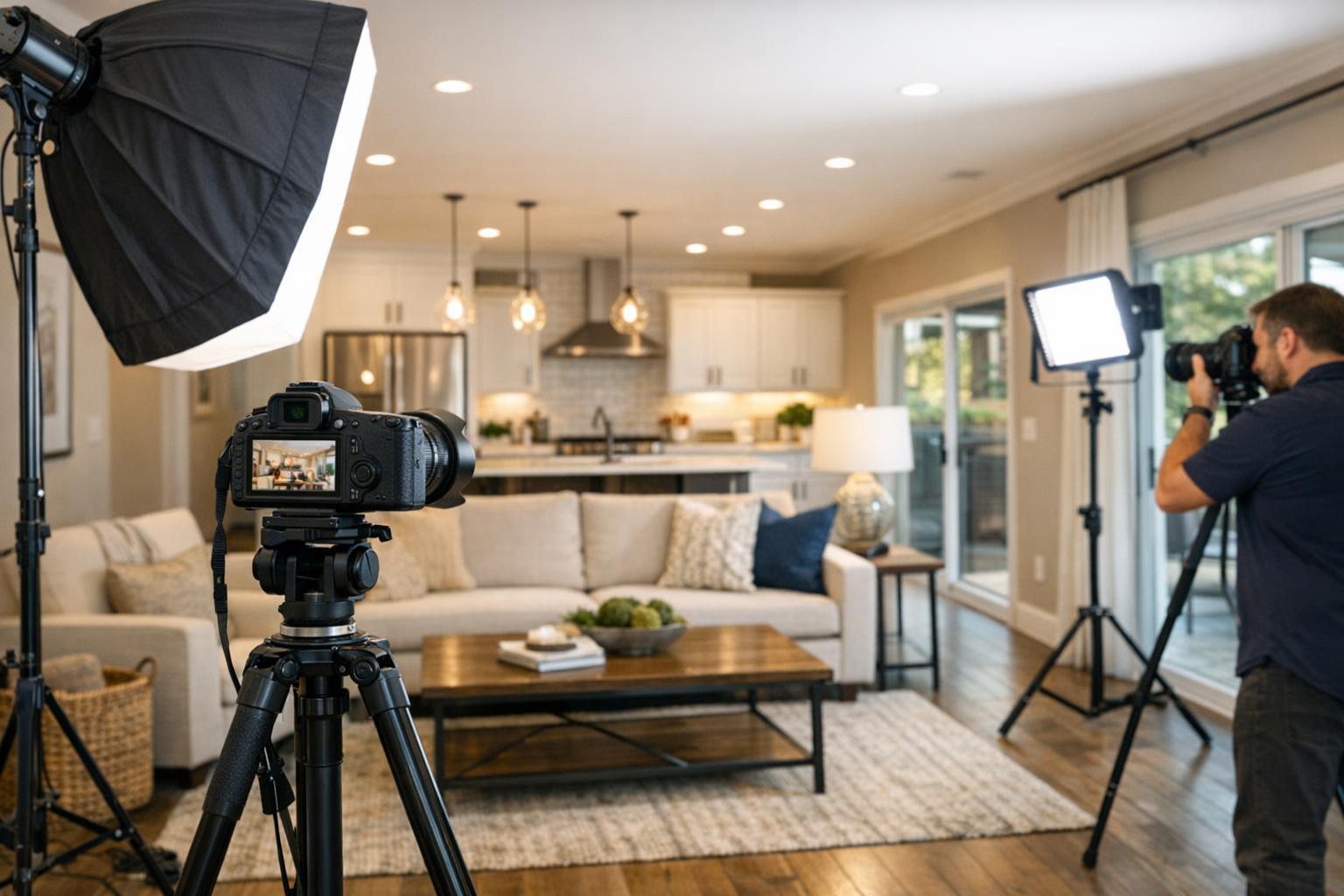
Real estate photography services showcase a well-lit living room and kitchen setup, with a professional photographer capturing interior details using multiple cameras and lighting equipment.
How to Choose Real Estate Photography Services for Your Next Listing
Real estate photography services are fundamental for any agent, broker, property manager, or seller who wants to make their property stand out and be understood—especially across NYC and New Jersey, where space, lighting, and context can vary block by block. Getting this right isn’t about finding someone who owns a camera. It’s about working with a media partner who understands how to represent space accurately and efficiently while navigating the real-world constraints of each property.
Here’s what experienced real estate professionals consider when selecting photography services for a new listing—and how to pick the right blend of core photography and additional media.
Think About What the Listing Actually Needs
Start with the property, not the add-on list. Every listing needs to answer the same essential questions: What does it look like? How do the main rooms relate? What’s unique? Where is it located? In practice, most NYC apartments and New Jersey homes require a thoughtful set of professional photos—usually both interiors and exteriors—to make the layout, features, and context clear.
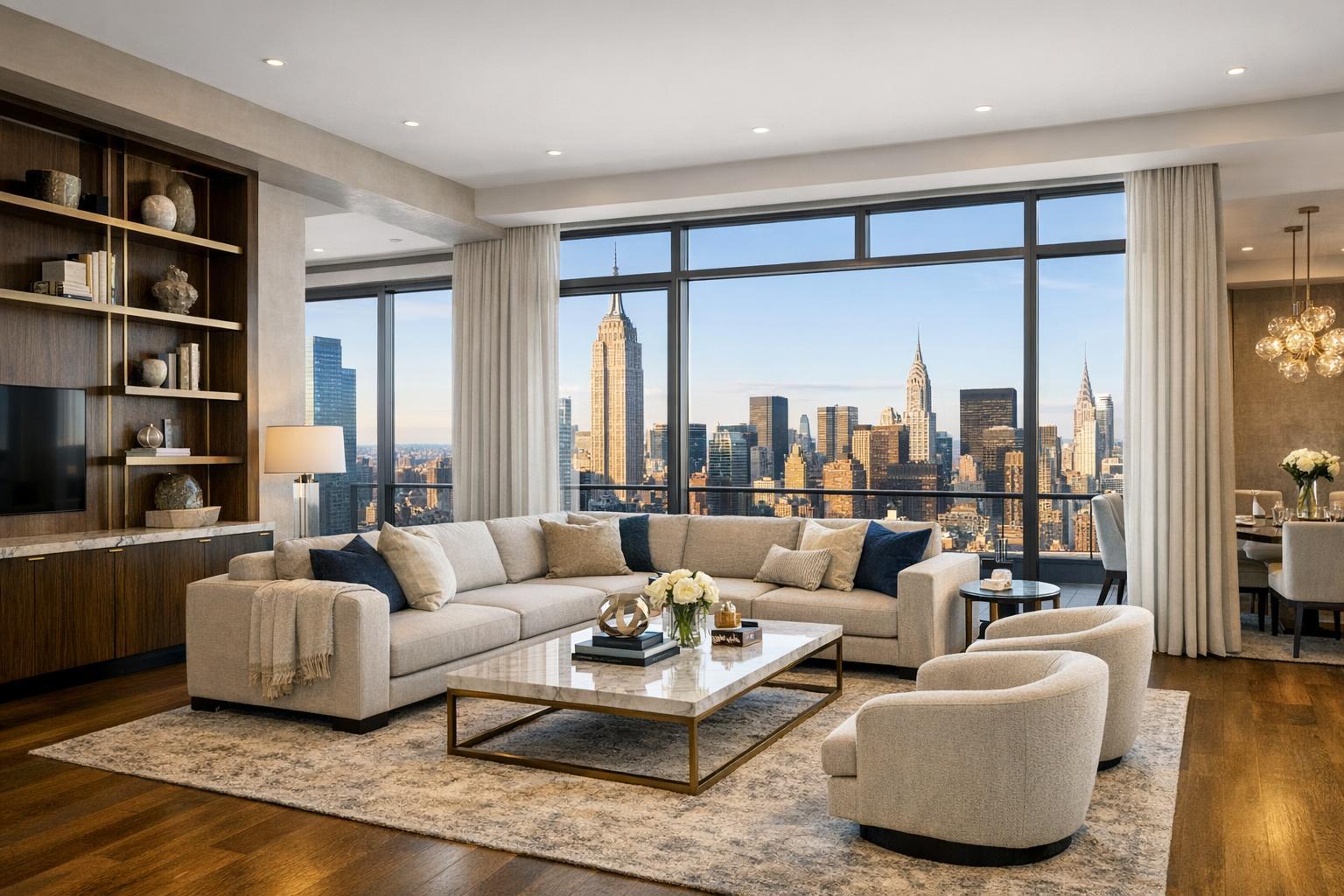
For condos in Manhattan, think skyline views and amenity coverage. Brooklyn brownstones might demand more attention to vertical flow, period details, and garden level. Suburban homes in New Jersey may need coverage across multiple stories, outdoor spaces, pools, driveways, or basements.
The number of images should match the space, not an arbitrary minimum. A compact studio rarely benefits from 40 repetitive photos, and a large multi-level house can’t be captured effectively in just a handful. The right photographer curates rather than floods, giving each image a job rather than padding the gallery with redundant angles.
What Sets Professional Property Photography Apart
When evaluating real estate photography services, most agents naturally check the portfolio. But the strongest photo galleries are built on several key foundations:
- Composition that explains the space: Look for level lines, natural perspectives, and thoughtful angles that actually tell the viewer where they are in the home. Avoid extreme wide shots that exaggerate room size or get disoriented by frequent odd-angle photographs.
- Lighting that looks believable: Bright rooms are great, but not every property has full daylight or open exposures. Skilled real estate photographers—especially those working in NYC—pay close attention to balancing window light with interior shadows. Window views should appear as real as possible, not washed out. Interior details, from appliances to architectural trim, should be visible without looking overexposed.
- Editing that refines, not deceives: Polished, yes—but still accurate. Over-editing with boosted colors, sky replacements, or “digitally perfect” features can leave buyers feeling misled. The best professional edits maintain consistent color, clean lines, and just enough correction to highlight what’s really there. If you know you’ll need objects digitally removed or want to see a “twilight” look, clarify these requests up front. They’re not always included in a base package.
Review Portfolios for Properties Like Yours
Experience does matter—especially local experience. Photographers who regularly shoot city apartments are better equipped to work around issues like elevator schedules, compact layouts, and shifting daylight. For New Jersey homes, skill in handling large footprints, multiple exteriors, and broad yards often pays off.
When you’re vetting portfolios, look for examples that match the shape and scale of your own property:
- Manhattan condos: Expect to see views, amenities, and compact luxury.
- Brooklyn brownstones: Multi-story presentation, focus on stairs and garden.
- Pre-war apartments: Unique layouts, formal rooms, period detail.
- New Jersey homes: Emphasis on room-to-room scale, finished basements, and outdoor living.
- Rental and managed properties: Clean, consistent documentation that shows finishes and layout.
While the property style may vary, adaptability in composition is a signal of a photographer who treats each listing individually.
Reliability and Workflow Matter as Much as Image Quality
A great image doesn’t compensate for logistical headaches. Before booking, clarify:
- How scheduling works, and how far in advance you need to book (at RealtaSnap, you can book online with just 24 hours’ notice if the time shows on the calendar).
- How property access, parking, building instructions, lockboxes, and contact info are communicated.
- What happens if the property isn’t ready, access is delayed, or a room can’t be photographed as planned.
- The process for ordering add-ons, providing special notes, or handling edits.
Especially in buildings with doormen, limited elevator windows, or unique insurance requirements (common in NYC), clear communication is critical. In suburban settings, plan for gates, driveways, and outdoor conditions like weather or daylight.
Properties should be prepared before the photographer arrives—straightened, decluttered, and lit as intended for showing. Even the best professionals can’t “fix” excess clutter, unfinished rooms, or blocked entryways without additional services or edits.
The Role of Add-Ons: Only When They Serve the Listing
While core photography is the foundation, additional media can be valuable when thoughtfully selected:
- Listing Video: On-site listing video can show flow and room connection. It works well for properties with engaging movement or sequential space. A true video is captured on site—it isn’t a slideshow of stills.
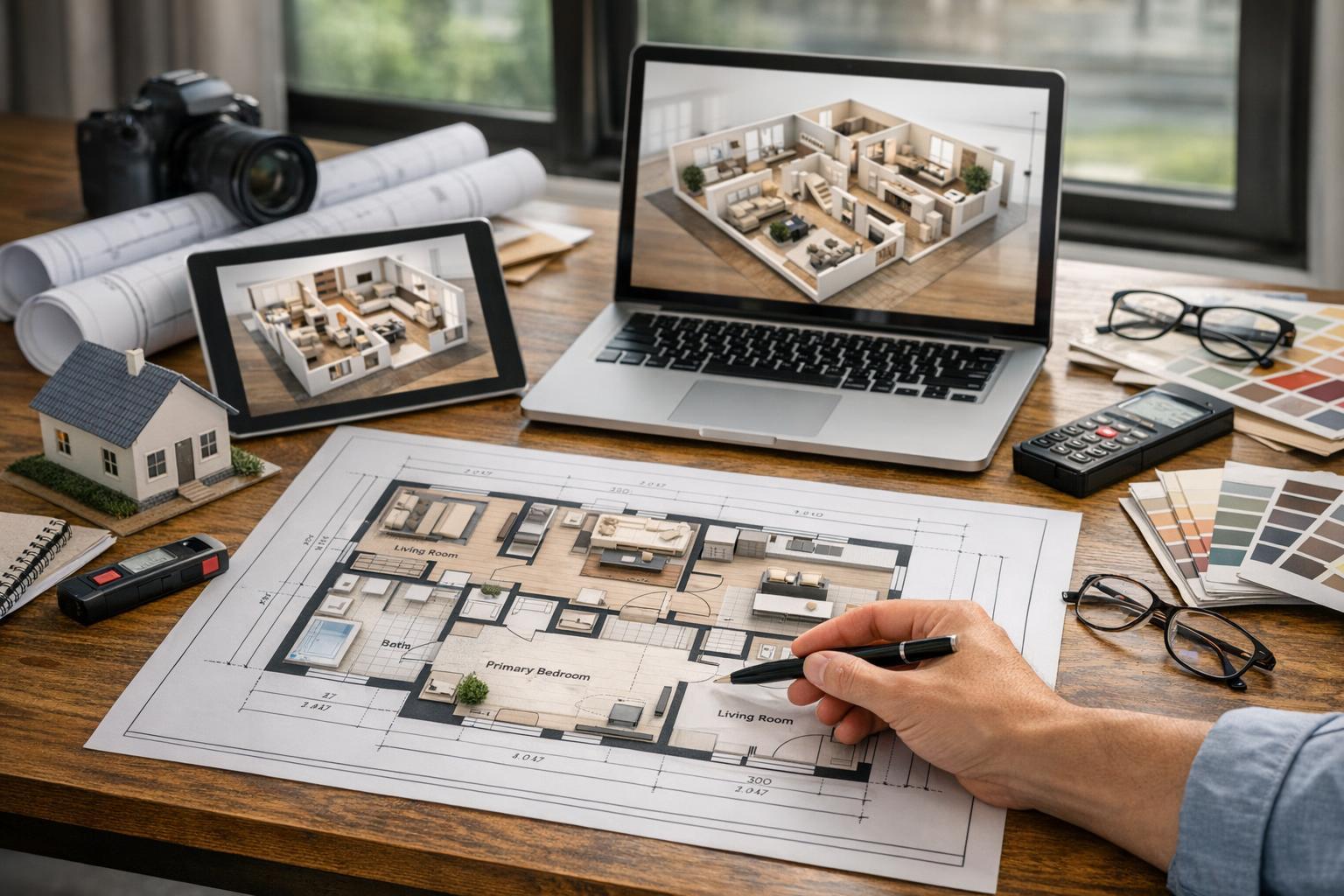
- Floor Plans: Floor plans clarify spatial relationships that photos can’t always express, especially for unusual layouts or homes with multiple levels. These require on-site measurement and capture.
- 3D Virtual Tours: Tools like Matterport allow interactive remote viewing, ideal for relocation buyers or complex properties. Like floor plans, they require in-person scanning.
- Drone Photography: Aerial imagery can clarify context, scale, and exterior features. Feasibility depends on airspace, weather, safety, and pilot discretion, and is often more relevant to houses with land or major outdoor amenities than to most apartments.
- Virtual Staging: Virtual furniture can illustrate possibilities for an empty or hard-to-visualize space, but the process requires proper decluttering in advance.
A well-composed set of still photos can carry many straightforward listings, especially when the core attributes are clear. Add-ons are best chosen when they genuinely help a buyer or renter understand something about this property—not because they’re on a menu.
Comparing Service Packages and Pricing
When you compare providers, check not only the quoted price, but also the scope of what’s delivered:
- Total number of photos included
- Time spent on site
- Editing and post-production standards
- Inclusions and exclusions (such as custom edits, object removal, or priority turnaround)
- The flow for selecting, confirming, and paying for services
RealtaSnap offers photo packages from 10 to 50 images—with pricing between $149 and $299, depending on the level of coverage required. Video, floor plans, Matterport tours, drone services, and virtual staging are available as add-ons, chosen per listing based on actual need. You can explore your options and reserve an appointment directly online at the RealtaSnap scheduling page.
Local Considerations: NYC and New Jersey
Our team works every week in city co-ops, condos, brownstones, and large suburban homes. Each brings its own logistical requirements and best practices:
- In NYC: Expect tighter building schedules, elevator reservations, and more need for coordination ahead of time. Preparation is important—occupied apartments especially should be decluttered in advance, as access for moving items during the shoot may be limited.
- In New Jersey: Properties often require coverage across bigger interior and exterior spaces—think garages, detached structures, and larger yards. Weather can play a greater role, particularly for planned exterior or drone capture.
Preparation: Make the Images Work Harder
Preparation is the single easiest way to maximize your results. Before the photographer arrives:
- Remove non-essential items from countertops, vanities, and tables.
- Hide personal photos, visible cords, bins, and pet items when possible.
- Turn on all working lights, replace burned-out bulbs, and open blinds if the view and light are assets.
- Clean glass, mirrors, and reflective surfaces.
- Straighten or minimize bulky furniture to clarify pathways.
- Prep outdoor spaces if they’ll be part of the shoot.
For vacant spaces, decide if you want to stage physically, stage virtually, or leave as-is. Each approach carries its own requirements for editing and preparation.
Making the Final Decision: What Really Matters
Once you’ve narrowed down your options, confidence should come from a provider who:
- Delivers clear, well-composed, accurately edited photos
- Understands the type of property you’re marketing
- Communicates clearly and makes booking straightforward
- Describes services, deliverables, and pricing openly
- Has experience with both the creative and logistical parts of real estate media
RealtaSnap specializes in on-site real estate photography and media for listings in NYC and New Jersey. You can find all supported services and book online at www.RealtaSnap.com.
FAQ
Question: How many photos should I order for my listing?
Answer: The best photo count fits the number of meaningful spaces in the property—not just its square footage. A smaller apartment may only need images of the main rooms and view, while a larger home with multiple levels and outdoor features may need more extensive coverage. It’s better to have a concise, intentional gallery than a long set of repeating views.
Question: Are floor plans or 3D tours necessary for every listing?
Answer: Not always. Floor plans and virtual tours are most useful when the layout is complex or difficult to describe in photos alone, or when you expect interest from remote viewers who want interactive viewing. Many straightforward listings are well served by high-quality photography. Add these formats if they help clarify the property for your audience.
Question: What’s the best way to schedule a real estate photography shoot with RealtaSnap?
Answer: You can book online anytime at www.RealtaSnap.com/schedule. Enter your property address, select your services, add special notes, and pick an available time. Twenty-four hours’ notice is usually enough, and you’ll see real-time availability while booking. Payment is handled at checkout.