How to Choose Real Estate Photography Services for Your Next Listing
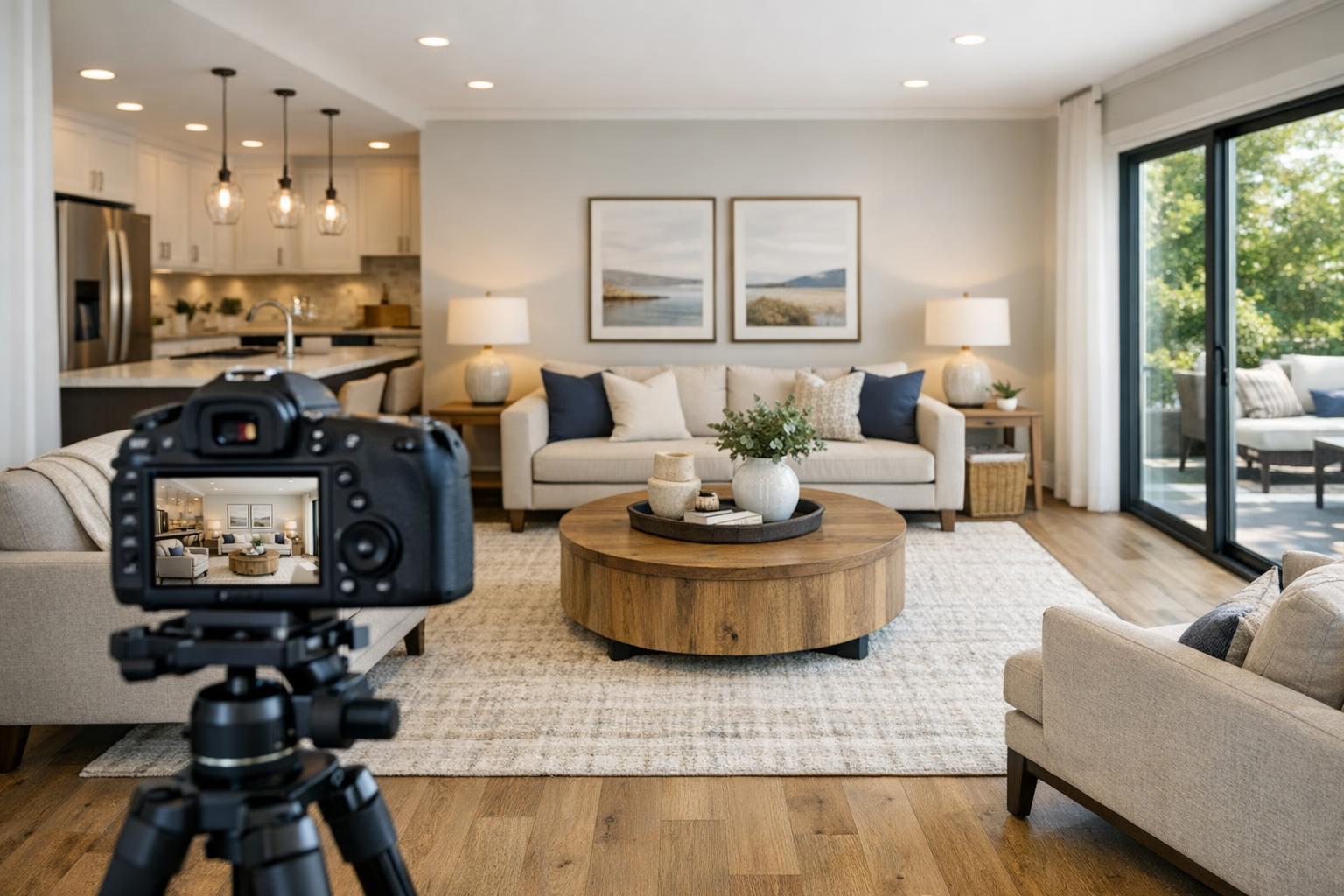
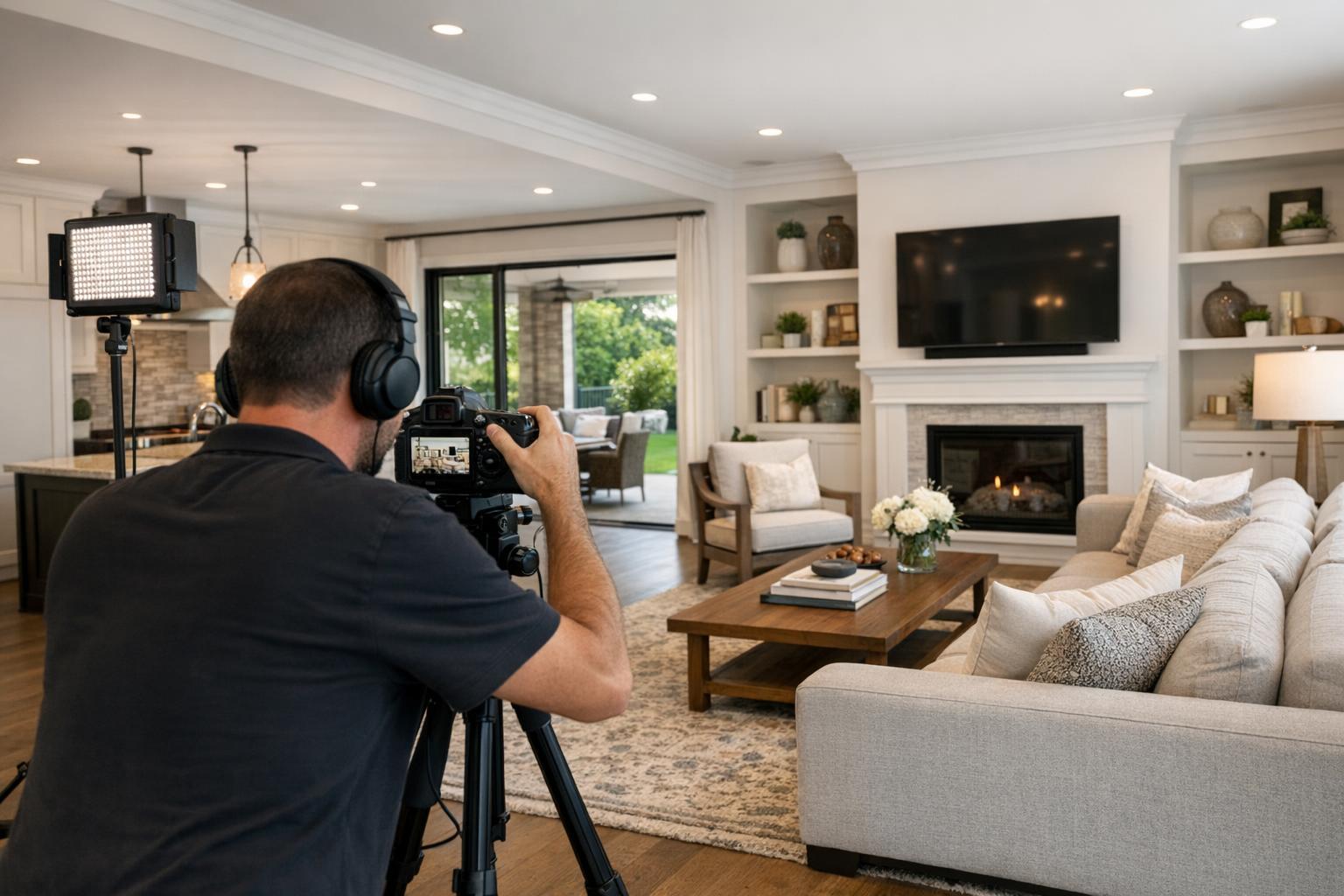
A professional photographer with a camera and lighting equipment captures the inviting ambiance of a modern living room for real estate photography services.
How to Choose Real Estate Photography Services for Your Next Listing
Real estate photography services form the first line of marketing for any new property listing. The difference between rushed snapshots and professional property photography is immediately clear to anyone who has ever scrolled through listings online—sometimes for better, sometimes for worse. Choosing the right provider, though, isn’t about splurging on the biggest package or hoping that “professional” means the same thing everywhere. It’s about knowing which decisions actually move your listing forward and which ones only add clutter.
For agents, brokers, and property marketers in the NYC and New Jersey area, making these decisions can feel more complicated than ever. Property types range from compact Manhattan co-ops to multi-story Brooklyn brownstones to sprawling suburban homes in New Jersey, each requiring a tailored approach to visual presentation.
Start With the Property, Not the Package
The most effective real estate photography company doesn’t just deliver high-resolution images—it helps you prioritize what actually matters for the specific property you’re bringing to market. A small Manhattan studio and a large New Jersey colonial don’t share the same photo needs. Neither will a recently updated brownstone in Brooklyn or a condo with a strong amenity package.
Begin your planning by considering:
- What are this listing’s unique features, inside and out?
- Does the layout translate well in photos alone?
- Are there meaningful outdoor spaces or nearby surroundings to communicate?
- Will you need interactive or remote-friendly media, or is still photography sufficient?
- Is the property vacant, occupied, staged, or awaiting final touches?
- Where will these images be used—MLS, social, print, custom webpages, or all of the above?
Resist the pressure to simply “order more.” Compelling real estate media starts with clarity—images that accurately show the property’s condition, layout, finishes, and lighting. Complementary media such as video, floor plans, or virtual tours should be used purposefully, not by default.
What Sets Professional Property Photography Apart
Professional property photography is more than showing up and pressing the shutter. The best providers have reliable workflows and expertise that are reflected long before and after the onsite capture.
On-Site Capture Considerations
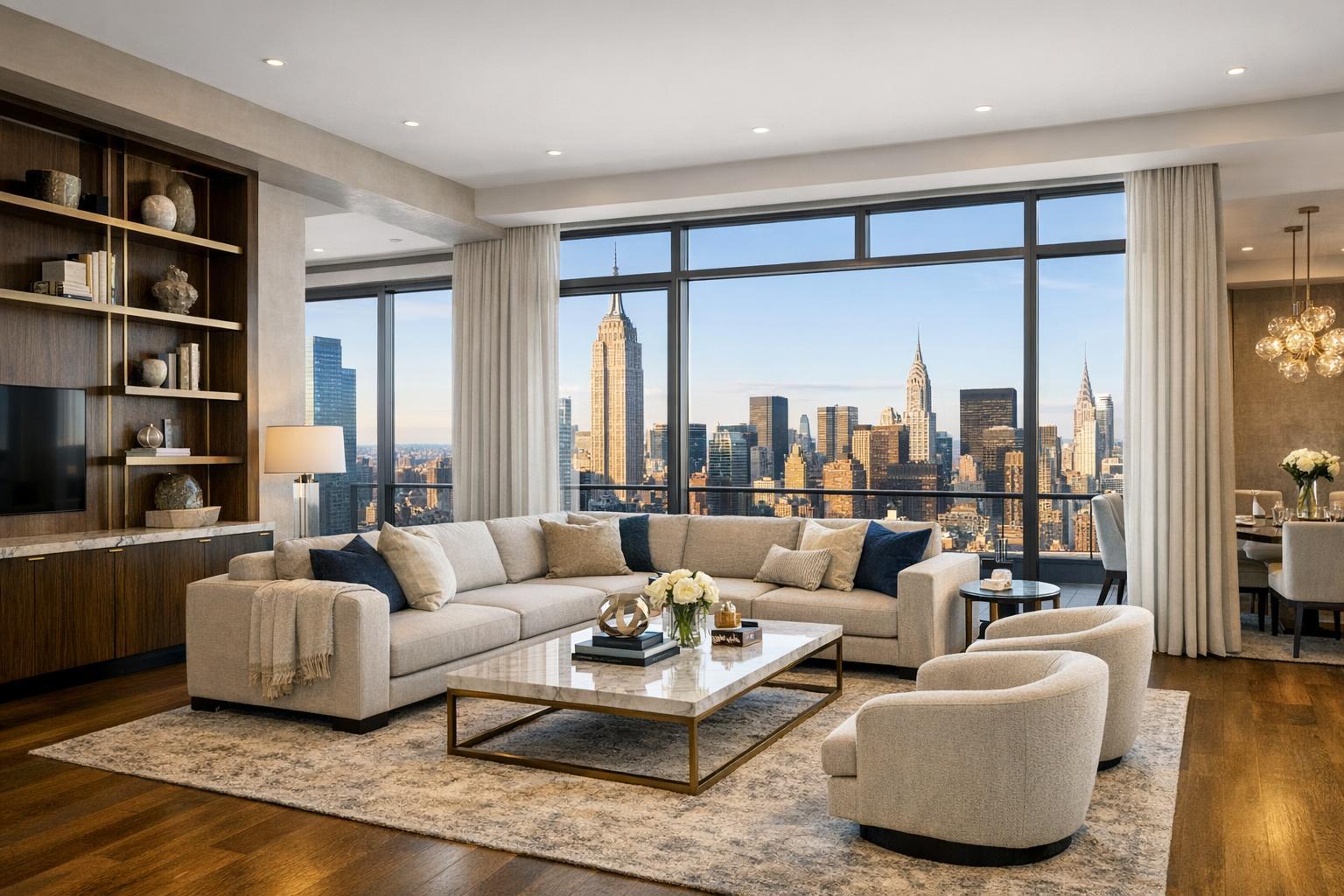
A skilled photographer will work systematically, choosing angles that reveal usable space and room relationships while controlling for lighting challenges common in local homes. In Manhattan, window-filled apartments can be tricky: strong natural light can overpower the room, while shadow-heavy interiors need careful balancing to avoid muddy or uneven images. Across New Jersey, broad exteriors or shaded porches may require shooting at specific times of day or in varying conditions.
The photographer documents only what’s present on shoot day. Prepping matters: tidy spaces, open blinds, functional lighting, and minimal clutter ensure the finished media keeps viewer focus where it’s needed—on the property itself.
Editing and Consistent Presentation
After capture, professional editing should refine the results without over-processing. Watch for consistency: Well-edited galleries avoid wild swings in color, perspective distortion, or exaggerated brightening. Each image should feel like it belongs to the same property, whether it's a kitchen, bathroom, outdoor terrace, or hallway.
Media Delivery You Can Rely On
Confirm the provider’s delivery process before you book. Timetable, file access, gallery organization, and the method for making any necessary revisions should all be clear. Know what you’ll actually receive: not just “photos,” but counts, formats, video durations, and hosting options. Setting expectations on deliverables prevents surprises and ensures nothing essential is left out.
Portfolio Review: Look for Consistency, Not Just Highlights
A strong homepage photo is easy to showcase, but it’s the “ordinary” listings in a real estate photography company’s portfolio that reveal their reliability. Browse through complete galleries—ideally, the kinds of properties you actually represent. Look for:
- Straight lines that keep walls and doorways proportional
- Lighting and color that match the property’s real-life feel
- A useful mix of room angles, not just repeated wide shots
- Logical visual flow, so viewers can understand how rooms connect
- Exterior images that explain the context when it matters
- Consistency in both small apartments and large homes alike
Visual style should enhance the property’s story. For a classic pre-war apartment, the editing should preserve architectural details and vintage character without making the space look dark or dated. For a large New Jersey listing, exterior features, yards, and outdoor living spaces will often need equal attention as the interiors.
Asking the Practical Questions
Booking the shoot often means coordinating between sellers, tenants, building staff, or a staging team. Before committing, clarify:
- What steps should be taken to prepare?
- How long will the shoot last for the chosen package?
- What building access or parking details are needed in advance?
- Are there building rules, elevator booking requirements, or other logistical concerns?
- What if the property isn’t ready at the appointment time?
- How are special instructions or requests tracked?
- Is the provider’s service area well-defined, including travel fees if relevant?
Preparation is different for every property type. In a Manhattan apartment, reducing visual distractions can make a major difference in photos. A Brooklyn townhouse may require enough time for both interiors and gardens, while New Jersey homes often need access to driveways, yards, or detached structures.
Evaluating Pricing: Beyond the Base Number
Transparent pricing lets you compare options fairly. Be sure you know what’s included—not just in base price, but what adding extra images, shoot time, or services like video, floor plans, or drone work would cost. For listings with straightforward needs, a smaller package may be appropriate, but for those that require more involved storytelling, reliability and flexibility in the provider’s process can be worth more than the cheapest option.
Adding Media—Purposefully
Photography anchors nearly every real estate listing, but complementary media helps clarify what stills can’t achieve alone:
- Video: Useful for showing how rooms flow into one another, highlighting movement, or giving buyers a sense of scale. Professionally captured listing videos are distinct from animated slideshows—they require on-site production and planning.
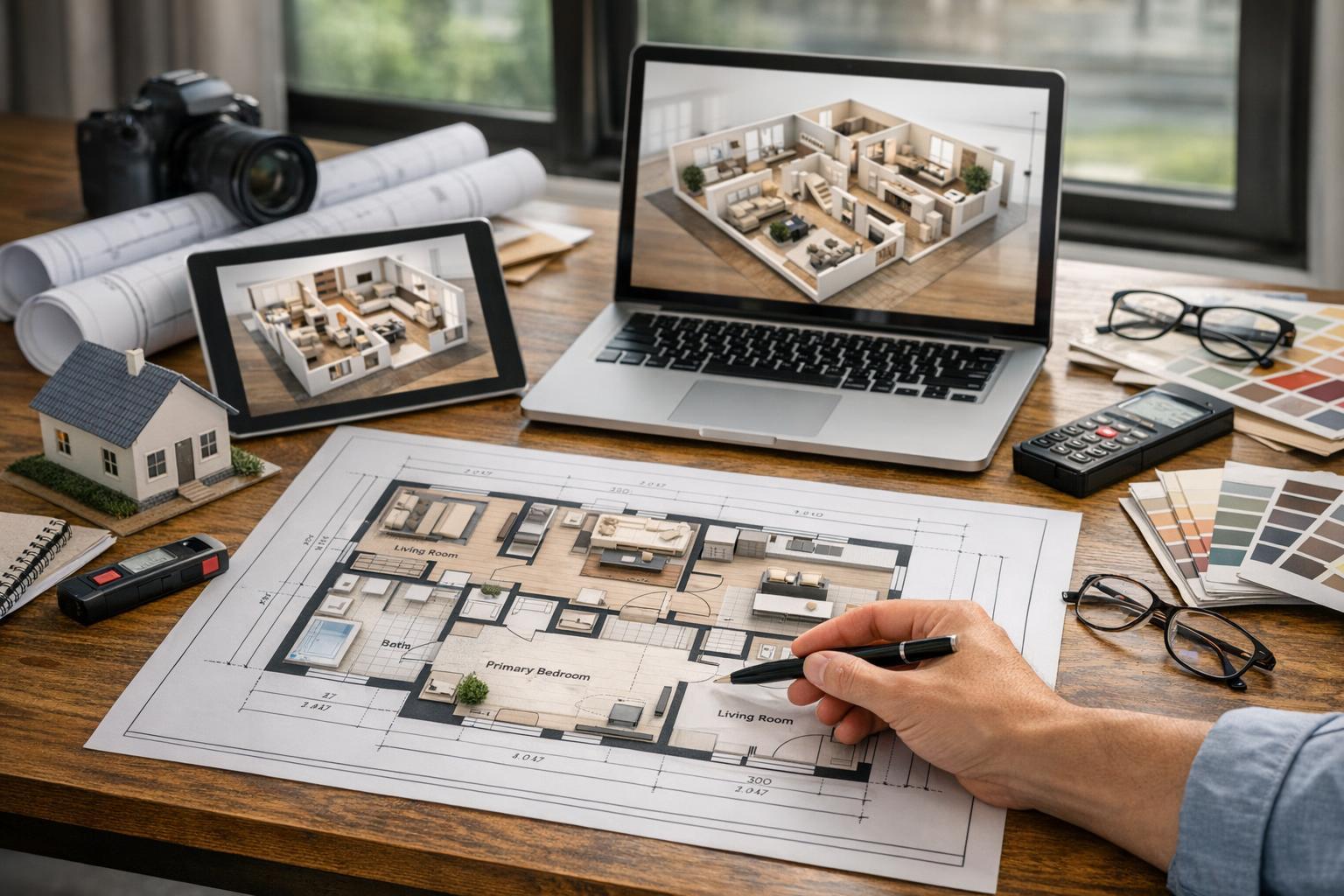
- Floor Plans: Especially helpful for unique layouts, multi-level properties, or listings where orientation is a key concern. Accurate floor plans require in-person capture, not just guesswork from photographic reference.
- Virtual Tours: Allow buyers to explore the property interactively, which can be essential for remote or busy clients. 3D tours (including Matterport scans) also require physical access.
- Drone Media: Best for listings where exterior context matters—think expansive grounds, prominent settings, or waterfront access. Airspace rules, weather, and property access affect feasibility, especially in dense city environments.
- Virtual Staging: Makes empty rooms easier to imagine furnished but is only effective when the room is actually vacant. Virtual furniture placed over existing pieces rarely produces a believable result.
Choose these add-ons not by default, but when they genuinely serve the property’s communication needs.
Matching Media Production to Real-World Conditions
Experience in the NYC and New Jersey markets means understanding the logistical factors unique to local listings. In the city, building access, parking, and limited elevator time can impact scheduling. In Brooklyn, homes span multiple stories and often include garden or terrace areas requiring extra coverage. In suburban New Jersey, larger lots and extended outdoor features introduce a different set of priorities and timing.
RealtaSnap works specifically with these property types. Our online booking platform is designed for clarity: clients can enter property addresses, customize access details, select specific media services or add-ons, and book their appointments directly through our website. Orders are organized in advance to reduce last-minute messaging and help agents stay focused on their deal, not logistics.
Make the Booking Decision with Confidence
Booking real estate photography services should feel straightforward. Take time to:
- Review portfolios for consistent quality
- Confirm editing and delivery methods
- Set expectations for preparation and shoot day
- Clarify what’s included (and what isn’t) in pricing
- Consider which, if any, add-on media services fit the listing
Quality professional property photography remains the core. Supplement with video, floor plans, tours, drone, or staging only if it brings clarity to the listing. Advance planning ensures a smoother capture and a more organized presentation—one that both you and your clients can trust.
For real estate photography and media services in New York City and New Jersey, you can view options and schedule at www.RealtaSnap.com.
FAQ
Question: How do I know how many photos to order for my property?
Answer: The right number of photos depends on the size and type of the property. For a compact apartment, a focused set that covers all main rooms and unique features is usually sufficient. Multi-level or larger homes will typically benefit from broader coverage to clearly show bedrooms, bathrooms, exterior areas, and key amenities.
Question: Are floor plans or 3D tours really necessary for every listing?
Answer: Not always. Floor plans quickly communicate layout and room relationships, while 3D tours offer interactive viewing—both are best used where they add needed clarity, such as for unusual layouts or multi-level properties. Both services require in-person, on-site capture to be accurate.
Question: What’s the best way to prepare a property for real estate photography?
Answer: Make sure all spaces are clean and decluttered, personal items are put away, lights are functional and turned on, and window coverings are opened where appropriate. For virtual staging, the room needs to be empty or nearly empty to produce the most realistic results. Proper preparation keeps attention on the property’s most marketable features.