How to Choose Real Estate Photography for Your Next Listing
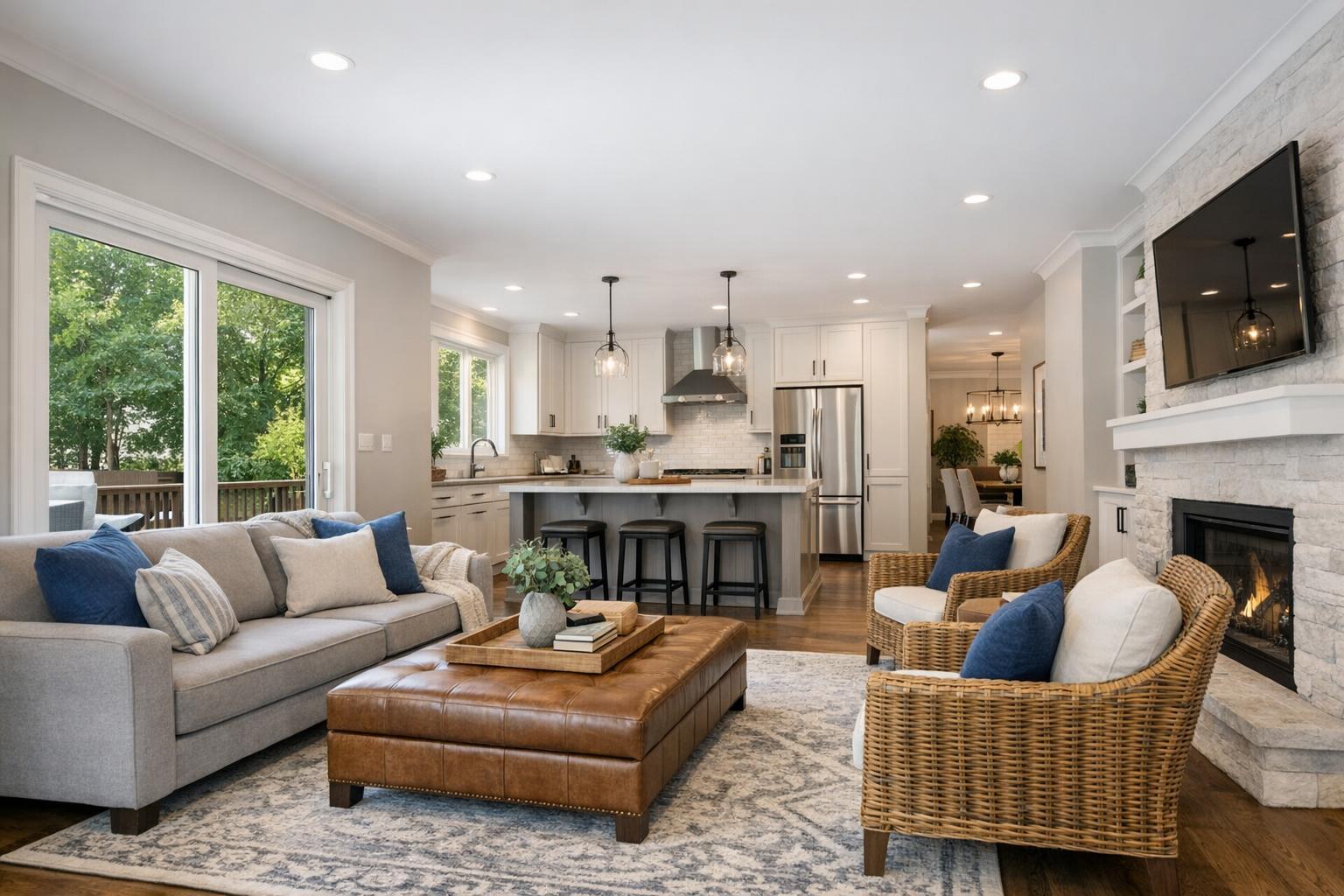
A modern open-concept living space showcases a cozy seating area, a sleek kitchen with stainless steel appliances, and large glass doors leading to a deck, emphasizing the harmony between indoor and outdoor living in this example of real estate photography.
How to Choose Real Estate Photography for Your Next Listing
Real estate photography shapes how every property is perceived, long before anyone schedules a showing. For agents, brokers, and property owners, quality listing photos aren’t a formality—they’re one of the most influential factors guiding a buyer’s first impression. The right approach should reveal how rooms flow, where the light comes from, and what gives a property its character, whether that’s an open Manhattan condo, a historic Brooklyn brownstone, or a sprawling New Jersey home.
With so many options out there, it’s understandable to wonder how to evaluate real estate photography services or what defines professional property photography. Here’s what matters in practice, from the perspective of a real estate media team that works across NYC, New Jersey, and beyond.
Defining the Right Visual Story for Your Listing
It’s a common misconception that real estate photography is simply about making rooms look big and bright. In reality, the task is more nuanced: the photos should tell a clear, honest story of the property’s layout, light, and features. An effective set of images answers the buyer’s “where does this room go?” and “what’s it really like inside?” questions at a glance.
While every property is unique, professional property photography prioritizes:
- Accurate room proportions: Wide lenses help fit tight spaces, but rooms should not look dramatically distorted or misleadingly large.
- Logical sequence: The series of images should follow how a visitor would naturally move from entry to living space, kitchen, beds and baths, and outdoors.
- True-to-life lighting and color: Balancing interior lights, natural daylight, and window views so that spaces feel natural—never blown out or over-processed.
- Strong composition: Vertical lines should look vertical. Camera height and angle should match the room. The frame is kept clean to guide attention to architectural details.
- Focus on defining features: A terrace, original woodwork, a city view, or a renovated kitchen might deserve more coverage if it helps buyers understand what makes the property special.
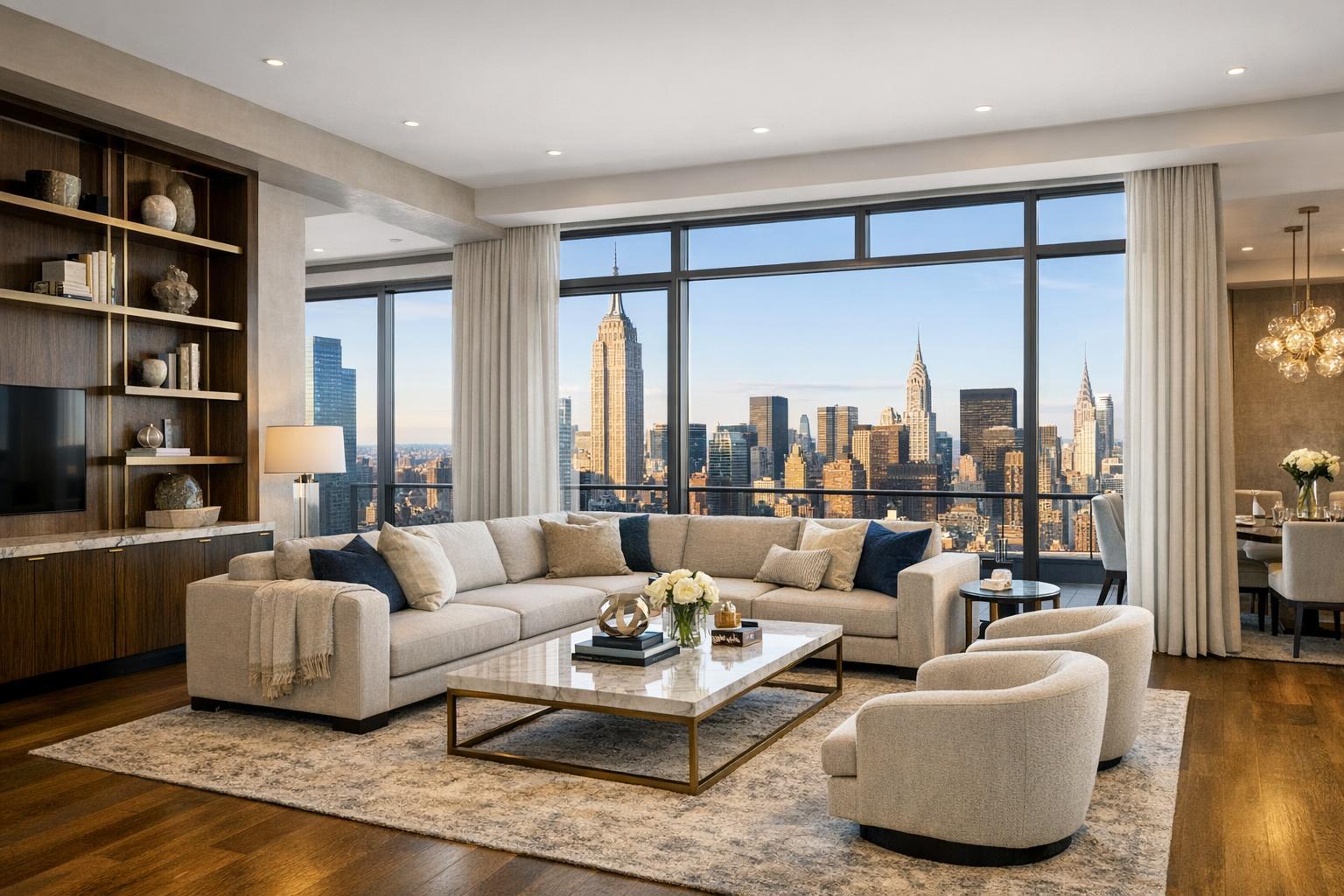
This approach lends itself to different strategies depending on property type. For example, the open lines and glass of a Midtown high-rise require different framing and exposure techniques compared to a classic Park Slope brownstone, where historic trims, wood tones, and multi-level layouts matter more. Suburban New Jersey, with its yards, pools, and larger rooms, often calls for a broader mix of interior and exterior perspectives.
What to Look for in a Photographer’s Portfolio
Most real estate photographers will have a few standout images, but the true test is consistency. Your next listing might be a sun-filled corner unit, an awkward basement apartment, or a complicated multi-floor home. Can your photographer deliver clean, navigable visuals in all cases—not just for dramatic penthouses?
Some things to examine when reviewing a portfolio:
- How are challenging spaces like small bedrooms or tight hallways handled?
- Are bathrooms clear and free of distracting reflections or color casts?
- Can you understand room geometry, even in spaces with strong window light or mixed lighting?
- Are exteriors presented attractively regardless of weather or time of year?
- Does every image—details and overview alike—feel purposefully composed?
A consistently strong portfolio reflects careful planning, technical skill, and repeatable editing standards. You want your listing, from the hero shot to the smallest room, to show professionally as a whole—not just in its flashiest corners.
Matching Visual Style to the Property
Photographic style isn’t one-size-fits-all. Some photographers favor high-key, “airy” imagery; others deliver deeper, more editorial looks. For most listings, the best approach is one that feels honest and supports the way a buyer will experience the home in person.
It’s worth considering:
- Overly bright edits can wash away color and texture; deep shadows may hide details buyers care about.
- Aggressive window replacement or sky compositing should support, not distract from, the property’s appeal.
- For listings with key exterior views—think skyline glimpses, garden yards, or water—a balanced view through windows is essential.
If you’re reviewing a photographer’s work, consider whether the style shown will faithfully represent your property type—something especially important when marketing a Brooklyn brownstone’s historic richness or a bright Jersey Shore home with sweeping outdoor potential.
Handling Practical Challenges: Light, Layout, and Access
Behind every polished listing is a series of real-world decisions about what gets photographed and how. Here are some day-to-day challenges an experienced media team expects to manage:
Mixed Lighting and Window Views
Urban and suburban homes alike often pair natural light with overheads, lamps, and varying daylight. Without careful management, this can result in photos with discolored walls, blown-out windows, or dark corners.
Professional real estate photographers typically blend multiple exposures or use advanced HDR techniques to keep both the room and window views readable and true-to-life. The end goal is always believability—it should look like a real room, not an artificial composite.
Tight or Busy Spaces
In New York City, apartments often have rooms where camera placement is limited by walls, doors, or existing furniture. An experienced photographer will avoid the temptation to shoot from every corner, instead focusing on a few well-chosen perspectives that reveal the layout without exaggeration.
Occupied homes add another layer: personal possessions, pets, and everyday clutter require more preparation and framing to keep images clean, focused, and useful.
Large Homes and Exteriors
A New Jersey listing with multiple living levels, detached garage, pool, or sweeping yard needs a different plan. Preparation includes timing for best light, prioritizing which outdoor amenities get aerial or ground coverage, and making sure the photo count matches the scale of the property.
Key Questions to Ask Real Estate Photography Services
Whether you’re evaluating providers for the first time or switching from a previous relationship, a few pointed questions can save time, money, and post-shoot frustration:
- How many final images are included, and do you adjust that count for property size?
- Can you show portfolios of both large homes and smaller apartments?
- What’s the standard turnaround time for delivery?
- Are edits such as color correction, window replacement, or minor object removal included, and what counts as extra?
- If you need custom services like virtual staging, drone work, or floor plans, how are those scheduled and priced?
- Are there property preparation tips you should follow before the shoot?
- What’s the communication process if weather or access issues arise?
- How do you handle shoots in occupied versus vacant properties?
- Are 3D virtual tours or video packages available, and what are the additional costs?
RealtaSnap, for example, provides a clear outline of what’s included and encourages clients to book directly online for straightforward packages. For anything unusual, a conversation in advance helps set expectations.
Learn more about RealtaSnap’s real estate photography services in NYC and New Jersey.
Realistic Editing: What’s Possible, What’s Not
Professional editing can work wonders—improving color, sharpening edges, and removing small distractions. But photo editing should never mislead. For example, RealtaSnap only photographs what physically exists at the property, and editing boundaries are clear: permanent features and layouts stay true to reality.
- Virtual staging is best reserved for vacant or properly decluttered rooms; clutter or real furniture should be removed beforehand.
- Object removal is possible as a paid add-on, but isn’t intended to erase major permanent elements.
- Sky and window replacements are used selectively for clarity, not to mask views entirely.
Solid preparation is still the most effective way to get strong images. Simple steps like turning on lights, opening blinds as appropriate, decluttering surfaces, and prepping beds make architectural and design features stand out.
For a full prep checklist, read RealtaSnap’s Real Estate Photography Preparation Guide.
When Does Your Listing Need More Than Photos?
While still images anchor most listings, some properties benefit from additional media:
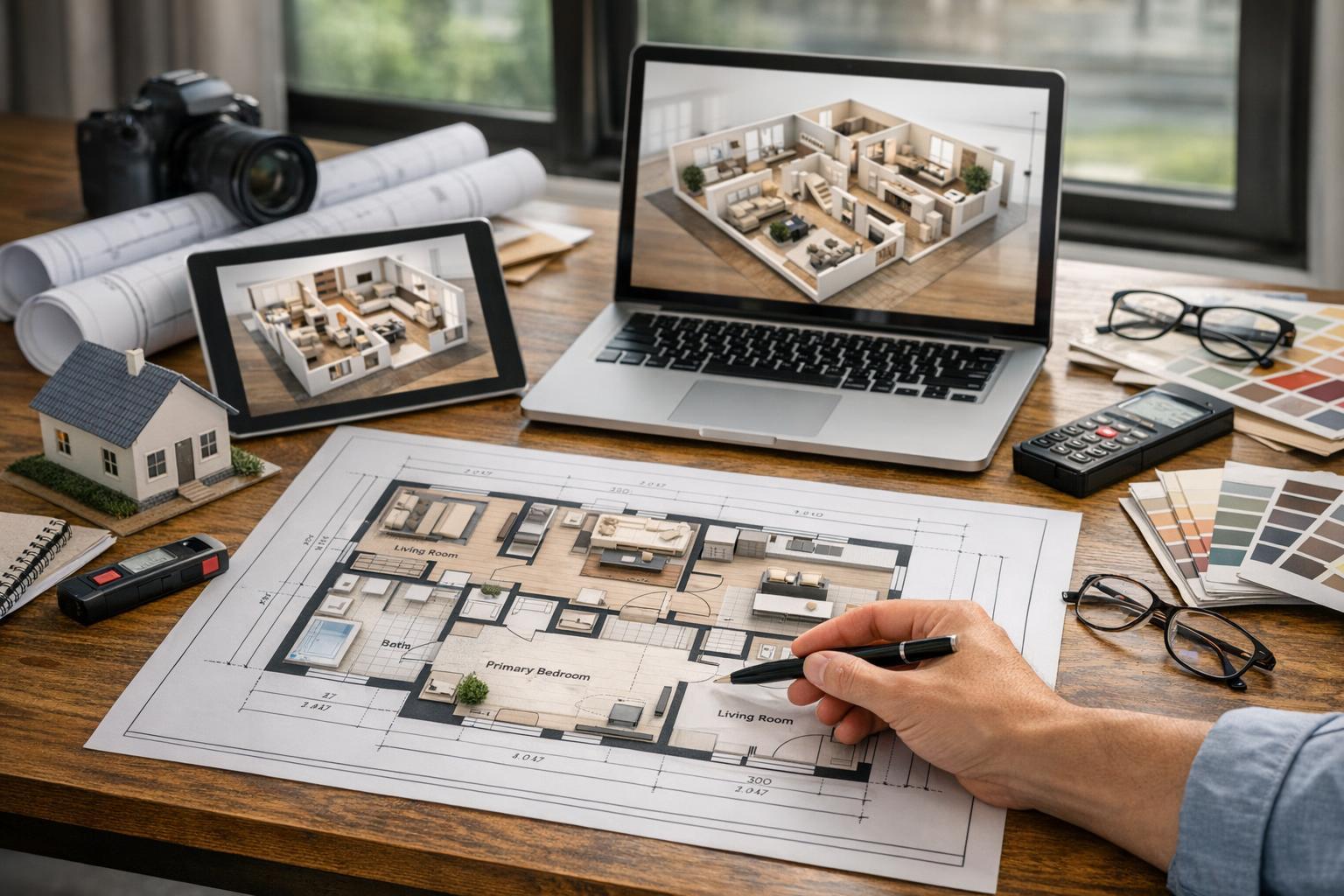
- Floor plans add layout clarity, particularly for multi-level or uniquely proportioned spaces. RealtaSnap creates these on site—they can’t be reliably generated from old PDFs or phone photos.
- Listing video helps bring the experience to life, showing the flow between key rooms or the atmosphere of a dramatic entryway.
- 3D virtual tours let remote buyers or renters explore at their own pace, which is valuable for unusual layouts or out-of-town prospects.
- Drone imagery provides exterior context, especially for large lots, water views, or unique architectural details. Aerial work depends on airspace, weather, access, and pilot discretion.
Choose complementary media when it genuinely clarifies features or scale that photos alone can’t, not just because it’s available.
Local Know-How: Why NYC and NJ Logistics Matter
Each region has its quirks. In Manhattan, scheduling may require coordination with building staff, doormen, and elevators, often within narrow appointment windows. Brooklyn offers historic charm but also multi-floor walkups and changing window light. In New Jersey, broader coverage and exterior shots are often necessary to tell the property’s story.
Local expertise includes realistic expectations about access, neighborhood guidelines, parking, and even local weather patterns that affect outdoor shots or drone feasibility.
Booking RealtaSnap
For standard real estate photography, RealtaSnap makes booking easy: use the online schedule, choose your services, enter your property address, and select a convenient time. The system shows live availability and provides space for notes about access, features, or priorities. Custom-quote situations can be discussed when unique needs arise.
Service is concentrated across New York City (all boroughs) and New Jersey, with limited coverage in Westchester and select Upstate New York cases by approval.
See more about RealtaSnap’s coverage, service options, and transparent pricing at www.RealtaSnap.com.
Final Thoughts
Selecting the right real estate photography team is about more than price—it’s about quality, consistency, and visible professionalism. The best images show a property the way it actually feels, capture its scale and light, and answer the most common buyer questions—before anyone steps through the door.
If you’re preparing a listing in NYC or New Jersey and want genuine, market-ready media, RealtaSnap is ready to help capture your property clearly. Visit www.RealtaSnap.com to get started.
FAQ
Question: How many listing photos do I need for my property?
Answer: The right number depends on the size, distinct spaces, and unique features of your listing. A smaller apartment may call for a focused selection that covers all main rooms and the view, while a larger home might need more comprehensive coverage. Rather than defaulting to a fixed photo count, identify which spaces a buyer actually needs to see to understand the property.
Question: How should I prepare my property before the photographer arrives?
Answer: Preparation can make a significant difference. Turn on all lights, check for working bulbs, open window treatments where privacy allows, clear surfaces, remove clutter, hide personal or sensitive items, and make beds. For occupied homes, focus on making permanent features visible by reducing distractions.
Question: What if I want additional media like floor plans, video, or virtual tours?
Answer: These options are available and can enhance certain listings, especially if the layout, movement, or broader context is important to buyers. For floor plans and virtual tours, on-site access is always required. Video is captured on location—not created as a slideshow from photos. Be sure to mention your interest in these services when booking.
Ready to present your next listing with clarity? Learn more or schedule directly at www.RealtaSnap.com.