How to Choose Luxury Real Estate Photography for High-End Listings
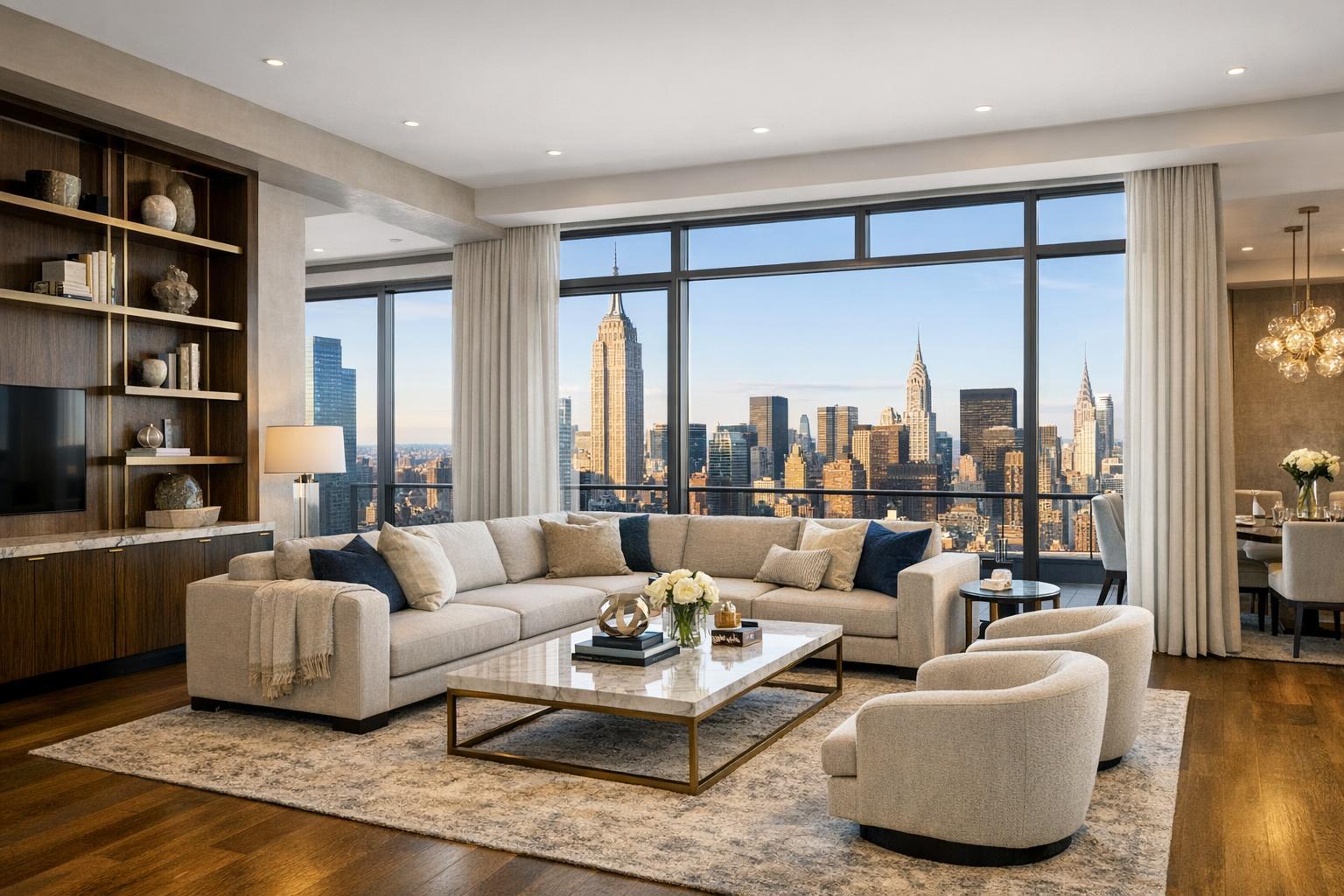
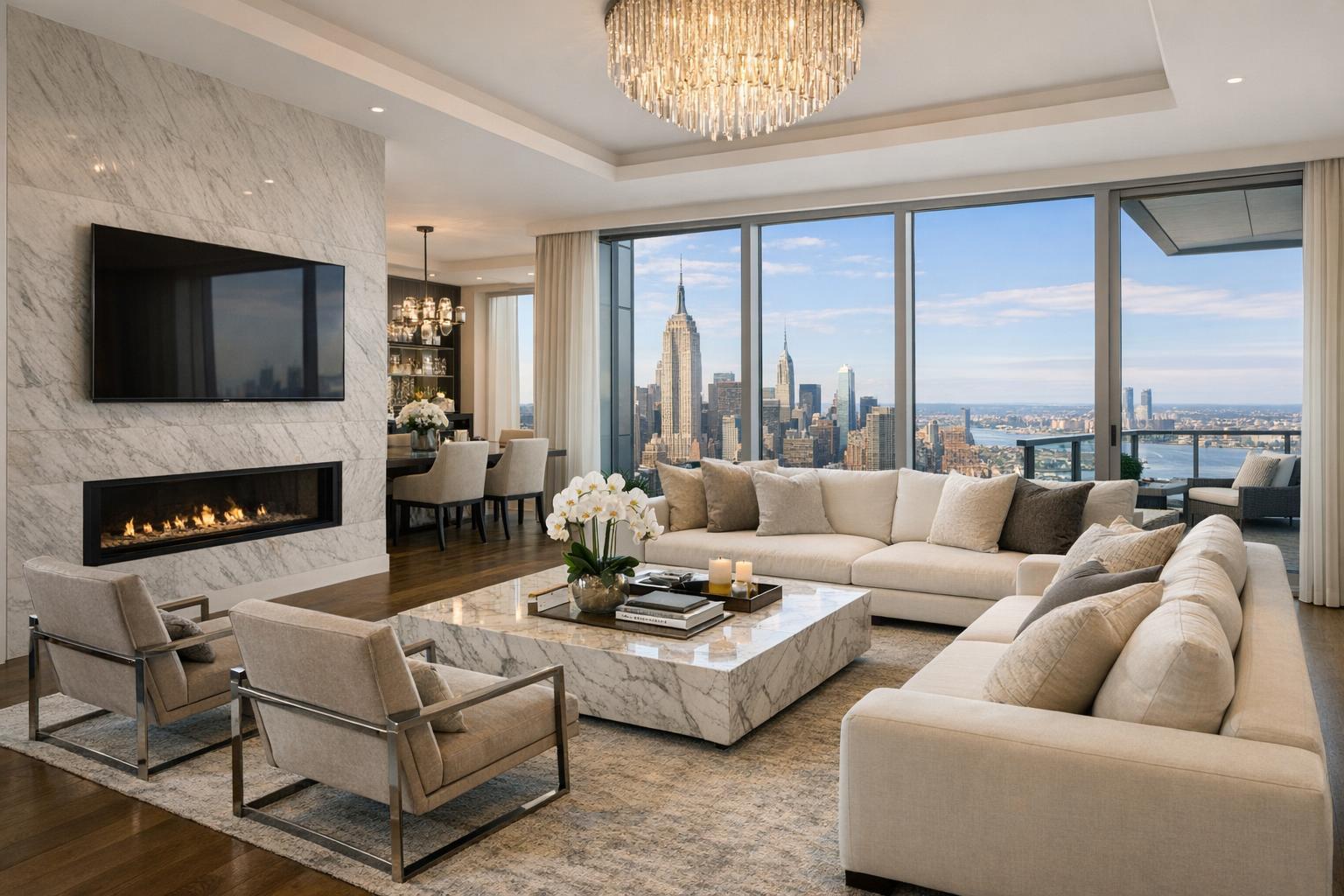
Luxury real estate photography captures an elegant living space with modern furnishings, a marble fireplace, and expansive city skyline views through floor-to-ceiling windows.
How to Choose Luxury Real Estate Photography for High-End Listings
Luxury real estate photography shapes the story of a high-end property from the very first image. For agents, developers, and owners, it’s not just about creating attractive photos—it’s about representing spaces with a level of clarity, accuracy, and attention that reflects the values of premium real estate. Every detail, from composition to window exposure to the sequence of images, informs how potential buyers perceive both the property and the professionalism of the team behind it.
What Sets Luxury Property Photography Apart
In crowded markets like NYC and New Jersey, real estate media is everywhere. The difference with premium property photography comes down to intentional decisions at every stage of production. Rather than producing a series of generic images, professional teams focus on how best to communicate design, craftsmanship, architectural character, and the lived experience of a property.
- Wide compositions are balanced with interior details—think fireplaces, custom millwork, or unique views.
- Interiors are photographed so lines stay straight and rooms feel substantial without artificial stretching.
- Climatic features, window views, and lighting are handled thoughtfully, never washing out a cityscape or leaving interior details in darkness.
- The gallery is structured as a narrative, leading a viewer through the space logically, not just snapping every available corner.
This nuanced approach sets true luxury real estate photography apart from a routine listing shoot.
The Art of Composition and the Importance of Perspective
Discerning clients, especially those working with architectural photographer NYC specialists, know that composition can make or break a listing’s visual impact. High-end interiors often feature challenging geometry—arches, statement stairs, or oversized windows. A premium photography team considers:
- Where to place the camera so the room feels open but not distorted.
- How to keep verticals (such as windows, cabinetry, or walls) straight for credibility and stability.
- When to move beyond the standard “corner shot” to something that really brings out spatial relationships, symmetry, or the interplay between spaces.
- Which details deserve closer attention, especially when materials or workmanship set a property apart.
It’s not enough to show rooms at their widest. Close perspectives and vignettes matter when they communicate story—such as the view out a landmark window or the exact finish of handcrafted cabinetry.
Balancing Light: Window Views and Natural Atmosphere
One of the more technical, but noticeable, differences in luxury real estate photography is how light is managed—especially in rooms with dramatic window exposures. In places like Manhattan, where skyline or river views are selling points, a photograph should reveal the panorama outside without sacrificing warmth and detail inside. This means finding that balance where both the view and the interior read clearly.
Agents and property owners should look for galleries that maintain this balance, avoiding over-edited or artificial looks. Pros know that blown-out windows or muddy interiors can misrepresent a listing, leading to disappointment during a showing.
Visual Flow: Telling the Property’s Story
Luxury listings—brownstones, new developments, large homes—rarely follow a standard layout. The photography sequence needs to help viewers understand how rooms connect, where public meets private, and how amenities fit into the larger context. A property’s flow is especially important in:
- Multi-level homes where the path from floor to floor matters.
- Listings with both indoor and outdoor spaces (think Manhattan terraces or New Jersey pools).
- Unique layouts where context is crucial to understanding value.
Photographers who approach the shoot as a walkthrough create more meaningful galleries and help buyers imagine themselves in the space.
Property-Specific Considerations in NYC and New Jersey
Every listing deserves its own strategy. The right approach depends on the property type and what will matter most to buyers:
- Manhattan Condos and Co-ops: Natural light, window views, ceiling heights, building amenities, and renovation details can all be primary selling points. Scheduling often hinges on access—elevator use, lobby approvals, and shared amenities all factor into a successful shoot.
- Brooklyn Brownstones and Townhomes: It’s about capturing both historic details (woodwork, fireplaces, staircases) and how the home functions for modern living. Galleries should show craftsmanship and how the floors relate to each other without losing the big picture of layout.
- New Developments: Consistency matters—a project may require repeatable coverage of model units, amenities, rooftops, and public spaces. Advance coordination is critical to identify which areas are ready and which units best represent the development.
- Larger New Jersey Properties: Here, the story often includes extensive exteriors—yards, outbuildings, driveways, pools, and the relationship between architecture and land. In these cases, aerial drone media may be a valuable complement if safety and access permit.
For every project, a tailored shooting plan better serves both the marketing effort and the final gallery.
How to Evaluate a Photographer’s Portfolio
The best predictor of success is a portfolio that shows technical skill, artistic range, and the ability to adapt to different property types. When reviewing samples, ask yourself:
- Do the proportions feel true to life? Are the spaces believable, not stretched?
- How are window views and interior light handled? Are both given equal consideration?
- Do colors stay consistent and natural throughout the gallery?
- Are important architectural lines straight, not listing or warped?
- Can you see a mix of establishing shots and detail-focused images?
- Can you follow the space as if moving through it?
- Is there flexibility in showing both new builds and historic homes?
- Are outdoor and indoor spaces photographed with comparable attention to quality?
A strong portfolio will reveal not just isolated “hero” shots, but a consistent ability to present entire listings with clarity and professionalism.
Preparing a Property for Premium Photography
Meticulous preparation remains critical for high-end results. Photographers can only capture what’s present, so pre-shoot readiness makes a visible difference. Common checklist items include:
- Removing personal or excess items (small appliances, cords, photos, clutter).
- Presenting kitchen counters, bedding, towels, and surfaces clean and orderly.
- Turning on all key lighting and replacing burned-out bulbs.
- Clearing exterior distractions (cars, bins, hoses).
- Ensuring access to all areas scheduled for coverage.
Occupied homes typically require extra coordination, but even empty spaces benefit from the process—especially if virtual staging is planned. With AI staging, existing furniture should be physically removed or handled with approved clutter-removal edits before digital furnishings are added. This avoids an unnatural, layered look that can undermine the listing’s credibility.
For more on how to prepare for a shoot, check out RealtaSnap’s Real Estate Photography Prep Guide.
Discussing the Shoot: Collaboration Without Complexity
A successful luxury real estate shoot is a collaborative effort. Before booking, spend time clarifying:
- Which rooms, views, and details are most important?
- Any building requirements or timing considerations?
- Whether the property will be vacant, staged, or occupied?
- Spaces that won’t be available or require special coordination?
- Desired shots for listing platforms, social media, print, or marketing?
- Timing for best natural light or specific sunset views?
- Whether to capture additional media such as video or exterior drone coverage?
A clear line of communication means fewer surprises, ensures necessary preparation, and helps the team capture everything that truly matters.
Integrating Complementary Media—When and Why
While photography is usually the core asset, some listings benefit from additional tools:
- Video: Motion brings the viewer through spaces—along a terrace, up a stair, or from kitchen to living room. Well-produced video is much more than a slideshow of photos; it requires on-site capture for coordinated flow.
- Floor Plans: Especially useful for complex or multi-level layouts, floor plans clarify relationships and room sizes for buyers. These require physical on-site measurement.
- 3D Virtual Tours: For remote audiences or out-of-area buyers, a Matterport or similar scan allows interactive exploration from anywhere. These also require on-site scanning.
- Drone Media: Aerial images or video can contextualize properties with large lots, water access, or notable urban placement. Feasibility depends on location, airspace, safety, weather, and pilot discretion.
Complementary services should be chosen with the goal of communicating value efficiently, rather than piling on options that do not serve the listing’s needs. For more details, visit RealtaSnap’s Real Estate Photography NYC.
RealtaSnap’s Approach to Luxury Property Photography
At RealtaSnap, media for luxury listings in NYC and New Jersey is built around a property’s real features, not a generic template. Every shoot is an opportunity to communicate architectural intent, distinctive materials, scale, and the flow of a home—always with attention to what buyers expect from premium properties.
The experience is meant to be clear, coordinated, and practical, so clients feel fully supported whether booking a single photo session or a more comprehensive media package for new developments or large homes.
For more insight on costs, you can visit Real Estate Photography Cost, or see our service offerings for real estate photography in New Jersey.
A well-planned gallery should never feel overproduced or repetitive. Instead, it should give buyers the most honest, appealing, and complete sense of the space—before ever setting foot through the door.
Ready to start planning your next luxury listing shoot? For tailored, modern, and listing-focused media, explore www.RealtaSnap.com.
FAQ
Question: How many photos should a luxury real estate listing have?
Answer: The best number of images depends on the property’s size, layout, and distinctive features. A smaller premium condo may need fewer, carefully chosen photos, while a larger townhouse or estate could require many more to capture each key area and transition. The main goal is to create a thorough but non-repetitive gallery that covers main spaces, views, and signature details.
Question: What additional media is worth adding to a luxury listing besides photography?
Answer: Start with strong professional photography. Then consider add-ons based on the property’s needs and target buyers. Video is great for showing movement and layout; floor plans are helpful for complex properties; 3D tours support remote buyers or unusual layouts. Drone images can provide valuable context for larger sites or buildings when feasible. RealtaSnap can advise on the right mix for your listing.
Question: Is drone photography available everywhere in NYC and New Jersey?
Answer: Drone coverage depends on several factors: FAA airspace rules, weather, property location, building access (such as rooftop permission), and the pilot’s discretion for safety. Not all properties are eligible, particularly in dense urban areas, so it’s best to check feasibility for each specific address before planning aerial media.