How to Choose a Real Estate Video Tour for Your NYC or New Jersey Listing
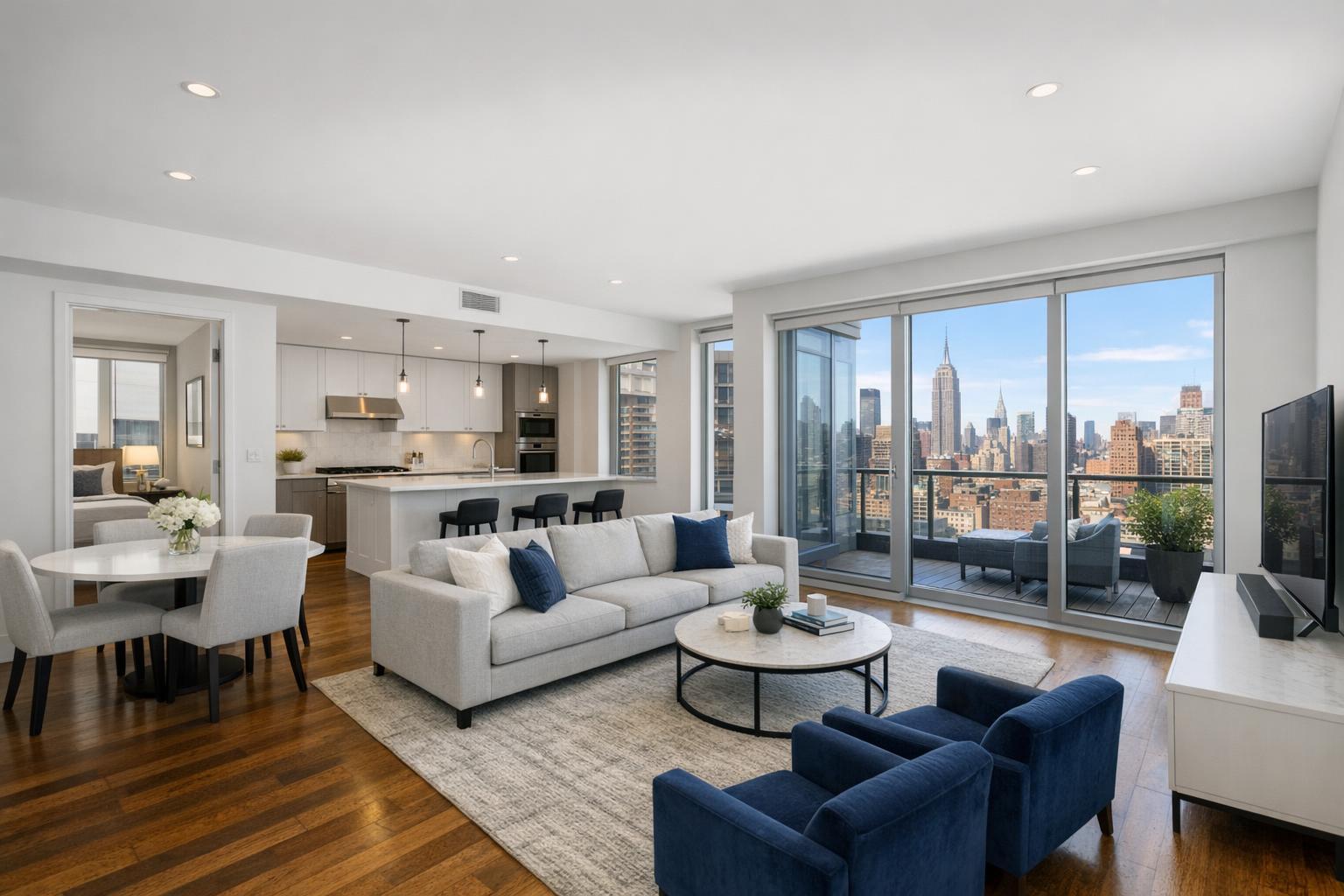
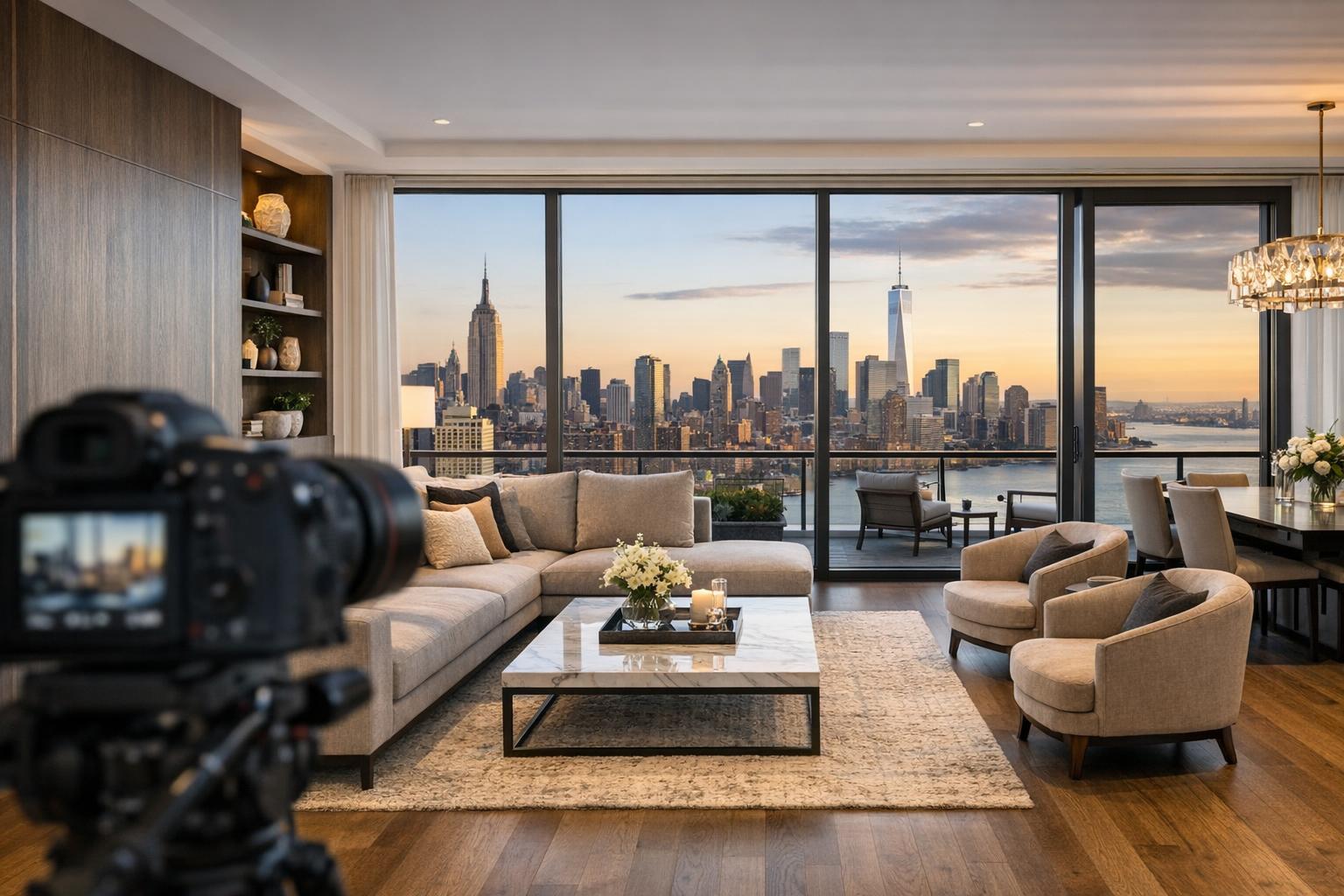
A luxurious open-concept living room with a stunning city skyline view is being filmed for a real estate video tour.
How to Choose a Real Estate Video Tour for Your NYC or New Jersey Listing
A real estate video tour is the one format that can truly convey how a property moves, connects, and lives in a way that still photography alone cannot. For agents, brokers, developers, and managers working with listings in NYC and New Jersey, video isn’t just another box to check. It’s a decision about visual storytelling—about making the physical spaces feel real and logical to someone who hasn’t yet set foot in the property.
At RealtaSnap, we see video tours as tools that need to be chosen thoughtfully, based on what the property actually needs to communicate and how future viewers will experience it. Here’s how we think about the process of selecting—and preparing for—the right video approach in this market.
What Should a Video Tour Actually Show?
A listing video shouldn’t be a random reel of pretty moments. The best property walkthrough videos make it easier to understand what it feels like to enter, move through, and inhabit a space. Think about the experience: entering through the lobby or front door, orienting inside the main living area, catching shifts in natural light, or realizing how a kitchen flows toward a terrace or backyard.
Deciding what to show depends entirely on the specific story of the property:
- A compact Manhattan apartment usually benefits from a brisk, clear walkthrough—entry, main living, sleeping space, and any standout view or amenity.
- A Brooklyn brownstone may need a step-by-step progression across multiple floors to describe its vertical layout, character details, and garden or outdoor access.
- A Jersey City condo often pairs internal coverage with brief context on lobby spaces, common amenities, or a skyline view.
- Larger homes in New Jersey will likely want a more comprehensive approach, covering multiple levels, outdoor zones, basements, or special workspaces.
Fundamentally, every listing is different. The most effective video directs focus where it counts—for most agents and buyers, that’s flow, scale, lighting, features, and surrounding context.
How Video, Photo Slideshows, and 3D Tours Are Distinct
The phrase “video tour” gets used loosely, but in practice there’s a big difference between a professionally shot real estate video tour, a slideshow made from listing photos, and an interactive 3D virtual experience.
Real Video Tours
When we talk about a video tour at RealtaSnap, we mean an actual on-site production that captures guided camera movement through the property. This could be a flowing entry shot, a smooth pan through the kitchen, or a transition from a living room out to a patio. The final edit incorporates music, graphics, and thoughtful pacing to create a coherent introduction to the space.
Video is especially useful when:
- The property has a logical, distinctive layout or unique features
- Details are best understood from several angles or in motion (think staircases, terraces, winding hallways)
- Natural light changes meaningfully throughout the day or across rooms
- Interior and exterior areas are closely connected
- Amenities or neighborhood context add real decision-making value
A quality video shouldn’t feel rushed or disjointed—a smooth, well-paced sequence gives viewers room to absorb the space before the next cut.
Slideshows from Photographs
Some agents or platforms create “video” simply by animating still images, perhaps with music or text overlays. These slideshows can work for quick social media posts or presentations but fundamentally lack the sense of movement or spatial logic that comes from real video. You can’t feel how one room connects to the next or experience how the eye travels through the space.
At RealtaSnap, listing videos are always shot on site. We don’t turn photo galleries into video “tours” because we’ve found they don’t add the same value.
3D Tours
Interactive 3D tours (like Matterport) serve a different need altogether. They let viewers navigate through scan points, examining the layout from many directions at their own speed. This self-guided approach gives full control to the online viewer, which is great for some remote buyers or long-distance clients.
However, the strength of a video tour is intentional storytelling—it guides attention, controls pacing, and highlights the most meaningful features, rather than leaving everything up to chance. Both formats require on-site capture, and both can work well together depending on the listing’s needs.
Tailoring Production to the Listing
Not all properties—and not all agents—need the same type or length of video tour. For some spaces, a tight, concise tour is more than enough. For others—a three-story home with multiple living areas, significant exteriors, or major amenities—there’s value in spending more time.
Some practical examples:
- Shorter tours generally suit:
- Studios and modestly sized one-bedrooms
- Condos or homes where only a few rooms stand out visually
- Rentals where quick orientation is the primary goal
- Situations where photography already covers most details and the video is just meant to add atmosphere and flow
- Social-media-centric campaigns needing quick impact
- Expanded or premium tours might make sense for:
- Multi-level homes, brownstones, or large single-family residences
- New developments emphasizing amenities and shared spaces
- Properties with substantial outdoor features (gardens, pools, extensive yards)
- Listings where an agent, broker, or designer interview adds authentic context or personality
At RealtaSnap, we offer several video formats to match these scenarios. The deciding factor should always be how much there really is to communicate—more isn’t necessarily better if the property itself is compact or simple.
Making Video Tours Clear and Watchable
Great real estate videography in NYC and New Jersey tends to prioritize clarity and honest presentation. Here’s how experienced teams approach the production:
- Visual Flow: The camera should move logically, as if you’re walking the property yourself. It can start at the exterior for curb appeal, enter through the main door, and progress naturally through living areas, bedrooms, and key amenities—always maintaining a sense of direction and context.
- Camera Movement: Movement should be smooth and purposeful. Quick, erratic pans or wild angles are more distracting than helpful. Steady transitions—like panning across a city view, gliding through French doors, or slowly approaching a kitchen island—are far more effective in giving a sense of space.
- Pacing: Each segment should linger just long enough for the viewer to register important details like finishes, window views, or unique layouts. Overly fast edits can be disorienting; too much time on empty space or repeated features can lose attention. Music, titles, and branding should enhance focus, not overwhelm it.
- Lighting and Timing: Natural light fundamentally affects how a space looks and feels, especially in homes with big windows or outdoor connections. Filming an east-facing room at the wrong time of day, for example, could flatten the atmosphere. Before a shoot, it’s always worth discussing optimal times and lighting adjustments with the media team.
It’s these careful choices—about what to show, in what order, and with what style—that separate an effective real estate video tour from just another listing upload.
Preparing Properties for Video Motion
A detail that’s often overlooked: what works for photography doesn’t always translate to video. As the camera moves, it picks up clutter, awkward transitions, and distractions that may have been easy to crop out in a static photo.
Before the shoot, it’s worth walking the property with “fresh eyes”:
- Clear surfaces (countertops, tables, open shelving) of anything that draws the eye away from architecture or finishes.
- Remove visible cords, pet items, personal toiletries, and extra furniture.
- Open blinds and curtains wherever daylight or a view is a feature.
- Turn on all working lights and replace any dead bulbs—dim or unbalanced lighting can undermine an otherwise polished video.
- Tidy outdoor areas—stoops, patios, balconies, gardens—so they’re ready for a moving camera.
- Identify any special features you want captured (like roof access, smart-home controls, or hidden storage) ahead of time.
For lived-in or occupied properties, it often takes a little extra coordination to prepare before the shoot. Plan for the right people, pets, and rooms to be ready and accessible. Areas that won’t be ready might be better left unfeatured than forcing a last-minute scramble during filming.
Exterior and Neighborhood Scenes: When to Include Them
Footage outside the property can be valuable in providing context—a classic Brooklyn brownstone, a Jersey City building’s lobby, or a garden in suburban New Jersey. But not every home needs extensive neighborhood coverage.
Aerial or drone video is sometimes an option, offering dramatic context in places where location and landscape play a key role. In dense parts of NYC, practical feasibility is shaped by airspace limits, building access, weather, and local safety. For most listings, a handful of targeted exterior shots is more helpful than a broad, unfocused neighborhood montage.
Using Video Assets Across Channels
How you plan to use the final property walkthrough video can influence the production itself. Typically, a full horizontal edit is great for listing platforms, outreach emails, websites, or YouTube. Short-form vertical or square cuts can be highly effective on Instagram, TikTok, and similar social channels. At RealtaSnap, we offer social edits, 30-second trailers, and alt cuts to help agents deploy video across platforms.
Think ahead about what key info—such as agent contact or branding—should appear within the main edit. Don’t overload the screen, though. The property and its story should always be the focus.
Practical Considerations for Adding a Video Tour
The most useful reason to order a video is when a listing has a story that benefits from seeing its flow, connections, or context in action. Ask yourself:
- Would someone genuinely benefit from seeing how rooms relate?
- Does the property have lighting, views, amenities, or outdoor features that are more compelling in motion?
- Will the listing be promoted on platforms where video stands out?
- Is there enough feature variety for a focused and non-repetitive video?
- Can the property be prepared and accessed for on-site shooting?
When you answer “yes” to several of these, a video frequently adds real perspective to the listing. It’s never a replacement for crisp photography—but for the right property, it can be a very worthwhile layer that encourages buyers, renters, or decision-makers to envision themselves moving through the space.
For professionals in NYC and New Jersey who want tailored, on-site real estate videography—and not just a photo slideshow—RealtaSnap offers practical options for every property type. To explore our video services or schedule a shoot, visit RealtaSnap’s homepage.
FAQ
Question: What’s the ideal length for a real estate video tour?
Answer: The length should fit the property and its purpose. Compact apartments or studios tend to be best served by concise videos, while larger homes, new developments, or listings with substantial amenities could benefit from a more detailed walkthrough. The key is to show enough for viewers to understand the flow and highlights—without repeating the same types of rooms or angles.
Question: Is it better to use a photo slideshow or a real on-site video tour for a listing?
Answer: Slideshows created from listing photos can work for quick social posts but do not provide the sense of movement, spatial connection, or atmosphere that a real on-site video tour offers. Professional video is captured specifically to show how a property flows and feels; at RealtaSnap, all listing videos are created through on-site capture, not by animating existing photos.
Question: What’s the difference between a video tour and an interactive 3D tour like Matterport?
Answer: A video tour guides viewers through a property in a controlled sequence, creating a visual story about how the spaces connect. An interactive 3D tour allows viewers to explore at their own pace, clicking through scan points to inspect rooms from multiple angles. They serve different viewing preferences and can complement each other—agents often use both when a listing warrants both guided introduction and in-depth remote exploration.
For more information or to schedule a real estate video tour in NYC or New Jersey, visit www.RealtaSnap.com.