How to Choose a Real Estate Photographer in NYC for Your Next Listing
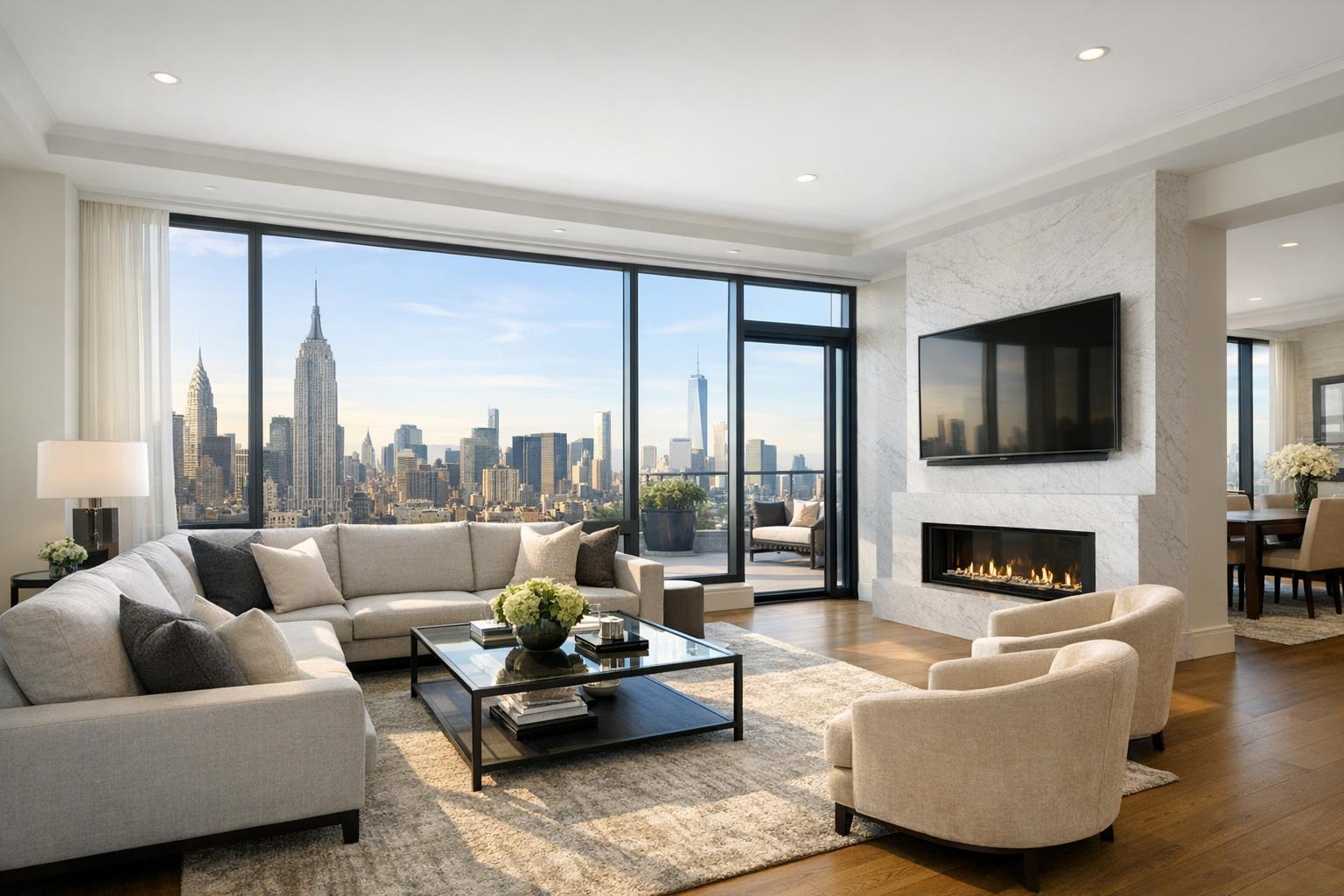
Real estate photographer NYC captures a luxurious living room with a stunning view of the New York City skyline, featuring elegant furnishings and a modern fireplace.
How to Choose a Real Estate Photographer in NYC for Your Next Listing
Selecting a real estate photographer in NYC is rarely as simple as picking the most eye-catching portfolio. For agents, brokers, property managers, and owners in this market, the right photographer must do much more than deliver a gallery of attractive images. The real test is whether their photos actually help you market the property effectively, under the constraints and realities of this market: varying layouts, unique architectural features, unpredictable lighting, tight building schedules, and the practical details of New York City access.
Most listings face at least one common challenge: presenting an apartment, brownstone, or home in a way that feels true, engaging, and easy for buyers to understand—even before they set foot inside. Here’s what experience has taught our team about what you should consider before hiring a photographer for your next NYC-area listing.
Looking Past the “Greatest Hits” Portfolio
Every real estate photographer will show you their most polished work. But your decision shouldn’t stop at their best images. What you truly need is consistency: can this NYC property photographer handle everything from daylight-saturated lofts to basement studios, from bright open exposures to interiors where light just barely reaches the living room?
When you scan a photographer’s gallery, ask yourself:
- Are the lighting and colors natural, not washed out, murky, or overly processed?
- Do the windows look believable, with real views when it matters—rather than being blown out or gray?
- Are vertical lines, like those on doorframes and cabinets, truly vertical? Crooked lines can make even a beautiful room appear distorted.
- Is the space presented honestly, or are wide angles creating an unrealistic sense of room size?
The underlying principle is credibility. Well-crafted real estate photography helps buyers envision a space as it truly exists, not as a digital fantasy. It should make the layout and flow easy to follow, not just highlight the best corner.
Matching the Photographer to the Listing
NYC’s property landscape is more varied than most markets. Each building type, from a compact Manhattan apartment to a Brooklyn townhouse or a large detached New Jersey home, presents its own visual challenges.
- Manhattan Apartments and Condos: These properties are often compact, and the best images come from careful composition—showing layout, details, and finishes without overstating space. Affordable apartments may have limited window access, building rules for equipment, and strict access windows. The right photographer plans for these variables and works efficiently.
- Brooklyn Brownstones and Townhomes: These homes usually span several floors and feature details like stairways, parlor rooms, gardens, and historic features. Experience here means knowing how to visually connect the levels and make architectural details feel unified, not just like a collection of separate rooms.
- Larger Residences and Suburban Properties: In areas like New Jersey or the outer boroughs, properties might include exteriors, yards, garages, or pools. A professional knows when to zero in on landscaping, how much of the outdoor space to include, and when to step back to tell the story of the property’s scale.
Make sure the photographer you choose is comfortable with the type of property you’re listing. A strong portfolio with apartments, for example, doesn’t guarantee they can adapt to a brownstone with multiple floors or a single-family home with sprawling grounds.
Preparing Occupied Homes: More Than Just Moving Objects
Occupied spaces are a fact of life in NYC and surrounding areas. A photographer can’t simply retouch away daily clutter or major furniture pieces—instead, the best images start with preparation.
Before booking, clarify who will handle staging and tidying: the owner, tenant, property manager, or you as the agent? A typical checklist includes:
- Clear surfaces (especially kitchen counters and vanities)
- Remove trash bins, pet items, visible cords, and loose paperwork
- Make beds and tidy soft goods
- Open blinds or curtains for light, but adjust for glare as needed
- Turn off TVs and fans
- Minimize personal photos and valuables
- Clear walkways
- Ensure access to every space that should be photographed
A little clutter can distract from beautiful features, especially in compact NYC apartments. But leaving a space too barren makes it feel cold. Good real estate photographers recommend a careful balance—present the room as clean, inviting, and authentic.
If you need extra digital help, such as object removal or virtual staging, confirm in advance what your photographer offers and what’s covered. For example, at RealtaSnap, digital decluttering and virtual staging are available as add-ons, with clear policies about what can and can’t be altered or staged virtually. For instance, virtual staging is only available for empty or properly cleared rooms; existing furniture must be physically removed or a paid clutter-removal edit added first.
Scheduling and Building Access: A Core Part of the Service
In New York, logistics matter. Even a skilled photographer can end up stuck if the elevator is unavailable, the doorman wasn’t notified, or a roof deck remains locked during the scheduled shoot. Here’s what should always be covered before you confirm the shoot:
- Building access policies (management, doorman, or concierge notification)
- Elevator schedules and reservation requirements
- Key codes or lockboxes
- Timing for tenants, owners, or property managers
- Allowed hours for photography or equipment use
- Permissions for shared spaces, amenities, or exterior areas
- Parking or loading logistics when applicable
Upfront communication prevents wasted time and last-minute surprises. With RealtaSnap, you’ll add access instructions and special notes while booking. Appointments are shown in real-time and can be scheduled with at least 24 hours’ notice, making it easy to coordinate preparation and access needs.
Know What to Expect: Deliverables and Editing
“Professional photos” can mean different things depending on the company. Before making your final decision, get clarity on:
- The number of edited images you’ll receive
- Editing standards (color correction, window balancing, straightening)
- Delivery timeline
- File formats and compatibility (MLS, print, web, social platforms)
- Procedures for missed features or requested reshoots
- Add-ons, such as branded/unbranded property websites, floor plans, or marketing materials
- Weather contingencies for exteriors
- Revision or additional edit policies
Well-defined deliverables prevent disappointment. This is also where value-focused agents and managers recognize the difference between service quality and a “lowest price” approach. For example, RealtaSnap provides clear package pricing and editing standards, making it easier to compare real estate photography services in NYC on even footing.
When is Photography Alone Enough—and When Is More Media Worthwhile?
Not every listing calls for more than standard photography. For straightforward apartments or small homes, good photos that show light, finishes, and layout may be all you need. But some listings benefit from additional media, especially if you need to answer layout questions, show off movement between spaces, or provide remote access.
- Video: Useful for properties where movement matters—multi-story homes, open lofts, or apartments with significant indoor-outdoor flow. A true listing video is captured on site, giving viewers a sense of how rooms connect.
- Floor Plans: If buyers are likely to wonder how odd layouts, multi-levels, or renovated spaces fit together, floor plans give needed clarity. These must be based on on-site capture (not old blueprints or PDFs).
- Matterport Tours: 3D virtual tours work well for remote buyers or listings with complicated layouts. Like floor plans, these require in-person scanning and can’t be made from still photos or architectural drawings.
- Drone Media: Aerial photography is useful when roof decks, large lots, or exterior context play a role. Remember that flight in dense NYC neighborhoods is subject to regulations, weather, and building access—sometimes even a roof deck doesn’t guarantee flyable conditions.
- Virtual Staging: If you’re listing a vacant condo or rental, this tool can make empty rooms easier to visualize as a home. However, it’s only suitable for spaces that are either vacant or properly cleared. Staging can’t simply mask clutter or existing furniture.
For a breakdown of media services, you’ll find more at RealtaSnap’s main website.
Practical Checklist for Comparing Providers
Use these core benchmarks as you shortlist photographers for your next listing:
- Do their images show room dimensions and proportions honestly?
- Is their editing style consistent across property types, lighting, and locations?
- Have they documented properties similar to yours—apartments, brownstones, condos, homes?
- Do they explain logistics clearly and adapt to NYC building and scheduling rules?
- Are their deliverables explicit, with editing and revision policies?
- Can they provide additional services as needed, but without packaging unnecessary extras for a simple listing?
- Are technical or legal limitations (like access for floor plans or drone flight) transparent upfront?
- Does their booking platform make it easy to communicate your needs?
In our experience, both image quality and process reliability matter. You want a photographer who is not just skilled behind the camera, but well prepared, respectful of the property, and clear in communication.
Tailoring Media to the Listing: No Cookie-Cutter Approach
Not every listing needs a mega-production. Some NYC apartments need high-quality photos—nothing more. A historic Brooklyn brownstone may warrant video, floor plans, and a Matterport tour to cover its layout. Vacant homes destined for the rental market may benefit most from thoughtful virtual staging. And properties with noteworthy outdoor features become stronger candidates for drone imagery when all technical requirements are met.
If you’re planning an upcoming listing and want to review options for media, you’ll find more detail and booking instructions at www.RealtaSnap.com.
FAQ
Question: How much advance notice do I need to book real estate photography in NYC?
Answer: Booking at least 24 hours ahead is generally sufficient with RealtaSnap, as our calendar reflects real-time availability. Allowing extra time helps with seller preparation, building rules, and elevator reservations—this can streamline the listing process and prevent last-minute issues.
Question: What if my property is occupied or has personal items—does the photographer handle staging?
Answer: While a photographer can provide guidance, preparing the property is usually a team effort between agents, owners, tenants, and sometimes property managers. RealtaSnap photographers arrive ready to capture the property as it is, and offer digital clutter removal or virtual staging for an additional fee when applicable.
Question: Can virtual staging work in a furnished apartment?
Answer: Virtual staging is designed for empty or properly cleared rooms. If there is furniture present, it needs to be removed before photos are taken, or a digital clutter-removal service must be completed first. This ensures the virtual staging will look realistic and professional.
For more information or to schedule your next listing shoot, visit www.RealtaSnap.com.