How to Choose a Real Estate Photographer for Your NYC or New Jersey Listing
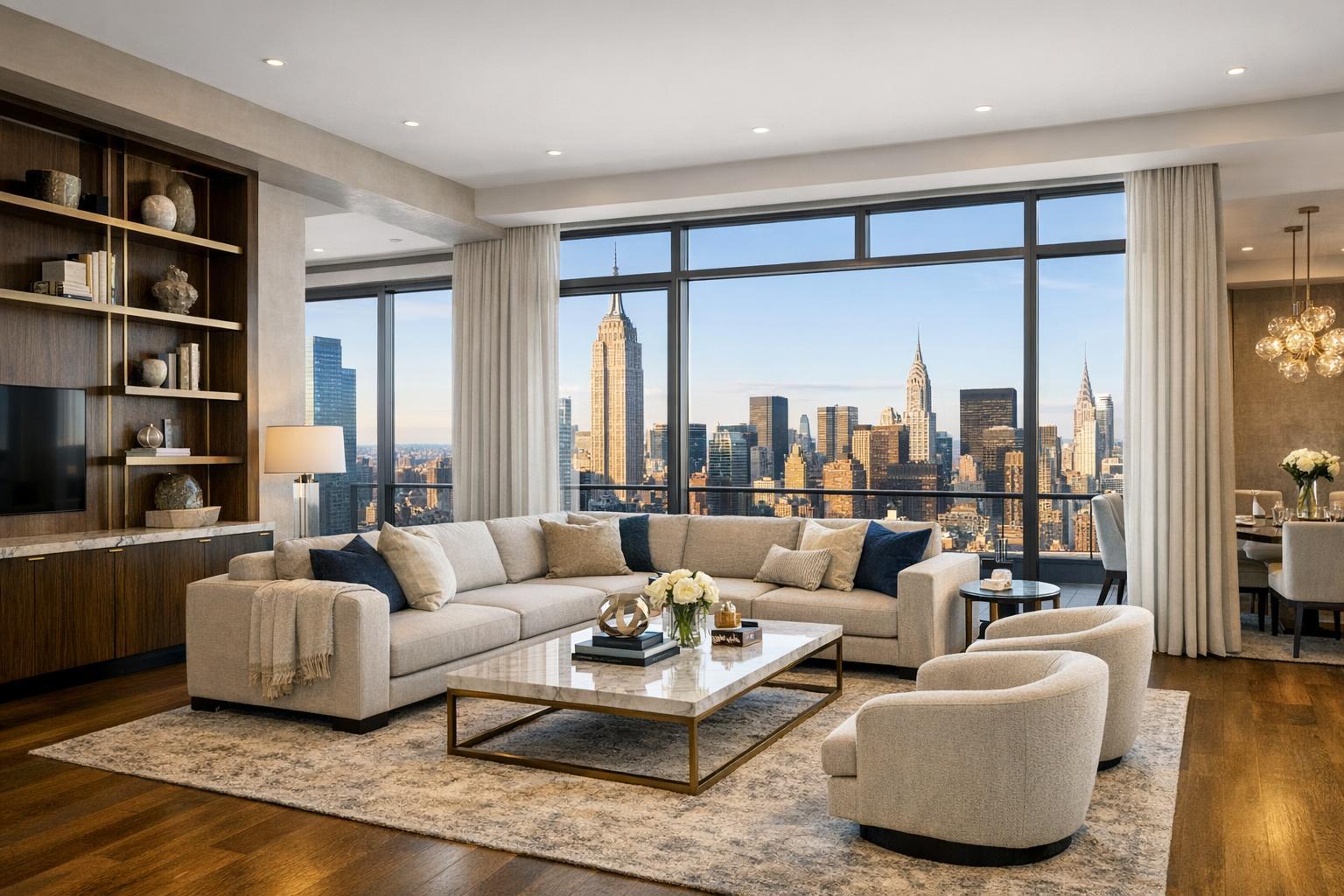
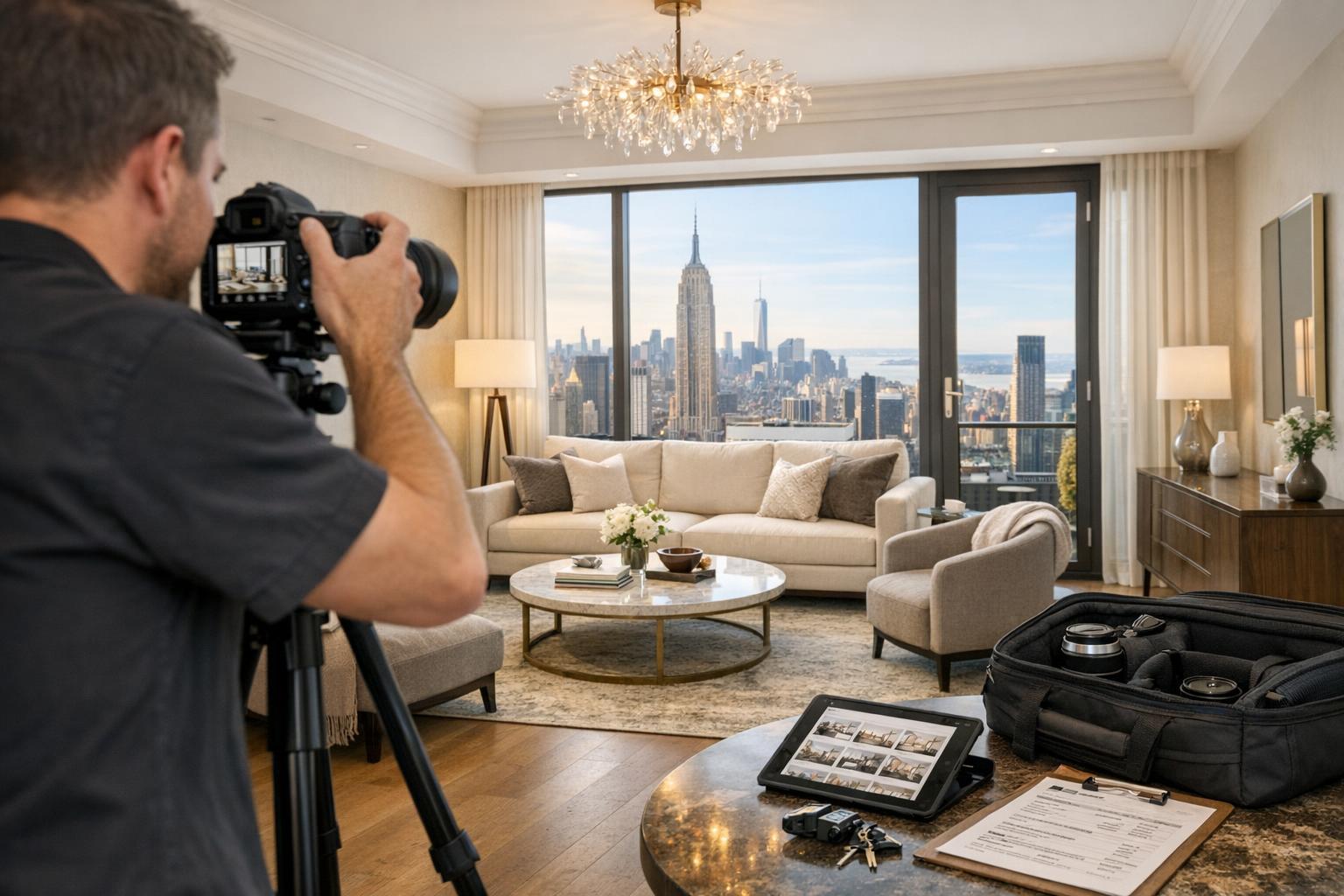
In a modern living room with a stunning cityscape view, a real estate photographer captures the scene using a professional camera setup.
How to Choose a Real Estate Photographer for Your NYC or New Jersey Listing
Finding the right real estate photographer isn’t simply about picking someone with the flashiest portfolio. For agents and property owners across NYC and New Jersey, a great photographer can quietly shape how your listing is understood when viewed for the first time—presenting the layout, light, finishes, and feel of a home as it actually exists. That challenge is unique in a region where a listing could be anything from a cozy Manhattan co-op to a sprawling New Jersey single-family, with every property type presenting its own demands.
Over the years, we’ve seen how easily a listing can feel disconnected or over-processed if the photographer overlooks the nuances of each space. What’s really needed is a photographer who thinks like a listing strategist: someone who balances aesthetics with accuracy, knows when to use restraint, and understands how preparation and communication can make the production process easier for everyone involved.
Below, we share what actually matters when choosing professional real estate photography services in NYC or New Jersey—grounded in the operational realities of how buildings, scheduling, and visual decisions play out in the field.
Photographers and Portfolios: What Tells You the Most?
It’s standard practice to browse online galleries or social feeds filled with impressive images. The reality? Just about any property photographer can pull together a few striking photos from their archive. The true test is how their work stacks up as a complete set for a real listing.
Look for consistency across entire property galleries, not just hero shots. Ask to see previous listings that walk you through a whole home—kitchens and living rooms, sure, but also hallways, bathrooms, smaller bedrooms, utilities, and exteriors under less-than-perfect conditions. A well-done collection should:
- Maintain balanced brightness from room to room
- Present accurate colors in various lighting (especially with NYC’s eclectic fixtures or New Jersey’s sunrooms)
- Keep vertical lines straight (look at walls, cabinetry, doors)
- Show window views and interiors cleanly, not blown-out or muddy
- Present a logical sequence, so the viewer can “move” through the property
- Avoid stretching or distorting small rooms
- Balance exterior photos with the interior set
Inconsistencies—in color, editing style, or perspective—can create a listing gallery that feels choppy or artificial. That’s something most buyers and renters will sense, even if they can’t put their finger on why.
Proportions, Lines, and Trust: Getting the Visuals Right
Wide-angle lenses allow photographers to show more space, which is a practical necessity for compact New York apartments or tight brownstones. But overusing them, or failing to manage camera height and angle, can result in curved walls, stretched sofas, and misleadingly large rooms.
Check that the photographer’s galleries feature:
- Upright door frames and cabinetry
- Clean, logical lines—critical in properties with strong geometry (townhouse moldings, modern kitchens, etc.)
- Authentic room proportions that don’t oversell spaces
These visual choices aren’t just aesthetic. They help prevent disappointment when visitors tour the property in real life. A narrow room might benefit from a careful angle to show orientation and light, but shouldn’t look twice its actual size.
A skilled real estate photographer understands that building trust is about avoiding visual exaggeration.
Lighting: Every Room, Every Situation
Different spaces pose unique lighting challenges. Manhattan apartments might have bright window walls and deep shadows in the same shot. Suburban homes can feature rooms with wildly different exposures, especially across multiple levels.
Professionals compensate by:
- Balancing exposure so interiors remain well-lit and window views aren’t lost
- Keeping colors believable—white walls should stay white, not swing blue or yellow with shifting sunlight or bulbs
- Avoiding heavy post-processing that gives every photo an unreal “pop” at the expense of accuracy
A telling question to ask any real estate photographer: How do they work with a mix of natural and artificial light within the same property? The answer will often reflect their understanding of what it takes to produce consistent results.
Editing: Enhancing, Not Distracting
Editing is a normal part of real estate photography services—used to clarify, straighten, brighten, and correct. Problems arise when post-production becomes the “main event,” introducing super-saturated colors or aggressive effects that distract from the property itself.
Before booking, compare recent complete listings. Is the photographer’s editing style aligned with your property, and does it feel steady throughout? Light, airy, or bold styles are both valid—what matters is consistency and truthfulness to the real environment.
Clarify what’s included in post-production. For example, RealtaSnap photographs properties as they physically exist on site. Special requests like major object removal or virtual staging for furnished spaces should be discussed in advance. For empty rooms, virtual staging works best when the space is fully clear before capture.
If you’re interested in virtual staging, remember: it’s most successful in vacant, clean rooms. If there’s furniture or clutter present, a declutter or removal process must typically happen before staging can be applied.
Matching the Photographer to the Property Type
Not every photographer is familiar with the unique challenges of each property style. For urban and suburban listings alike, familiarity goes a long way.
- Manhattan Apartments and Co-ops:
These often require creative problem-solving (tight quarters, building access, long corridors, reflective surfaces, city views). It’s important to highlight each room’s real function—maybe a dining nook in the living area, or a built-in office alcove. Building rules also come into play: check building requirements for insurance, elevator reservations, and visitor registration. - Brooklyn Brownstones and Townhomes:
These homes present beautiful period details (staircases, bay windows, fireplaces), but may have uneven natural light floor to floor. The right property photographer will present vertical flow and main features in a logical, walk-through narrative. Exterior shots, garden spaces, and top-floor rooms benefit from a thoughtful sequence. - New Jersey Single-Family Homes:
Larger homes mean more coverage and more options: garages, basements, decks, and yards. When the property includes a standout exterior location or lot, aerial (drone) images can add useful context—showing space, proximity to amenities, or a relationship to the neighborhood. Keep in mind, though, that flights always depend on safety, airspace rules, weather, and pilot discretion.
Fundamentals of Preparation and Communication
A little preparation before the real estate photographer arrives can prevent delays and improve results.
Consider sharing:
- Occupancy status (vacant, occupied, tenant-occupied, under renovation)
- Priority rooms or features to highlight
- Access instructions (building entry, parking, elevator use)
- Pet presence or access limitations
- Preparedness of lights, window treatments, and outdoor areas
- Time constraints from buildings, tenants, or sellers
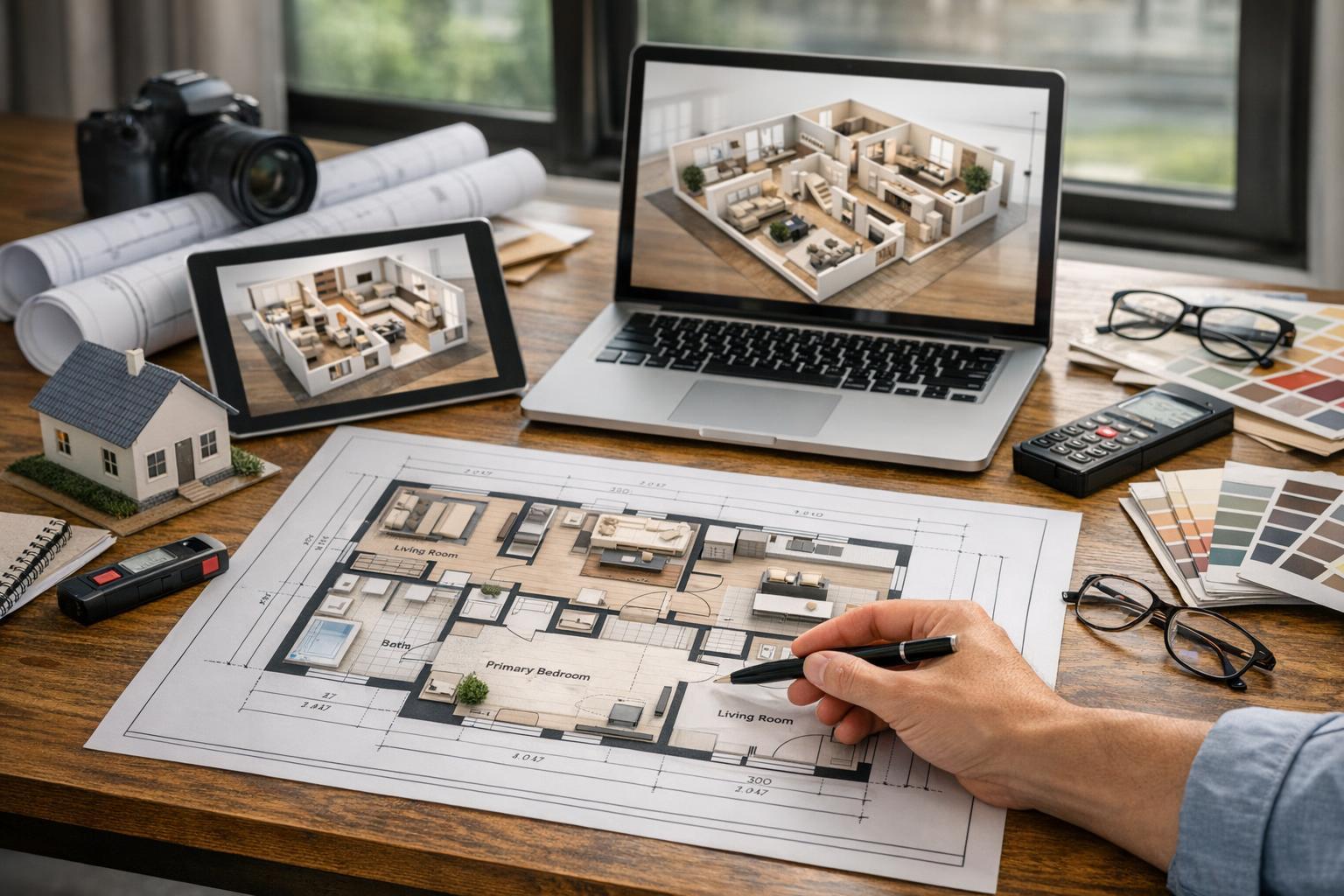
- Whether you’ll need only photography, or other media like floor plans or 3D tours
Occupied homes in particular benefit from advance decluttering, stowing personal items, and opening blinds. Well-prepared spaces ensure the photography session is efficient—and that images present the property clearly, with minimal reliance on digital fixes.
For larger homes, don’t forget exterior readiness: move vehicles, arrange outdoor furniture, tidy decks or patios, and make pools presentable.
Deciding on Additional Media: When Photography Alone Is Enough
While still photography forms the foundation of most listings, additional media can solve specific problems:
- Floor Plans:
Useful for clarifying unusual or multi-level layouts, especially in homes or apartments with complex circulation. Floor plans require on-site capture and access to all areas. - Video:
True listing videos (filmed on site) can show movement and “flow,” connecting rooms and making sequences easier to grasp—particularly valuable for unique arrival experiences, open layouts, or properties with strong indoor-outdoor relationships. - 3D Tours:
Interactive, immersive walkthroughs let remote viewers explore at their own pace—a good fit for vacant homes, relocations, or properties where buyers want an in-depth sense of space. Like photos and floor plans, these require a full on-site scan.
To learn more about the available options and best-fit solutions for your upcoming listing, you can always find details on RealtaSnap’s real estate media services.
Beyond the Images: Process and Service Matter
Deciding who to hire also comes down to how the photographer handles the working relationship. In listings where agents, sellers, building managers, and photographers need to coordinate, clear communication is sometimes as valuable as a great image.
Ask about:
- How to share access or preparation instructions
- Recommended pre-appointment steps
- Options for handling special requests (unique spaces, editing needs)
- How many photos or which services are included with your chosen package
- How to select additional add-ons
- What the delivery process looks like
- Who to contact if something changes before the shoot
With RealtaSnap, scheduling and service selection is handled via an online booking platform. You enter the property address, add your notes, choose photography and any add-on media, select an available time, and pay at checkout. Standard bookings require at least 24 hours' notice for planning and coordination.
Setting a Practical Standard for Your Next Listing
Choosing a real estate photographer should feel like a functional part of getting a property market-ready—not a gamble or a guessing game. The best results come when there’s strong consistency in the images, accurate representation of space and color, an editing style that supports clarity, and familiar workflow protocols that keep the process low-stress.
In a market as diverse as NYC and New Jersey, these basics apply whether you’re listing a cozy studio, a landmark brownstone, or a spacious family home with a yard. Effective photography serves both showing and selling: it makes what’s there easy to understand and helps buyers or renters visualize themselves in the space.
If you’re ready for on-site listing photography or property media in NYC or New Jersey, we’d be happy to help. See more at www.RealtaSnap.com.
FAQ
Question: How many photographs should a property listing include?
Answer: The ideal number depends on the size, complexity, and highlight features of the property. Small apartments might only need 10–15 images, while larger homes with multiple levels, outdoor spaces, or special amenities may need 20 or more. Focus on presenting every key area clearly without unnecessary repeats.
Question: Is it better to order floor plans or stick with photos alone?
Answer: Floor plans are most useful when the layout or circulation is a real factor in a buyer’s decision—think multi-level homes, apartments with odd shapes, or properties with flexible spaces. Since floor plans require on-site capture, it’s easiest to add them to your photography booking if you know you’ll need one.
Question: Can virtual staging be added to a furnished or cluttered room?
Answer: For the best results, virtual staging is applied to rooms that are empty and clean. If items are present, they typically need to be removed physically or via advanced clutter removal edits before staging can be applied. Talk to your photographer about what’s feasible for your space.