How to Choose a Manhattan Real Estate Photographer for Your Next Listing
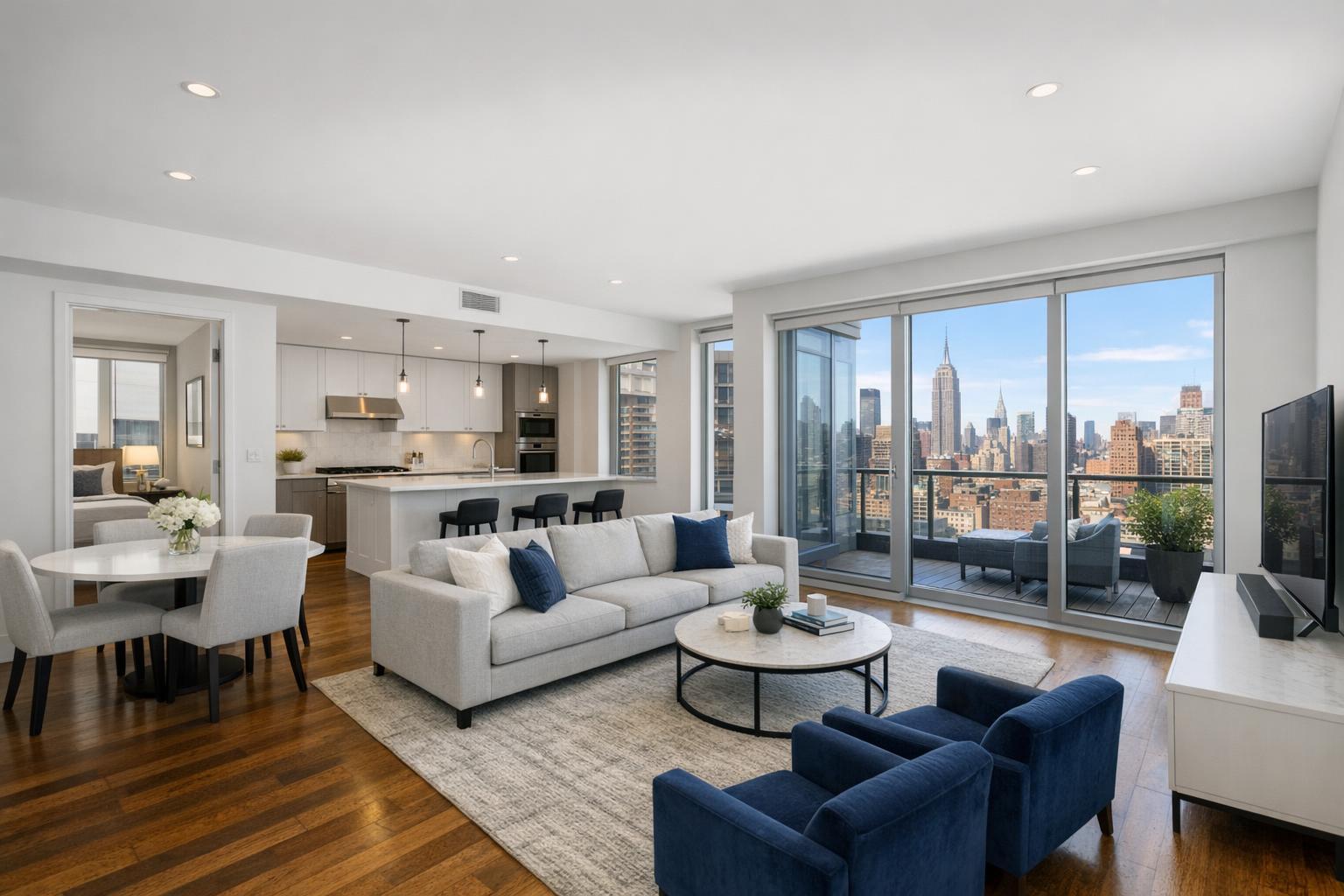
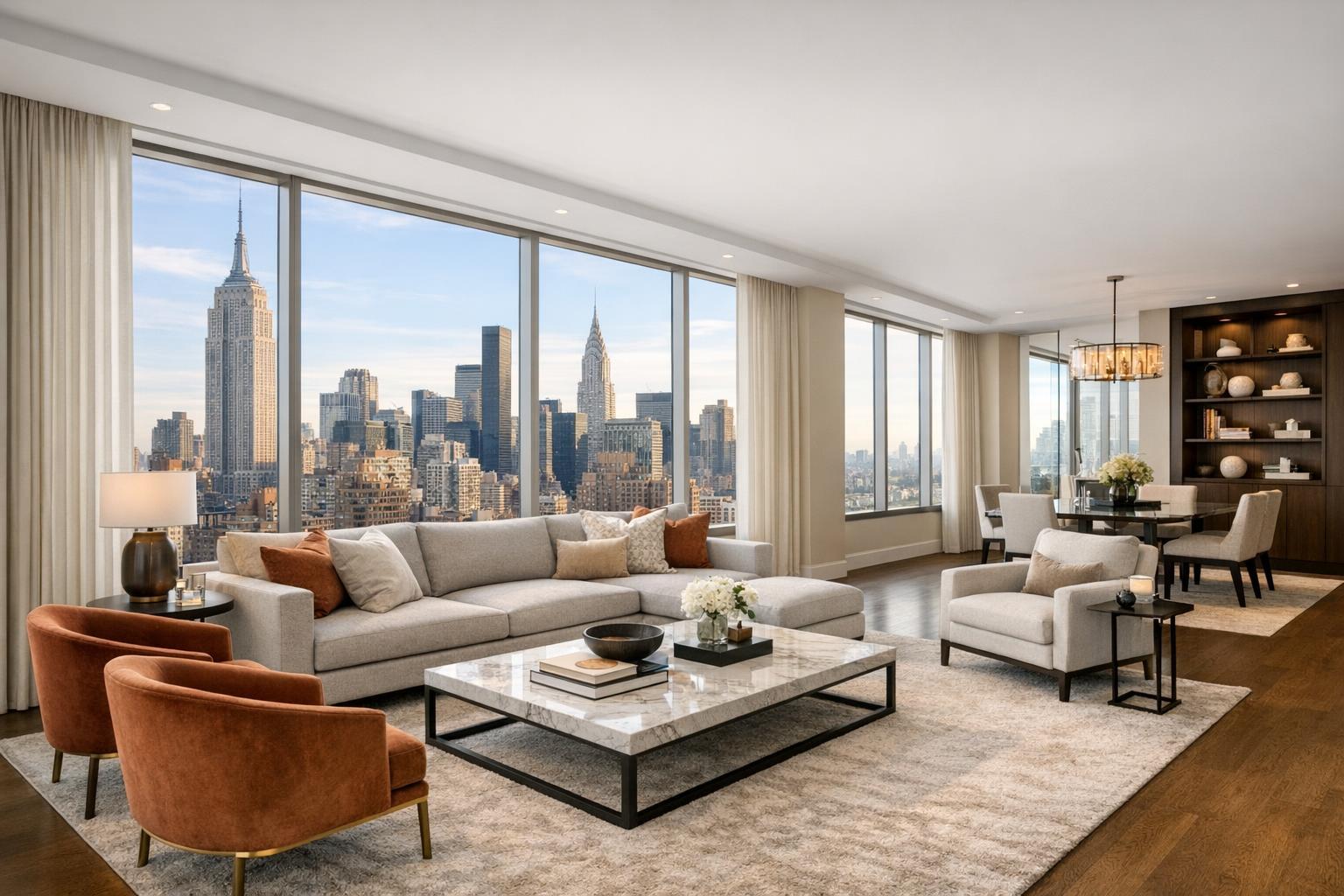
Manhattan real estate photographer captures a luxurious, modern living room with expansive windows showcasing a stunning skyline view.
How to Choose a Manhattan Real Estate Photographer for Your Next Listing
A Manhattan real estate photographer is expected to do more than create bright, agreeable images. For agents, brokers, developers, and property managers working in New York City’s competitive marketplace, the right provider helps clarify spaces, respects building logistics, and guides the production process so the finished result makes listings easier to interpret.
Why Manhattan Properties Demand Specific Real Estate Media Expertise
Property marketing in Manhattan means adapting to unique realities: compact rooms, iconic skyline views, pre-war details, service elevators, building access rules, renovation noise, and tight windows for getting the job done. A professional property photographer must navigate all of this with more than just a camera. For every assignment, it’s just as much about organizing a smooth process as it is about capturing usable, accurate images.
Hiring in Manhattan isn’t about picking the first strong-looking portfolio—savvy real estate teams look for consistency, reliability, and an eye for local architecture, knowing that the stakes (and expectations) are higher than in many other markets.
What to Look for Beyond the Portfolio
Images Should Communicate Honestly
First impressions matter, but for real estate photography in NYC, authenticity is essential. Images must help buyers, tenants, or commercial clients genuinely understand the scale, flow, light, and features of a property. A beautiful but misleading image creates confusion and wasted showings. Dig into full galleries, not just highlight photos. Ask yourself:
- Do the photos give a clear sense of how each room relates to the others?
- Are small rooms captured with care, rather than exaggerated by extreme wide angles?
- Do critical features (like window views, kitchens, built-ins, and architectural details) get appropriate attention but not overhyped?
Composition, Lines, and Perspective
Manhattan interiors are packed with strong vertical elements—windows, moldings, cabinetry, and columns. Look for images that keep vertical lines visually straight and natural. Crooked or distorted images usually mean rushed composition or lack of attention to detail. In multi-story townhouses or large condos, a logical visual progression from room to room helps prospective buyers orient themselves quickly.
Window Exposure and Color Accuracy
One recurring challenge in NYC listings is balancing indoor lighting with exterior views. In apartments overlooking Central Park, the Hudson River, or city streets, window exposure matters. Ideally, you want images that preserve both the interior’s appeal and a believable snapshot of the view. Overexposed or completely white windows lose valuable context, while oversaturated editing or blue-tinted windows can feel misleading.
A consistent, clean editing approach also means colors look natural—floors, stone, walls, and art should appear as they do in-person throughout a gallery. If the editing style jumps dramatically between images or listings, it’s harder for buyers to trust what they’re seeing.
The Importance of Process: Editing, Access, and Communication
Consistent Editing, Not Just Dramatic Showpieces
It’s easy to fall for the most striking images in an online gallery. But focus on consistency across entire jobs: bedrooms, bathrooms, entryways, hallways, and utility spaces. For luxury or commercial listings, this often means hundreds of images—every one should reflect the same editing standard and attention to detail.
Ask what’s included in the standard delivered gallery versus what might require separate editing, object removal, or special retouching. For example, RealtaSnap is clear about what’s covered by standard editing and what counts as additional clutter removal or virtual staging.
Logistics: Building Access and Occupied Properties
In Manhattan, property access can be as important as camera skills. Photographers often work around doormen, advance vendor sign-in requirements, certificates of insurance, elevator reservations, and time windows that restrict when services can be performed. For occupied apartments or rental units, close coordination is needed to minimize visual clutter—counters, cords, and personal items should be addressed before the shoot to keep attention on the space.
Before booking, confirm:
- Who will provide access on the day of the shoot?
- Are special building approvals or paperwork required?
- Are there specific time slots when the property can be photographed?
- Should certain rooms, amenities, or common areas be excluded for privacy or compliance?
- For vacant units, is staging or virtual staging being planned, and are rooms truly empty?
Clear communication before the shoot helps the process move efficiently and avoids last-minute surprises.
Matching Media Choices to the Property
Listing media isn’t one-size-fits-all—especially in NYC. The right mix balances clear photography with other media only when they add meaningful context for the listing.
- Photography is usually the foundation: For straightforward, well-prepared apartments or small rentals, a carefully selected set of professional photos is often enough.
- Floor Plans can be essential: Especially when room connections are unclear, or layouts are unconventional (alcoves, split wings, office nooks, formal and informal areas). For Manhattan co-ops and condos, this can make a listing easier to interpret, but requires full physical access — floor plans can’t be made from old PDFs or marketing materials.
- Video brings movement and atmosphere: Real, on-site video shows how rooms connect and helps buyers feel the experience of walking through a space. At RealtaSnap, listing videos are always shot on site—slideshows assembled from stills aren’t used.
- Virtual Tours (like Matterport) enable remote navigation: Helpful for new developments, commercial listings, or units likely to attract out-of-town buyers. Virtual tours require on-site scanning, not just photos or plans.
- Virtual Staging works only for empty rooms: Placing digital furniture over existing items won’t achieve a believable result. Either remove furniture ahead of time or add virtual staging only after approved clutter removal if needed.
- Drone Media is possible only where conditions allow: In Manhattan, airspace, rooftop access, weather, and FAA rules make drone services variable. If a shot of the building’s exterior, roof deck, or location is important, address this early and be aware that drone work is never guaranteed.
Practical Questions for Comparing Providers
When evaluating a real estate photography NYC service, ask direct, operational questions—especially if the listing has unique requirements or you’re managing multiple properties:
- What details do you need before the appointment?
- How are building access and special requests handled in the workflow?
- What is the typical turnaround for delivered media?
- Is it possible to request more images or additional edits after initial delivery?
- Will floor plans, video, or virtual tours be captured on the same visit, or do they require separate appointments?
- How are changes, revisions, or out-of-scope requests managed?
- Can I confirm the exact deliverable list, and will that be visible in my booking confirmation?
RealtaSnap streamlines this process: clients enter the service address, entry instructions, and property details during online booking, and can choose from available service options, add-ons, dates, and times using a real-time calendar.
Relevant details on the booking workflow are available at https://www.realtasnap.com/schedule.
Price Is Only Part of the Calculation
Many providers advertise aggressively low prices, but experienced agents know to dig deeper. What’s included? Are all rooms covered? How consistent is the editing? What are the add-on or rush fees? Can the provider handle an occupied apartment, a commercial lobby, or an amenity floor with building restrictions?
Reliable service means:
- The delivered galleries look sharp and organized across different listings
- Vertical lines, window exposures, and room connections appear natural
- Property features are genuinely presented—not exaggerated or omitted
- The workflow is clear and booking is straightforward
- Special requests and modifications are handled according to up-front policies, not post-delivery surprises
For Manhattan luxury, commercial assignments, or complex listings, it may help to consult about goals, logistical requirements, and the desired media mix before booking. Sometimes a more tailored approach is worth the time.
Current RealtaSnap photo rates start at $149 for 10 images, with flexible add-ons for services like advanced floor plans, video, virtual tours, and drone coverage. Complete, up-to-date rates and service details can be found at https://www.realtasnap.com/real-estate-photography-nyc.
Choosing Media That Clarifies, Not Complicates
A capable Manhattan real estate photographer translates physical reality into clear, believable media that benefits everyone involved—the seller, the agent, and the buyer or tenant. Visual storytelling should do more than catch the eye. It should make every listing easier to understand and easier to market—whether that means minimal images for a compact co-op or a full suite of media for a new development.
Explore more about our approach and offerings for the New York City and New Jersey real estate markets at www.RealtaSnap.com.
FAQ
Question: How much advance notice is needed to book a real estate photography appointment in Manhattan?
Answer: Building requirements often determine lead times. Some require vendor approval or elevator reservations. RealtaSnap’s online booking system requires at least 24 hours’ notice, and shows all available appointment windows for NYC properties.
Question: Is a floor plan always necessary for Manhattan listings?
Answer: Not always. Floor plans add particular value when a layout is complex or when buyers can’t easily interpret the flow of rooms from photos alone. However, making one requires physical access to the entire space—RealtaSnap does not produce floor plans from PDFs or existing plans.
Question: What’s the process for virtually staging a room that isn’t empty?
Answer: Virtual staging is intended only for clean, empty rooms. If furniture is present, it should be removed physically or addressed with a paid clutter removal edit before staging is applied. This helps ensure the final image looks natural and avoids layering digital furniture over real items.