How to Choose a Commercial Real Estate Photographer for Your Property
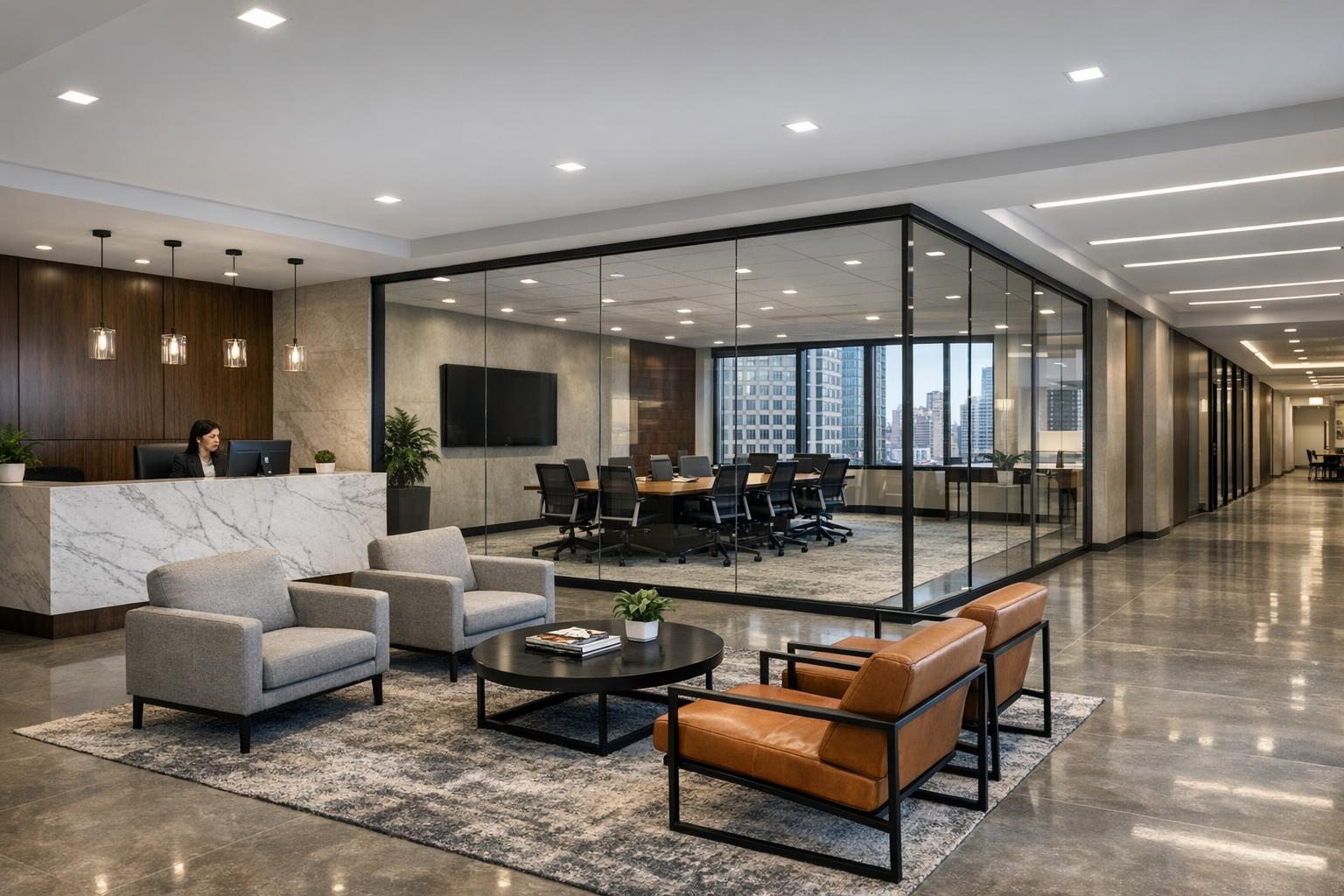
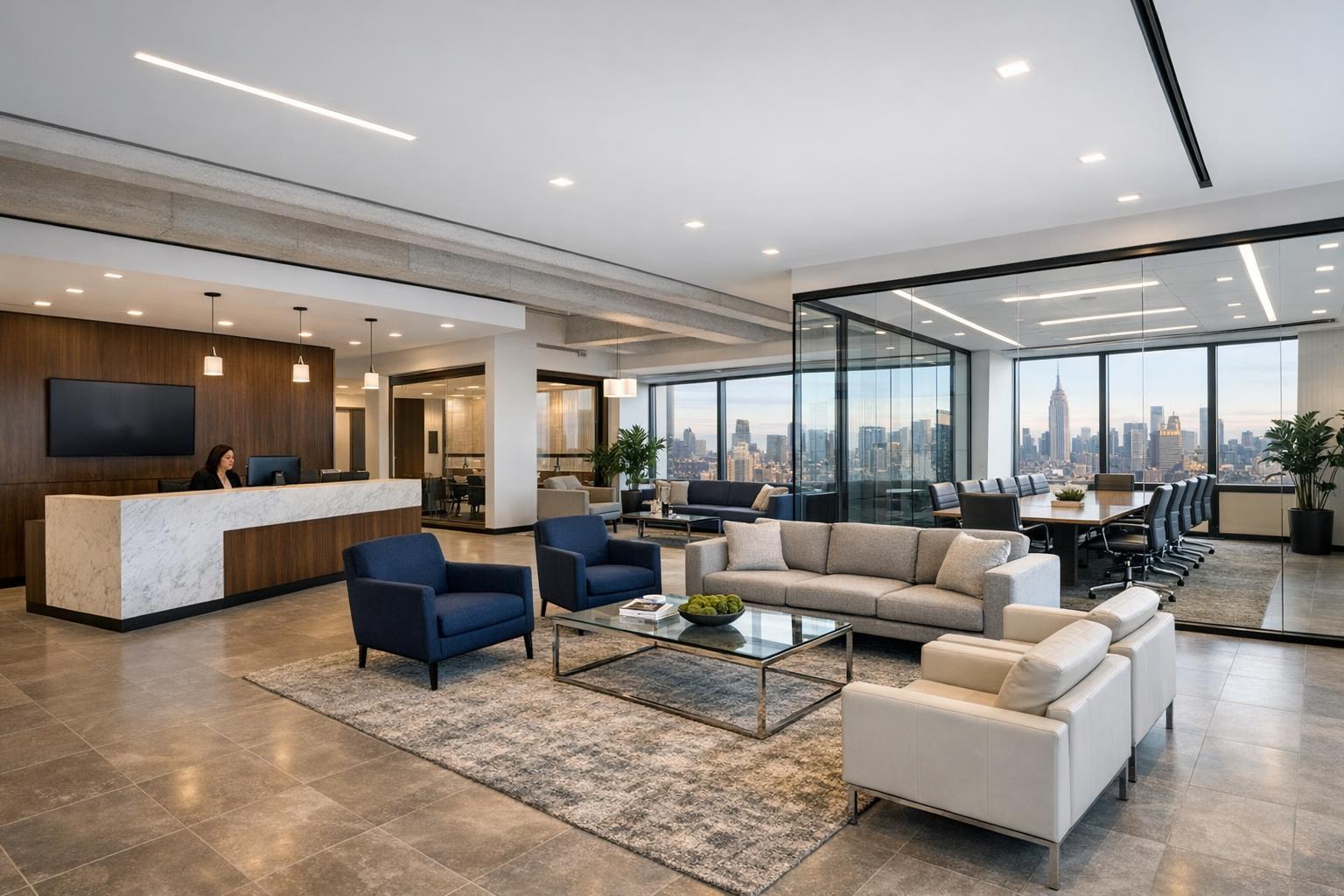
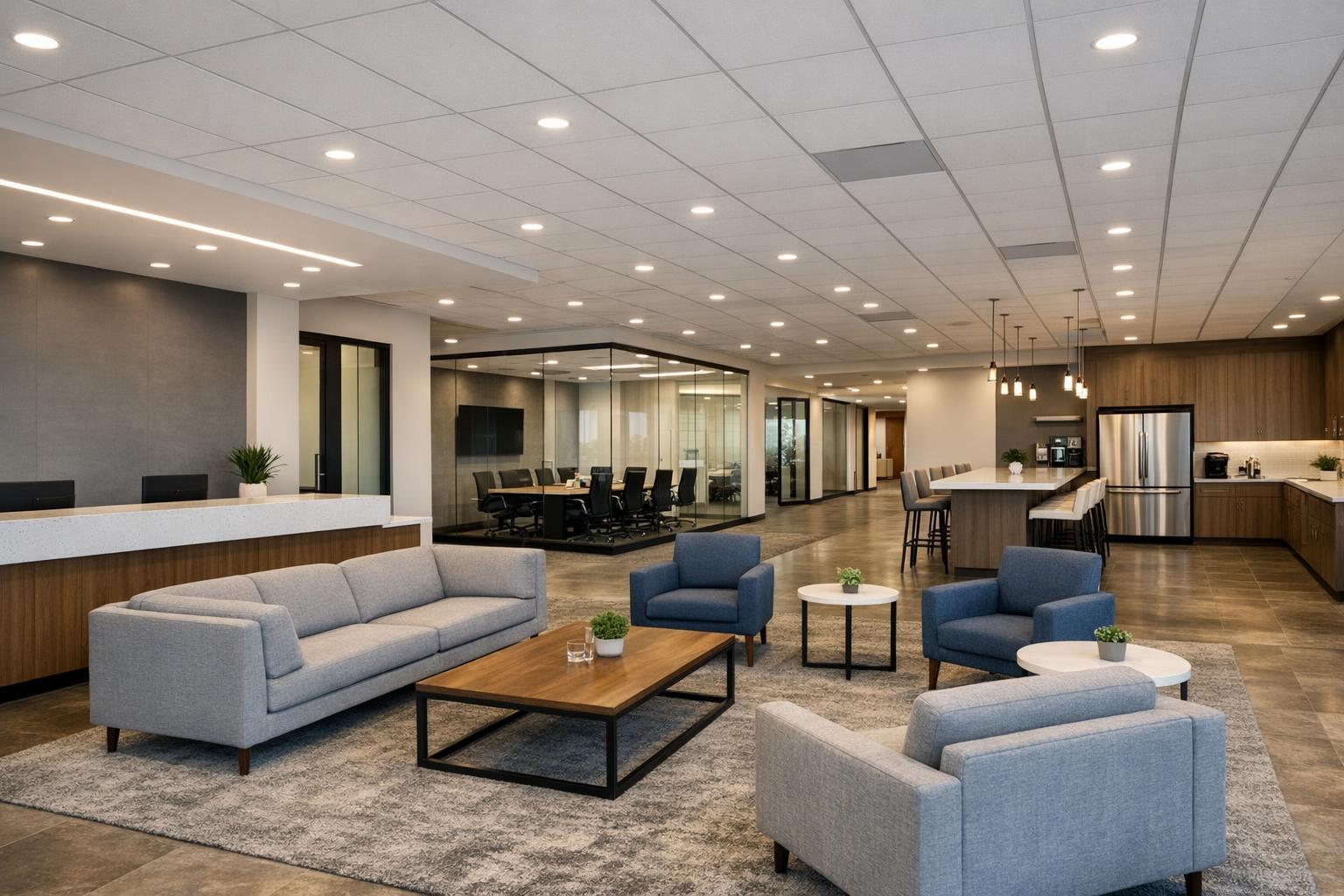
A modern office space is showcased with a welcoming reception area, sleek conference room, and comfortable seating, highlighting its commercial appeal.
How to Choose a Commercial Real Estate Photographer for Your Property
Commercial real estate photography is about much more than showcasing attractive spaces—it's one of the most practical tools available to brokers, property managers, developers, and business owners for communicating what a property is, how it functions, and why it’s valuable. The right images answer questions for your audience, support better decision-making, and help listings stand out for the right reasons.
Selecting a commercial property photographer is a bigger decision than simply who takes the sharpest photos or offers the lowest price. Different property types and business goals require distinct approaches to coverage, production, and delivery. In high-density regions like NYC and New Jersey, factors like building access, tenant coordination, and even the local streetscape become central to getting the results you need.
This guide brings together real-world experience and practical production insight to help you hire the right commercial property photographer for your project.
Understand the Role of Commercial Property Photography
Unlike residential listing photos, commercial real estate photography is built around conveying the functionality, potential, and context of a property. That means documenting scale, layout, features, and condition—not just making the space look beautiful. Whether you’re marketing an office, retail storefront, industrial facility, or newly developed building, the core question is: what are the decision-makers trying to see?
Consider these practical needs:
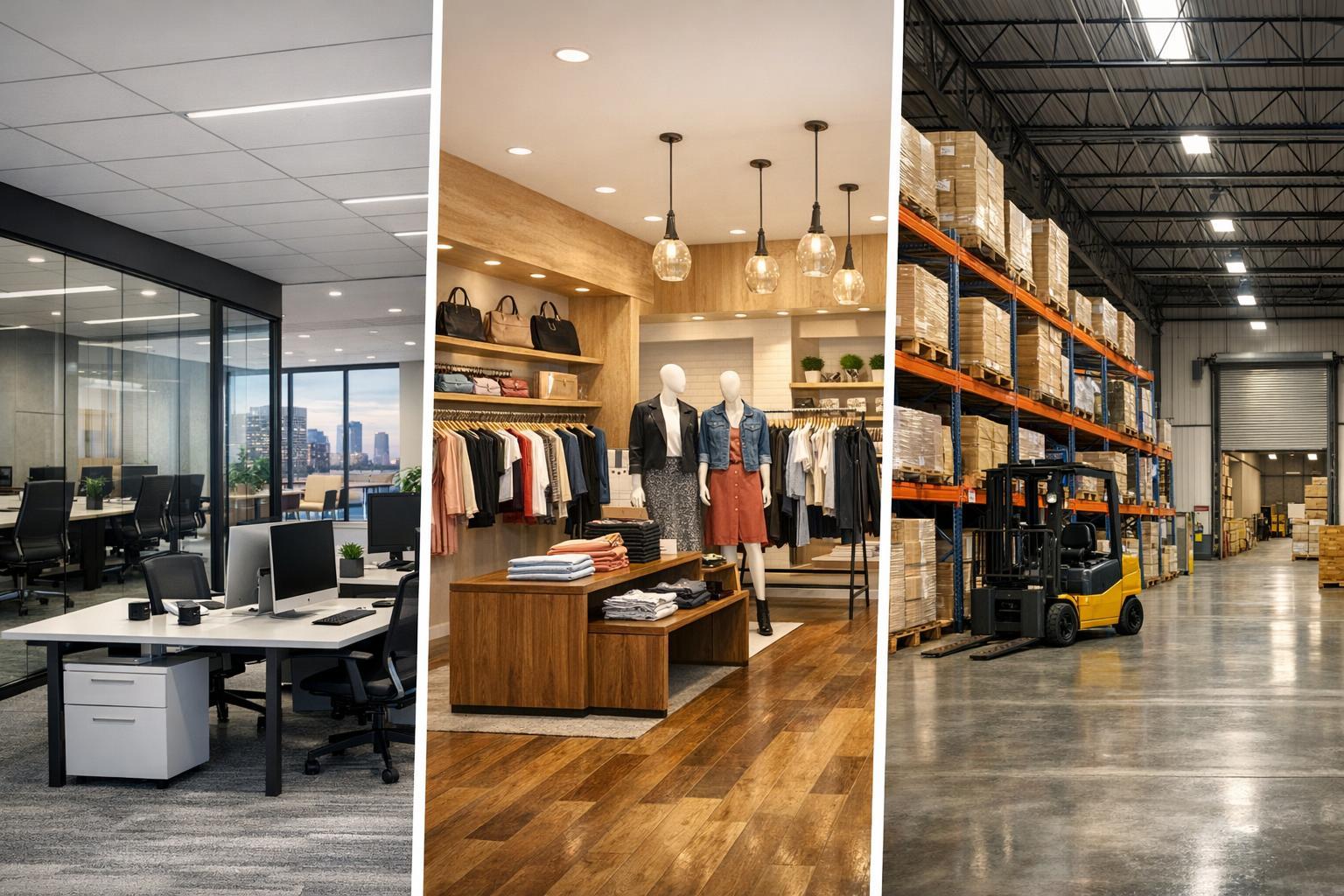
- Office tenants may focus on natural light, desk capacity, conference areas, and building amenities.
- Retail prospects want to evaluate storefront visibility, customer flow, signage, and foot traffic.
- Warehouse users care about loading docks, site access, ceiling height, and circulation.
- Hospitality listings require images that capture both guest-facing areas and operational zones, like kitchens, lobbies, or back-of-house.
- For new developments, showing construction progress or completed phases can matter as much as the finished aesthetic.
The utility of commercial images depends on whether they communicate the right information to your intended audience. Start with a clear sense of what you’re marketing and who is making the decision.
Not Just Bigger Spaces: Why Commercial Is Different Than Residential
Commercial property photography is more than just "residential, but larger." The intent shifts from capturing the feel of a home to revealing the workability and advantages of business space. Yes, good composition, lighting, and color matter. But so do factors like:
- The way different rooms or zones connect.
- The scale of workspaces or equipment areas.
- The visibility and layout of key features (like conference rooms, storefront windows, or loading bays).
- How much natural light rooms receive—and at what times.
- The exterior’s relationship to adjacent buildings, parking, or street activity.
One operational insight: Perspective control is especially important for commercial property. For instance, leaning verticals can distort a tall warehouse, and overly wide images might exaggerate room size but lose important details. A seasoned commercial property photographer manages lens choice, camera height, and composition for accuracy and clarity, presenting the property true to life.
Evaluating Portfolios: Go Beyond Style
A polished portfolio may impress at first glance, but commercial real estate projects demand more than nice images. Instead of chasing “wow” factor, focus on relevance to your property type and challenges:
- Does the photographer have experience with offices, retail, industrial, hospitality, or development projects?
- Are photos comprehensive, not just a handful of highlights?
- Do the images actually help you understand room flow, light, and layout?
- Is the representation of exteriors, amenities, and surrounding context useful?
Review the quality of lighting handling, how spaces are composed, and whether architectural lines and verticals remain controlled. A coherent, consistent result across an entire set of images usually signals professionalism in the commercial space.
Planning Scope and Coordination Before the Shoot
One common mistake in commercial property projects is leaving shoot priorities and logistics vague. A well-planned scope saves time, maximizes useful coverage, and minimizes disruption for tenants or ongoing business operations. Always discuss:
- Which rooms, areas, or features are non-negotiable for the marketing package?
- Are there floors, tenant spaces, or shared amenities that need specific handling?
- Is the property vacant, partially occupied, or under construction?
- Are you gathering images for leasing, sales, investment, a website, or another business purpose?
- Will anyone be available on site to assist with access, directions, or approvals?
Especially in larger properties, a focused shot list—built around must-have images, not every possible angle—can help photographers balance comprehensive coverage with practicality. If you’re seeking additional media like video, floor plans, 3D tours, or drone imagery, it’s often more efficient to plan all production together.
Operational Realities: Site Access, Tenants, and Timelines
In NYC and New Jersey, logistics are often as challenging as the photography itself. High-rise buildings may require elevator bookings or management approval; retail shops might need to avoid busy customer hours; warehouses could have restricted zones or safety protocols. Here are a few practical steps:
- Always coordinate with property management for access, keys, security, and insurance or certificate requirements.
- Allow for low-traffic times if images need to capture spaces without staff or customers.
- Prepare the property by removing clutter, excess signage, cleaning supplies, and any items you don’t want photographed (this helps focus the viewer and avoids misrepresentation).
- Be ready to provide clear instructions if specific features or areas are priorities—or if there are spaces that must not be photographed.
Preparation upstream vastly improves the efficiency of the shoot and the final outcome. Removing distractions, clarifying access, and aligning on scope ultimately save both time and editing effort.
NYC and New Jersey: Local Nuances and Media Considerations
Working in New York City means adapting to compact building entrances, busy sidewalks, overlapping uses in mixed-use buildings, and tight turnaround windows. Outdoor shots might need to be carefully timed around construction, deliveries, or street activity. Many larger NYC buildings require coordination with management for access, and roof access can sometimes support drone feasibility in dense urban blocks.
New Jersey properties often involve more space—side yards, large parking lots, wider driveways, and suburban or industrial settings. Here, aerial imagery, broader exterior coverage, and property context often play a greater role, when permitted and practical. All drone work is subject to FAA regulations, weather, safety, and pilot discretion.
Should You Add Video, Floor Plans, 3D Tours, or Virtual Staging?
Photography is the core for most commercial projects, but certain properties benefit from complementary visual assets:
- Video can clarify movement through space and atmosphere, showing relationships between rooms or zones that still photos might miss.
- Floor plans help prospects understand layout and spatial organization—a valuable asset for offices, multi-room suites, or developments. These require on-site capture.
- 3D virtual tours allow remote viewers to explore interactively, but must be produced by physically scanning the property.
- Drone imagery can document site scale, surroundings, or unique positions, particularly for larger campuses or buildings with hard-to-capture exteriors.
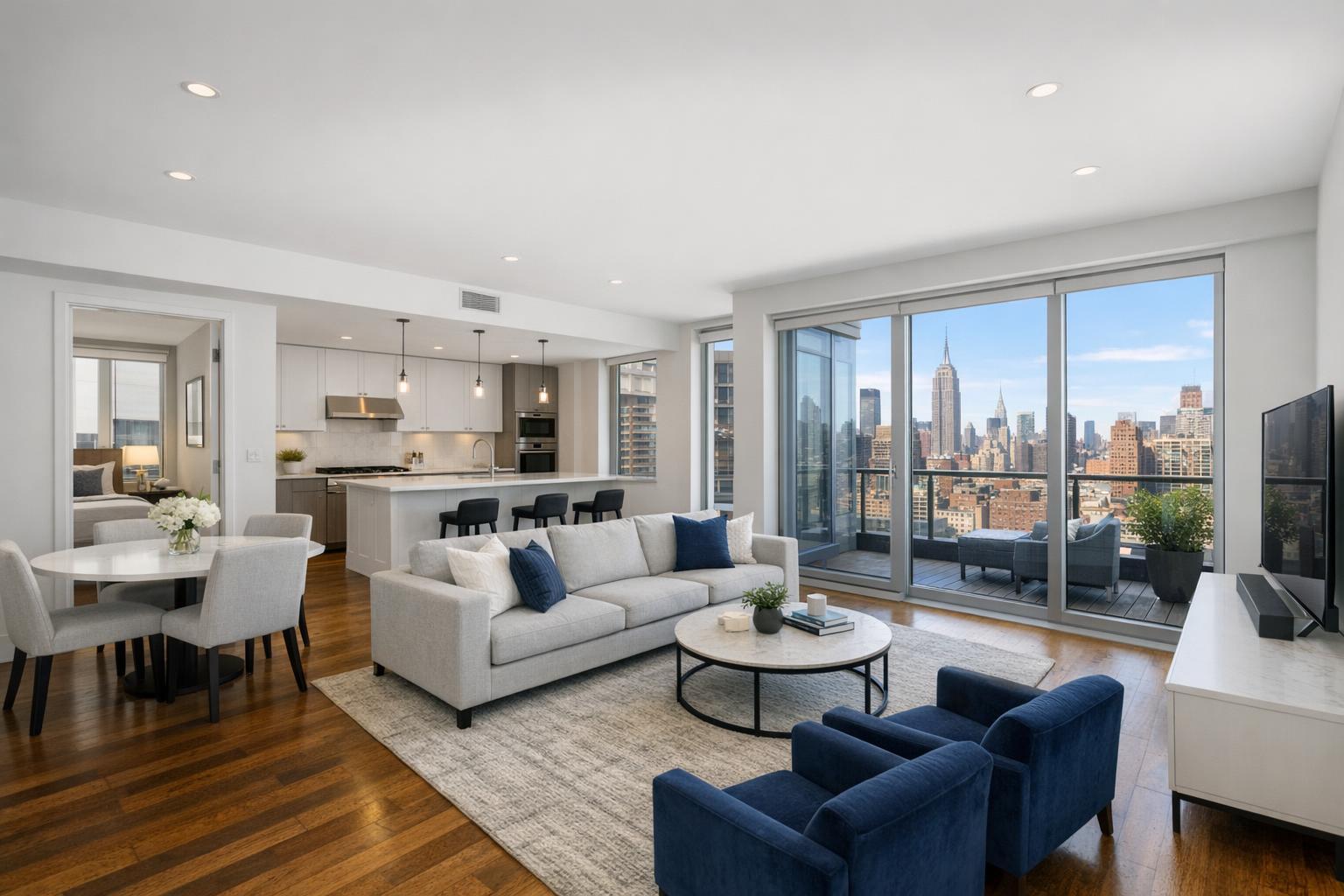
- Virtual staging may illustrate possibilities in unfurnished or empty spaces, but typically needs a clean, decluttered room for best results.
Only add media that supports your actual marketing or communication goals. Layering extra services without a clear use can add cost and complexity without increasing impact.
Questions for Prospective Commercial Property Photographers
Have a candid conversation with any commercial property photographer you’re considering. It pays to ask:
- What types of commercial properties have you photographed before?
- How do you approach lighting and perspective for large or complex spaces?
- What should be prepared in advance to ensure a smooth session?
- How do you handle site access, tenant communication, and operational constraints?
- Can you coordinate video, floor plans, drone work, or 3D tours if needed?
- What’s the timeline for editing and delivery?
- Are you comfortable with the realities of NYC/NJ scheduling and access?
Direct, practical answers signal a vendor who knows how to work efficiently in commercial settings.
RealtaSnap’s Approach in NYC and New Jersey
At RealtaSnap, commercial real estate photography starts with a clear understanding of your space and business goals. We shoot what physically exists on site, balance interior and exterior exposures, and document important features without exaggeration or misleading edits. Our team routinely assists brokers, managers, developers, and owners with planning coverage and access—whether the assignment calls for images of an office, retail suite, industrial property, or a whole mixed-use building. Floor plans, video, 3D tours, and drone media can be coordinated where appropriate, subject to applicable policies and real-world access.
If you’re looking for professional, on-site commercial property photography in NYC or New Jersey—or want to explore what coordinated media can do for your property—take the first step at RealtaSnap’s commercial photography page, or see office-specific options at our office space photography resource.
For custom projects, questions about scope, or to book online, visit www.RealtaSnap.com.
FAQ
Question: How do you plan coverage for commercial property photography in busy NYC buildings?
Answer: Planning begins with understanding property access, management requirements, tenant conditions, and the ideal timing for capturing different areas. We recommend early coordination with building staff, clear shot priorities, and scheduling around high-traffic or restricted-use periods whenever possible.
Question: What preparation helps ensure a property is ready to photograph?
Answer: Remove temporary items, clutter, and anything not meant to appear in images. Confirm access to every area that needs to be covered and identify in advance any rooms or spaces that should not be included. For floor plans or 3D tours, physical access is required to every part of the property being documented.
Question: Can commercial projects in New Jersey include drone photography or video?
Answer: Yes, many New Jersey locations can benefit from aerial images or video to show broader context. All drone work is handled case by case, depending on airspace, weather, safety, and pilot discretion. Roof access may improve feasibility in some situations. Reach out to discuss site-specific options and compliance.