How to Choose a Brooklyn Real Estate Photographer for Your Next Listing
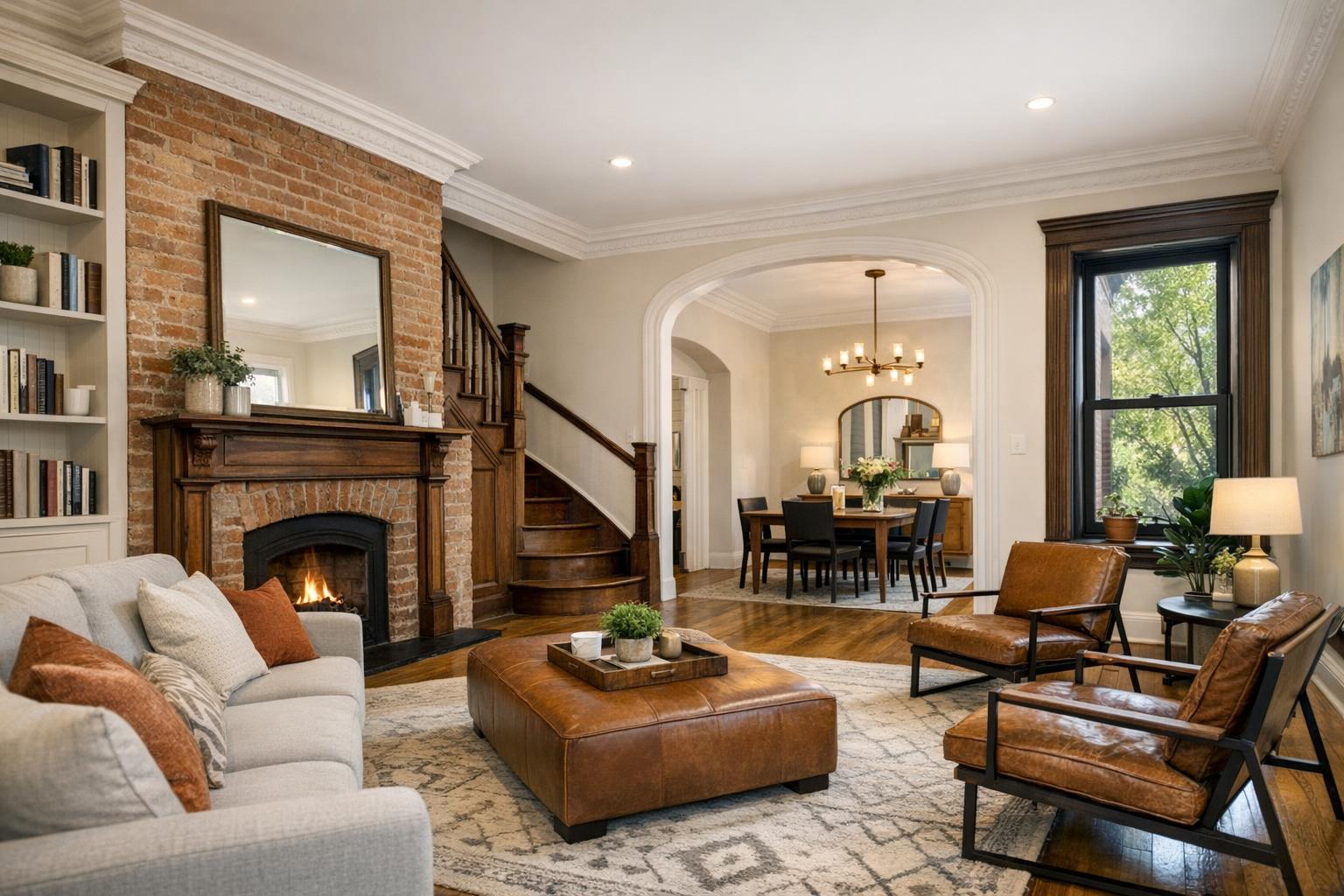
Captured by the Brooklyn real estate photographer, the elegant living area features a cozy fireplace, leather seating, and an inviting archway leading to a dining space.
How to Choose a Brooklyn Real Estate Photographer for Your Next Listing
A Brooklyn real estate photographer isn’t just there to deliver good-looking photos—they’re there to help you present the real property in a way that stands up to scrutiny, makes sense for prospective viewers, and addresses how Brooklyn properties actually show in person. Choosing the right photographer isn’t just about comparing prices or picking whoever’s available. The difference shows in how your listing is experienced online and whether the images tell the true story of each space.
The Practical Picture: What Brooklyn Listings Actually Need
Before you start interviewing photographers or checking rates, ask yourself what this specific property has to communicate. Every Brooklyn listing is different: a daylight-challenged studio, a garden-level brownstone apartment, a pre-war co-op loaded with detail, or a townhouse with four floors and a backyard. Each needs coverage that fits—not just a generic package.
Some practical questions to start with:
- Which rooms or features are selling points?
- Are there original details, unique architectural elements, or upgrades that need to be shown?
- Does the property have outdoor space worth highlighting (balcony, terrace, garden, roof deck)?
- Would the layout be clearer with a floor plan or virtual tour?
- Should shared amenities, the lobby, or exterior context be photographed?
- Is the space empty, tenant-occupied, cluttered, or in move-in condition?
This upfront assessment isn’t just about more pictures. It helps you choose a Brooklyn property photographer who will recommend the right scope based on the listing, not just sell a one-size-fits-all bundle. Clear communication at this stage also helps you avoid surprises later.
What to Look for in a Brooklyn Real Estate Photography Portfolio
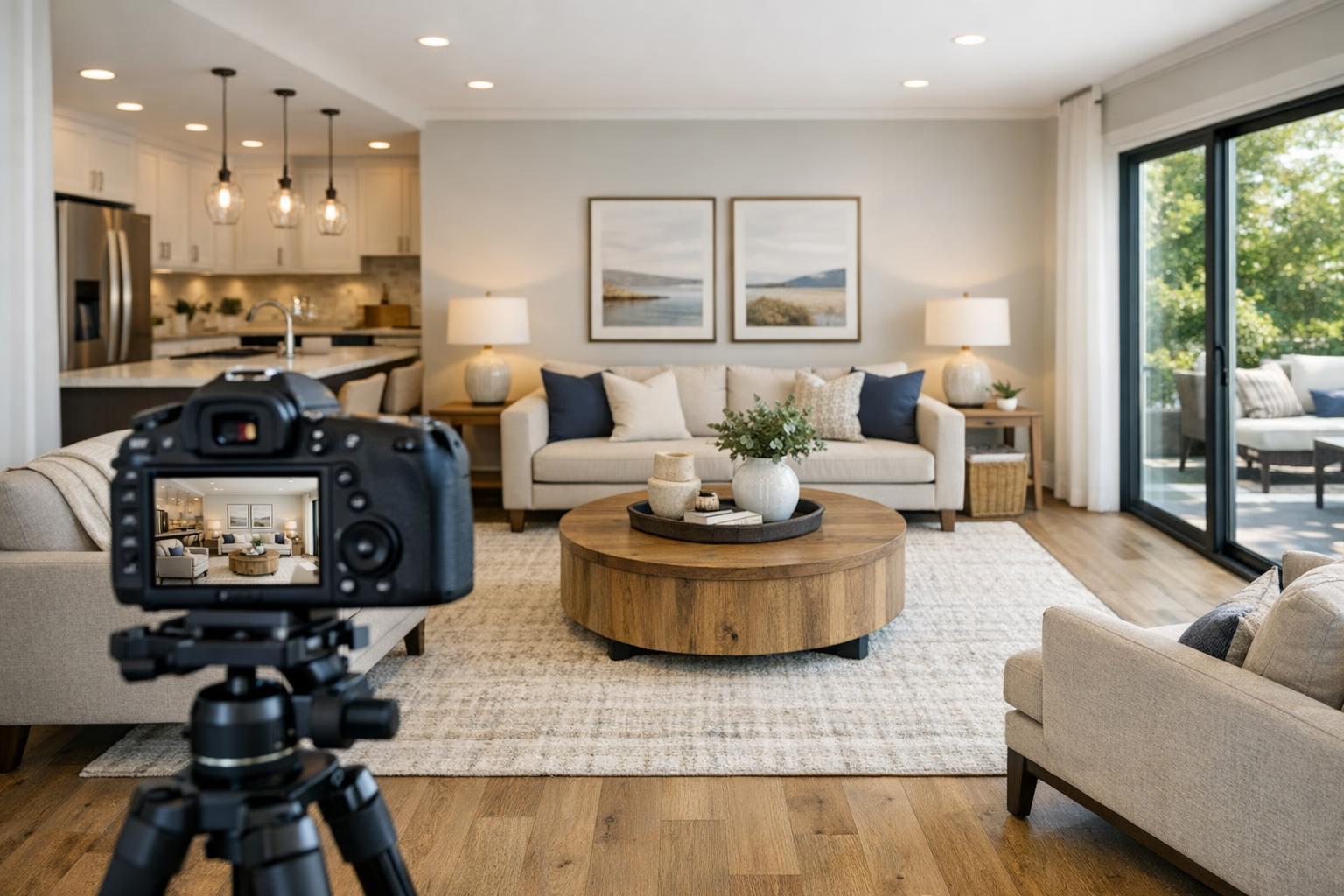
Browsing sample galleries is a step you don’t want to skip. High-quality real estate photography in Brooklyn isn’t just about drama—it’s about accuracy and clarity. When you click through a photographer’s work, look at more than just one hero shot.
- Consistency across property types. Do their condos, co-ops, brownstones, and apartments all look thoughtfully presented, not just “wide and bright”?
- True-to-life interiors. Are colors natural? Do wood and brick surfaces read true-to-life, without odd color casts or excessive retouching?
- Balanced windows and exposures. In tricky spaces—north-facing rooms, tight hallways, multi-light scenarios—can you see both inside and out, with neither entirely blown-out nor unrealistically dark?
- Straight lines and normal proportions. Good photographers keep doorways, verticals, and architectural details straight. Wide-angle lenses can be helpful in small NYC spaces, but overuse leads to stretching, bent walls, or misleading impressions that hurt trust.
- Clear flow and story. Do the galleries actually help you walk through the property in a way that makes sense, with angles that illustrate how rooms connect rather than just highlighting the largest space?
These aren’t just details—they’re central to whether buyers, renters, or other viewers can envision themselves in the property. If you can’t follow the visual flow, the listing may fall flat even if individual photos are technically strong.
Brooklyn-Specific Shooting Considerations: Realities and Workarounds
Properties in New York City (and Brooklyn in particular) often present a range of shooting challenges. A knowledgeable real estate photographer will factor these in from the start.
- Compact apartments: In smaller listings, small choices—positioning, height, removing a stray box—can make or break a shot. Often, a single misplaced item or the wrong camera angle can overstate or understate the space. Precision counts for more than just a wide focal length.
- Brownstones and multi-level homes: Older Brooklyn townhouses and brownstones often have multiple distinct floors, unique staircases, and crucial room-to-room flow. Visual continuity matters—prospective buyers want to understand not just individual rooms, but how they’re connected. Shooting these listings well means showing the property’s sequence, making good use of available light, and adapting to what’s actually accessible at the time.
- Detail-rich or pre-war homes: From fireplace mantels to original floors and moldings, many Brooklyn apartments and homes have lasting character. Portfolio work should include honest depictions of details alongside the broader rooms, not just close-ups that lose spatial context.
- Condos and building access: Co-ops and condos might involve elevator bookings, doorman schedules, or access limitations on lobbies and amenities. Coordinating these with your photographer ahead of time helps avoid surprises like locked roof decks or inaccessible common areas.
A flexible, experienced real estate photographer understands that “on the day” logistics in Brooklyn are real. Discussing these upfront—rather than expecting everything to work like a suburban shoot—means fewer headaches later.
Preparation: Why Room Readiness Directly Impacts Your Results
There’s no getting around it: No matter how skilled a photographer is, a crowded, disorganized, or unfinished space is going to show up in the final gallery. Giving your listing the best shot starts with simple prep:
- Clear counters except for a few intentional items
- Remove highly personalized or distracting items (photos, pet supplies, cords)
- Open blinds and turn on lights—all bulbs working
- Beds made and linens smoothed
- Heavy cleaning tools, storage bins, or excess furniture out of main sightlines
- Tidy outdoor furniture and clear up seasonal debris for any exterior shots
- Make sure every area you want photographed is accessible before shoot time
For occupied homes, more coordination is needed. Informing tenants, scheduling for minimal disruption, and alerting your media provider to any off-limits rooms in advance will always save time and avoid on-site confusion. Photographers document what’s there—active use of rooms, moving, or staging during the appointment can all slow the process or limit usable photos.
Supporting Media: Floor Plans, Video, Virtual Tours, Drone, and Staging
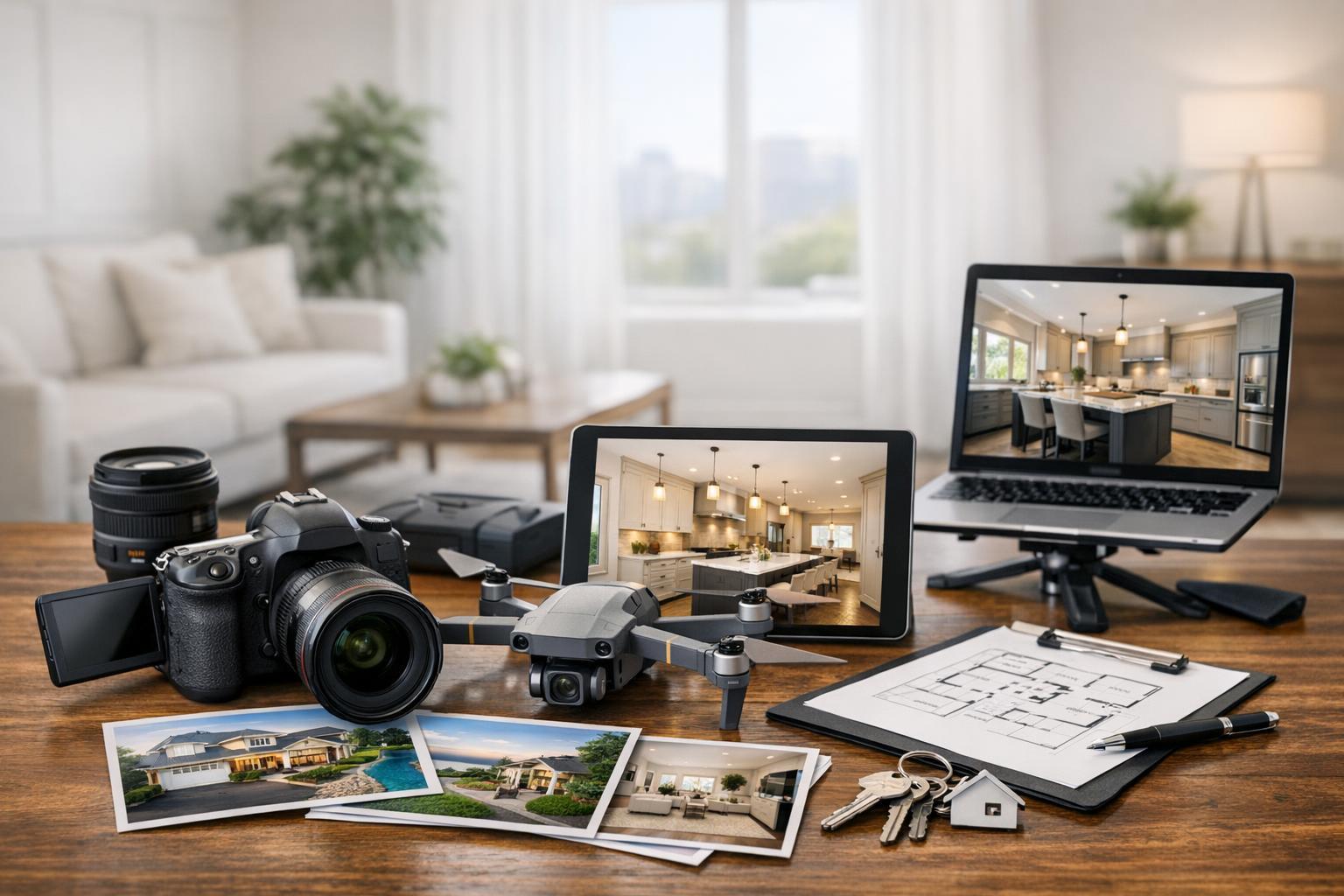
Photography is almost always the anchor for real estate marketing. But in NYC markets—especially in Brooklyn—there are good reasons to sometimes add on media like floor plans, listing video, virtual tours, drone imagery, or virtual staging. These aren’t must-haves for every property; they work best when used strategically:
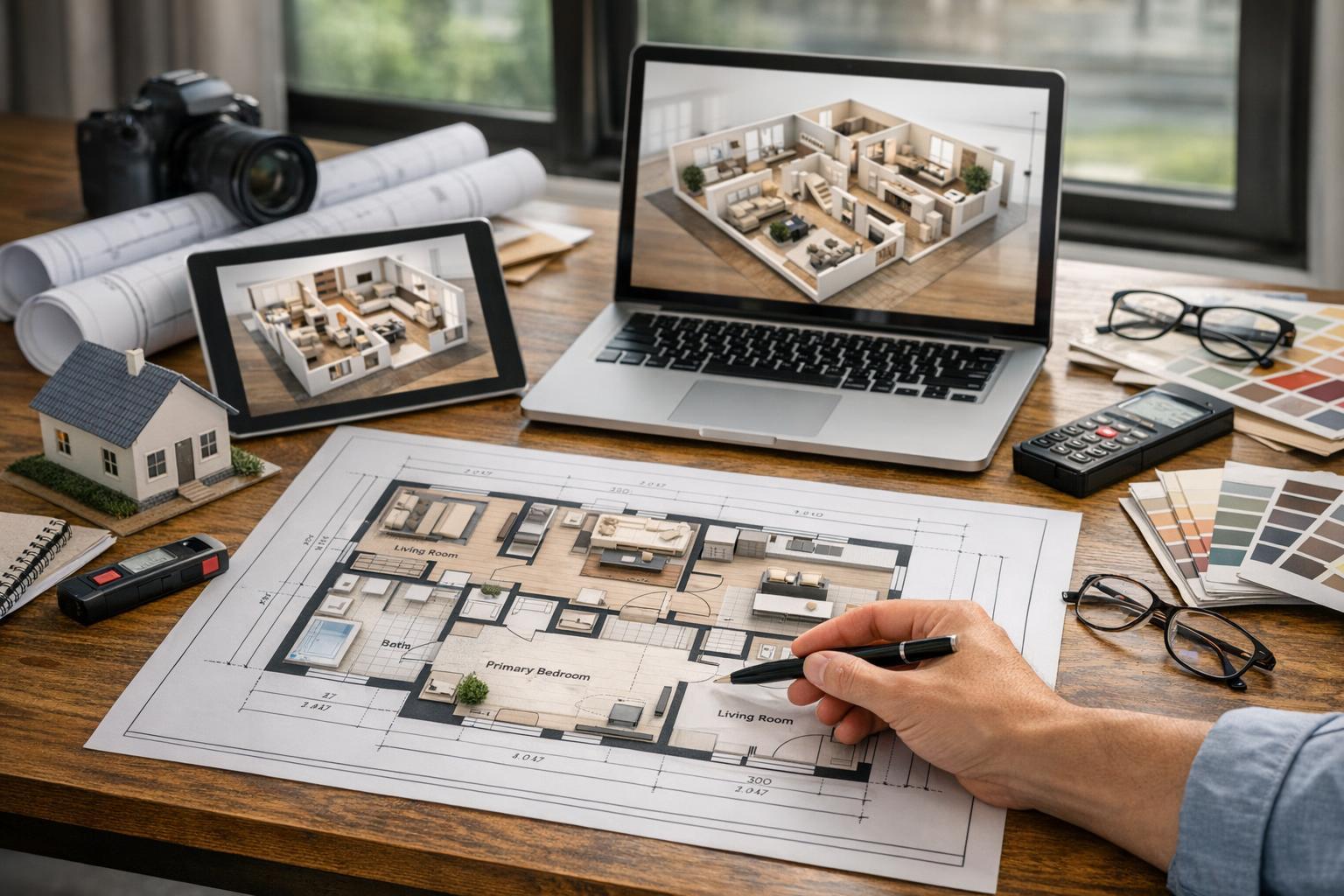
- Floor plans are useful for unique layouts, multilevel properties, or anything with a confusing or flexible floor plan. They require on-site access and physical measurement, and aren’t made from PDFs or old blueprints.
- Video can provide movement and a sense of arrival or flow not possible in still images, especially for homes with impressive indoor-outdoor transitions, multiple floors, or shared amenities. Video should be captured on-site so it matches the true experience.
- Virtual tours (like Matterport or equivalent 3D walkthroughs) are great for remote buyers or anyone who needs to understand the property’s spatial relationships at their own pace. This type of coverage is also done entirely on-site.
- Aerial (drone) photography or video can provide context for roof decks, gardens, urban scale, and hard-to-capture exteriors. Still, aerial capture depends on the address, local airspace, weather conditions, accessibility, and safety requirements—it’s not a sure thing for every Brooklyn or NYC property.
- Virtual staging is best for empty or nearly empty rooms. If any furniture or clutter is present, digital removal is needed first to produce realistic results.
Curating which of these services to use can clarify a property’s strengths, streamline the listing, and add real value—if decided based on the property’s needs.
For more about what’s involved in preparation and supporting media, RealtaSnap’s Real Estate Photography Prep Guide covers practical steps and helpful checklists.
What Sets an Experienced Brooklyn Property Photographer Apart
Experience isn’t just about years. It’s about understanding the unpredictable mix of property types, buildings, access limitations, and presentation needs across Brooklyn and NYC. A few operational observations stand out:
- Expect smart recommendations about which spaces need full coverage, which can be tighter, and which can be skipped—rather than shooting every angle in every room.
- Look for careful attention to vertical lines, balanced window exposures, and true-to-life color. These choices matter both in small apartments (where distortion is obvious) and larger homes where buyers want to see the real layout.
- A strong provider will ask about access, readiness, and any special selling points before the shoot—not just schedule and price.
- The best results come from a thoughtful, property-specific approach, not chasing a big photo count or the lowest rate.
Working with RealtaSnap for Brooklyn and NYC Real Estate Media
RealtaSnap specializes in professional real estate photography, floor plans, virtual tours, video, drone imagery, and staging for Brooklyn, all NYC boroughs, and New Jersey. Every listing conversation starts with the property itself: its features, layout, and how it will be accessed and used.
Photography coverage is available from 10–50 images, with a range of add-on options. You can review your choices and get familiar with options for real estate photography in NYC and real estate media in New Jersey before booking. Scheduling is handled online: enter the address, select your services and add-ons, pick an available slot, and leave any entry or shoot notes for the team.
To see what RealtaSnap can offer for your next Brooklyn listing, check out the current services, preparation advice, and online scheduling at www.RealtaSnap.com.
FAQ
Question: How many photos do I really need for a Brooklyn property listing?
Answer: The best number of photos depends on the layout, number of rooms, key features, and amenities. A compact studio won’t need as many as a four-story brownstone, but every photo should add something that helps online viewers understand the space. RealtaSnap’s options start at 10 images and increase in increments to fit any property.
Question: Is the approach different for occupied versus vacant homes?
Answer: Yes. Occupied homes come with more moving parts—personal items, pets, furniture arrangements, and scheduling considerations can all impact which angles are usable. Vacant listings are easier to shoot cleanly and may be good candidates for virtual staging if empty and clutter-free.
Question: Can I get a floor plan, virtual tour, or listing video without on-site capture?
Answer: No—the most accurate floor plans, 3D tours, and listing videos are made with on-site measurement and capture, not from existing photographs or PDFs. If you’re considering those services, plan to make the property accessible for measurement and capture at the time of the shoot.