How 3D Virtual Tours Are Transforming Real Estate Marketing in NYC
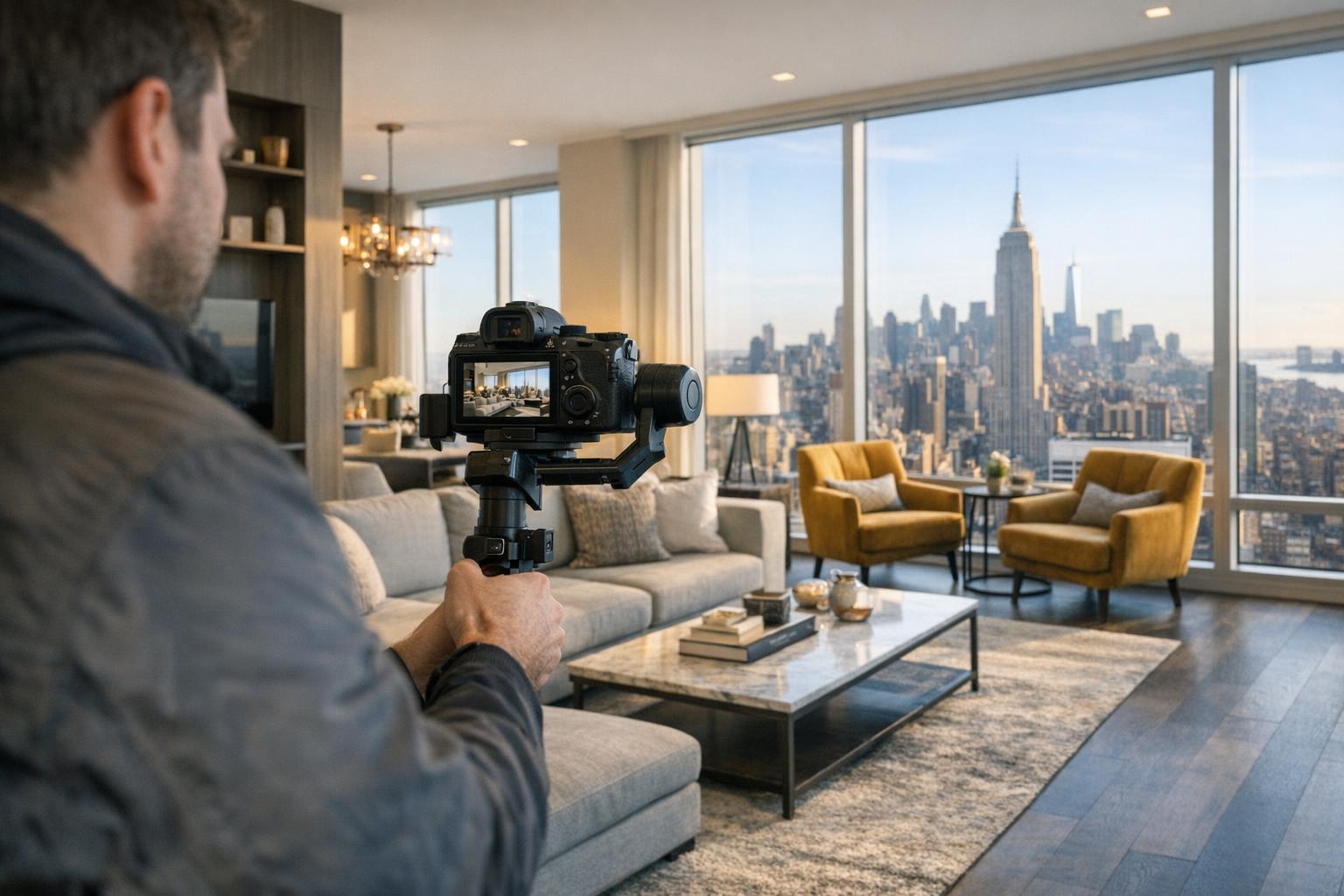
Explore a stylish, modern open-plan living space with large windows offering city views and a sleek kitchen, available for a 3D virtual tour.

How 3D Virtual Tours Are Transforming Real Estate Marketing in NYC
A 3d virtual tour has changed the way buyers and renters experience New York City real estate long before they ever step foot inside a building. In an urban market where listing inventory includes compact studios, sprawling lofts, and multi-level homes, there’s a real need for tools that showcase not only visual highlights but also the true flow and functionality of a property. Instead of relying solely on photos, buyers can now explore homes from their laptops, tablets, or phones, uncovering the layout, transitions, and spatial feel of a listing in a way that static images simply can’t deliver.
In this Newsletter, we dive into how 3D virtual tours, especially those powered by Matterport technology, are reshaping listing marketing in NYC and New Jersey. Drawing on experience from thousands of real estate media productions, we’ll break down the practical reasons agents are now pairing 3D walkthroughs with other visual assets, and how sellers and property managers can get the most out of this rapidly maturing medium.
Why Layout and Flow Are Critical for NYC Property Listings
A listing photo might draw a consumer’s eye, but it won’t tell them whether the space works for their day-to-day needs. In New York City especially, the layout of an apartment or townhouse can make or break buyer interest. Think about railroad apartments that stretch narrowly from front to back, duplexes joined by internal staircases, or condos where kitchen, living, and dining areas blend together. A single angle never tells the whole story.
In a dense market with busy buyers, clarity matters:
- Efficient one-bedroom and studio units often have unique configurations that are hard to read from photos alone.
- Larger homes with multiple floors, finished basements, or rooftop terraces require buyers to understand circulation between levels.
- Open-plan lofts and flex spaces invite creative use, but only if viewers can see how the rooms actually relate.
A 3D walkthrough lets viewers move through the property, peek around corners, and check the relationship between bedrooms, living spaces, and amenities. This is especially useful for those relocating, investors reviewing remotely, or anyone comparing several properties online after a long workday.
What Makes a 3D Walkthrough Different from Traditional Photography?
It’s no secret that professional photography remains a cornerstone of real estate marketing. Exceptional listing images highlight finishes, showcase natural light, and create an emotional impression that encourages further inquiry. But when it comes to truly understanding a property, photography and 3D virtual tours serve distinct roles.
- Photography establishes the strongest moments: A skilled photographer captures the best features of a room or building, crafting images that sell the most compelling story. Well-lit entryways, dramatic skyline views, or inviting kitchens work brilliantly in search results, social feeds, and brochures.
- A 3D walkthrough answers the “how does this space work?” question: With a Matterport or similar 3D tour, the user controls the experience. They can explore room by room, double back to areas of interest, or focus on tricky layout elements rarely captured in photos. Instead of presenting only the highlight reel, a virtual tour gives buyers the ability to investigate spatial relationships at their own pace.
- Video and floor plans add context: Video provides a linear, curated viewing experience, while a floor plan gives a top-down understanding of room sizes and configuration. Each media type answers a specific buyer question, so a thoughtful mix can build a more complete presentation.
How Matterport Technology Enhances the Viewing Experience
Matterport has become the industry standard for delivering an immersive, navigable digital model of a real property. When it comes to matterport nyc production, attention to detail in both capture and presentation can make the difference between a cursory glance and a fully qualified inquiry.
A Matterport 3d virtual tour is created during an on-site scanning session—never stitched together from photos or imagined from blueprints. This matters because it guarantees the virtual experience reflects the genuine as-is condition and layout at the time of capture.
For buyers, the benefits are clear:
- Step through every room from any desktop or mobile device
- Return to inspect details or clarify layout questions after the initial viewing
- Share links with family members or advisors regardless of location
- Preview the property outside traditional showing hours
- Narrow down choices before requesting in-person appointments
For agents and managers, one operational advantage is fielding fewer repetitive questions about size, room order, or where the second bath is located. Prospects can investigate independently, so conversations can move more quickly to what sets a property apart.
Operational Insights: What Makes for an Effective Virtual Tour?
We’ve seen time and again that the best 3D virtual tours don’t just document the property—they anticipate the buyer’s curiosity. Here are a few practical considerations RealtaSnap brings to every Matterport tour:
- Property preparation matters. Since the scan is comprehensive, everything visible at the time of capture will end up in the final tour. Preparation is key: declutter rooms, hide personal items, open doors to important spaces, and make sure lights are on and bulbs are working. The more organized and accessible each area is, the better the tour experience will be.
- Pathways between rooms should be clear. The quality of navigation depends on the ability to move freely with the scanner, especially in narrow hallways or multi-level homes. Agents and sellers should plan for easy movement through the property—obstructions can limit the quality and completeness of the scan.
- Decide in advance which areas to include. Not every closet or storage space needs to be in the tour, but omitting major features or interesting nooks can leave buyers with unanswered questions. Discuss which spaces add value or clarity, and which should remain private.
Who Benefits Most from 3D Virtual Tours in NYC and New Jersey?
3D virtual tours add particular value in scenarios where understanding the physical space is essential for decision-making:
- Unusual or open layouts: Lofts, junior one-bedrooms, and properties with alcoves or home offices can be confusing in photos. An interactive tour clarifies possible uses and daily routines.
- Multi-level or larger homes: Townhouses, duplex units, and properties with independent lower levels benefit from a format where viewers can intuitively explore connections between floors.
- Vacant homes: Empty rooms sometimes look cold or ambiguous in photos. A 3D tour makes their size and utility more apparent, and can be paired with a 2D floor plan for further clarity.
- Remote buyers and investors: Virtual touring allows prospects from out of state, or even out of the country, to thoroughly vet properties before making a trip or sending a representative.
- Listings with valuable amenities: Where permitted, scanning shared spaces—like lobbies or roof decks—can add important lifestyle context.
The Complete Online Experience: Why a 3D Tour Is Not a Substitute for Everything Else
While a 3D walkthrough can dramatically improve the clarity of a listing, nothing will ever fully replace the need for in-person showings, especially for details like light at different times of day, exterior noise, or the feeling of a building’s entrance. However, a well-produced virtual experience can serve as a top-tier filter—enabling remote discovery and setting realistic expectations for showings.
- Buyers arrive at showings better qualified, with specific questions and a sense of what to look for in person
- Agents avoid spending time on in-person visits from those who rule out the property after a virtual walkthrough
- Sellers experience fewer interruptions if non-serious prospects self-eliminate through the virtual tour
It’s a time-saver for everyone involved—and for many clients, that’s a real operational win.
Preparing Your NYC Property for a Virtual Tour
Because the camera documents everything accessible, thorough preparation ahead of a 3D capture session is essential. Here’s a field-tested pre-scan checklist RealtaSnap recommends:
- Remove personal belongings, toiletries, pet items, and visible clutter
- Ensure beds are made and soft goods are neatly arranged
- Clear all pathways for easy movement between rooms (especially hallways, entryways, and stairs)
- Decide if you want closets or storage rooms included
- Hide paperwork, medications, valuables, and anything sensitive—virtual tours let buyers look closely at every scanned corner
- Coordinate access logistics in advance, especially in buildings requiring elevator reservations, key pickups, or host confirmations
Integrating 3D Walkthroughs with Other Listing Media
A 3D tour works best as part of a multi-layered listing presentation. For most NYC and NJ properties, the ideal set of deliverables includes:
- High-quality professional photography for lead images and marketing
- A 3D virtual walkthrough for layout and detail exploration
- A 2D floor plan for clear spatial reference
- Video for guided, story-driven viewing or lifestyle context
At RealtaSnap, Matterport 3D virtual tours are available for properties up to 3,000 sq ft and also for mid-size homes up to 6,000 sq ft. Adding a 2D plan is a meaningful upgrade for properties with complex, unusual, or flexible layouts. Agents can also benefit by pairing a virtual tour with professional listing photography for a more comprehensive marketing approach.
Booking a Matterport 3D Tour in NYC or NJ
Scheduling a virtual tour with RealtaSnap is a streamlined, digital-first process. Just enter your property address, add entry instructions, select services (such as the 3D virtual tour and optional 2D floor plan), choose an available time, and finalize payment. Booking usually requires 24 hours’ notice and can be completed fully online, with instant calendar visibility for available slots.
Current pricing:
- Up to 3,000 square feet: $199
- 3,001 to 6,000 square feet: $299
- Optional: Hosting transfer for $40, 2D floor plan starting at $75
For properties in NYC (all boroughs) or across New Jersey, RealtaSnap supports efficient on-site capture and reliable delivery.
Schedule your next Matterport 3D virtual tour or visit www.RealtaSnap.com to get started.
FAQ
Question: What’s the difference between a 3D virtual tour and a real estate video?
Answer: A 3D virtual tour is interactive—viewers can navigate through the property at their own pace, exploring spaces and making their own decisions about where to focus. A video is a guided, edited sequence designed to tell a specific story or highlight pathway. Both are powerful listing tools but serve different roles.
Question: Does Matterport require photos or a floor plan to create a tour?
Answer: No—Matterport and other 3D tours require on-site scanning of the physical property. They cannot be created from existing photos or architectural plans. This ensures that the virtual model accurately matches the current reality and layout.
Question: Should I order a 2D floor plan with my 3D tour?
Answer: For listings with complex layouts, split rooms, multiple levels, or spaces that are hard to interpret in photos, a 2D floor plan can be highly useful. Many clients pair this with their virtual tour to help buyers quickly orient themselves, estimate furniture placement, or compare alternatives. Learn more about floor plan options with your next booking.