How 3D Virtual Tours are Transforming Real Estate Marketing in NYC
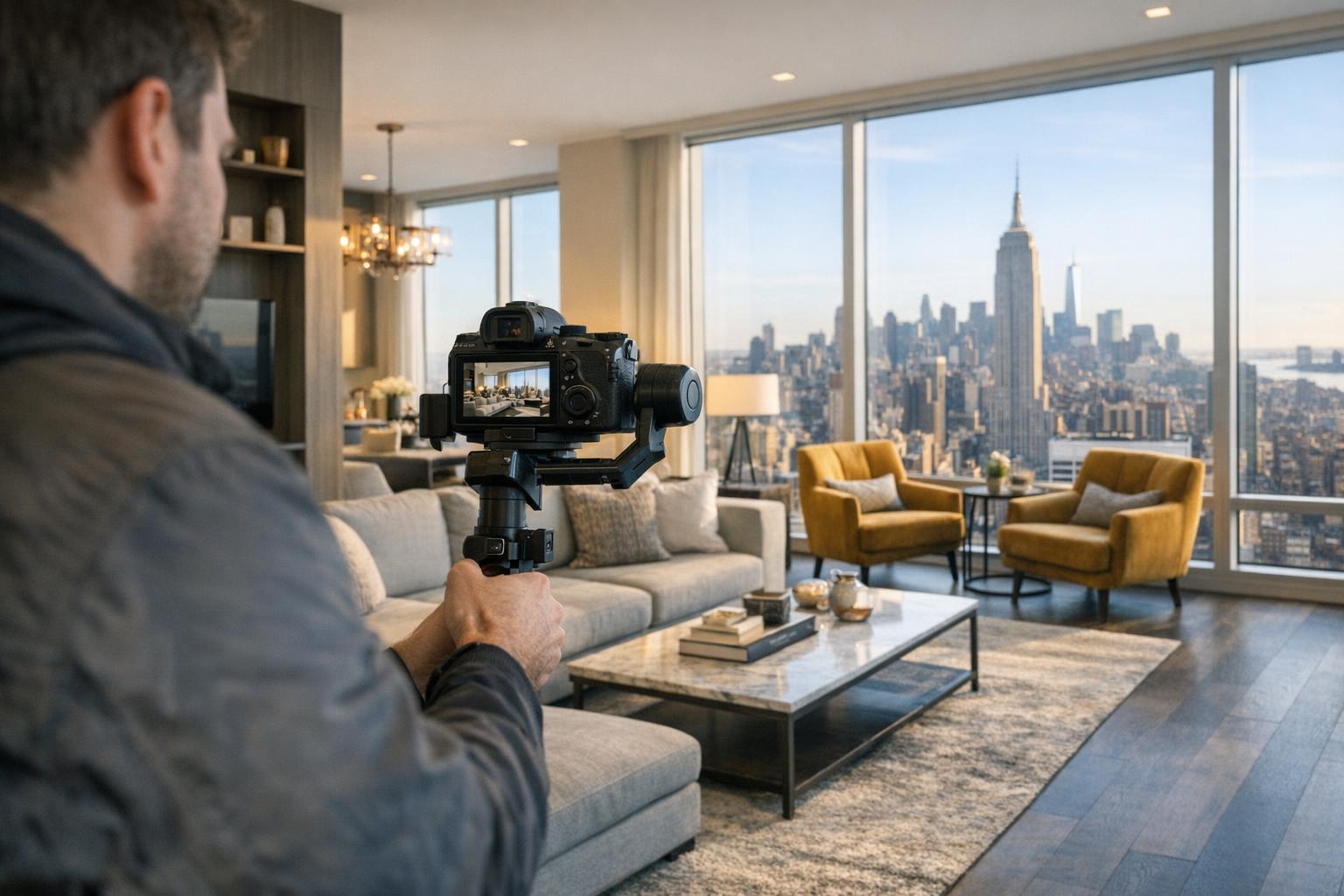
A luxurious open-plan living room with a modern design features a panoramic city skyline view through large windows, inviting exploration through a 3D virtual tour.

How 3D Virtual Tours Are Transforming Real Estate Marketing in NYC
A 3d virtual tour is now one of the most useful assets in a property listing, especially in crowded, fast-moving markets like New York City and across New Jersey. For real estate professionals trying to communicate the reality of a space—whether it’s a pre-war co-op, a spacious brownstone, a modern condo, or a flexible office suite—interactive tours offer a level of clarity that simple photo galleries can rarely match.
Why 3D Virtual Tours Stand Out
In NYC and NJ, no two spaces are quite alike. Even properties with identical square footage can feel entirely different depending on ceiling height, unique sightlines, storage solutions, or how rooms connect. Traditional photography is still essential. A well-taken photo can highlight a dramatic view or show off a newly renovated kitchen. But without context for how those features relate, clients are left to piece things together in their minds.
A 3D virtual tour—often delivered through widely recognized technology like Matterport—bridges the gap. Instead of set snapshots, viewers guide themselves through the space, lingering on details most relevant to them. It’s all about spatial understanding: not just what each room looks like, but how the entire property flows.
Real-World Walkthroughs, at Digital Speed
- Prospective buyers moving from other cities can get a sense of a New York apartment’s unique layout before booking flights.
- Busy local renters can compare multiple apartments on their own schedule, focusing in on what actually matters to them.
- Brokers working with out-of-area stakeholders—whether family decision makers or business partners—can ensure everyone shares the same visual reference, without coordination headaches.
In practice, a well-produced virtual walkthrough answers countless questions before the first email or call even happens. How is the bedroom separated from the living area? Is there direct access to outdoor space? Does that home office feel private or connected? These are the real-world considerations that matter in both compact city listings and expansive suburban homes.
Matterport and the Modern Listing Experience
Matterport remains the industry standard for full-featured, navigable property tours in NYC and NJ. Here’s how it changes the way listings are experienced:
- Intuitive room-to-room navigation: Visitors digitally “walk” through doors, turn corners, and check out sightlines for themselves. This is particularly valuable in listings where layout can’t be captured in a handful of static images—think railroad apartments, multi-story brownstones, or commercial spaces with open and closed-off areas.
- Self-directed exploration: Every client has different priorities. Some aren’t interested in the living room but will obsess over storage or lighting. A 3D tour lets them zoom in on the details they care about, without being led in a forced sequence.
- Stronger context, better conversations: By the time someone schedules an in-person viewing after exploring a well-made virtual tour, the conversation is more focused. Agents can spend less time explaining which room is which and more time addressing the client’s priorities.
Tour Coverage and Practical Considerations
From a production standpoint, the difference between a photo shoot and a 3D tour is more than just technology. Professional 3D capture records what physically exists at the property—no digital tricks, no speculative layouts.
This has practical implications:
- Preparation before scanning is critical. Because a 3D camera captures everything within sight, items that go unnoticed in photos (like cable clutter, pet supplies, or temporary signs) become much more visible in a virtual walkthrough.
- Lighting and access should be planned. Unlike still photography, where the photographer manages angles and exposure, a 3D tour exposes all visible areas and needs consistent lighting throughout to look its best.
- Deciding which spaces to include affects the usefulness of the tour. In NYC, do you want to share the view from the rooftop or just the apartment? Does the tour for a New Jersey single-family include the basement and garage, or only main living areas? Aligning capture with the listing strategy ensures that the final result actually answers what clients need to know.
3D Tours vs. Photos: Different Strengths, Different Jobs
It isn’t a question of choosing between professional photography and 3D tours; each serves a separate and complementary role. Photos make an instant visual impression and are ideal for MLS galleries, print materials, and digital marketing. A 3D tour is about hands-on exploration and seeing the property layout in real time.
When used together—often alongside video walkthroughs or floor plans—listings give prospective clients more ways to understand the space. For instance, a dramatic hero photo might prompt someone to click on a listing. The 3D tour then helps them understand the layout, while a floor plan gives a quick top-down reference if they’re comparing several properties.
| Media Format | Primary Strength | Best Use Cases |
|---|---|---|
| Photography | Visual impact, quick detail | MLS, marketing, websites |
| 3D Virtual Tour | Layout and self-guided context | Out-of-town clients, complex spaces, rentals, re-engagement |
| Video Walkthrough | Feel and movement | Social, lifestyle marketing, agent storytelling |
| Floor Plan | Spatial snapshot | Room comparison, planning, layout references |
If a listing regularly receives questions about room size or flow, pairing a virtual walkthrough with a floor plan provides double clarity.
Where Interactive Tours Are Especially Effective
Not every property justifies a full 3D scan. In practice, they add the most value in:
- Luxury condos or co-ops where buyers want to see finishes and details up close
- Townhouses, duplexes, and brownstones with multiple levels or unique vertical layouts
- New developments, where agents need a consistent way to present layouts to many different buyers or investors
- Rentals with remote applicants, especially those relocating from outside the region
- Commercial and mixed-use spaces where decision makers want to assess office placement, flow, or customer-facing zones
- Vacant or unusually configured properties where photos alone leave too many questions unanswered
In Manhattan and Brooklyn, for example, interactive tours bring clarity to complex layouts or homes with distinctive architectural features. In New Jersey’s larger homes, they can highlight basement spaces, bonus rooms, or finished attics that photography can’t easily connect.
A simple studio or straightforward single-family may be covered well enough by clean photography and a floor plan. But properties with layered layouts, multiple entrances, or rooms that serve dual functions benefit most from interactive navigation.
Preparing for a 3D Virtual Walkthrough
Because 3D scans capture every visible detail, effective preparation will always show in the finished product:
- Remove visual distractions: Extra cords, pet supplies, overflowing closets, and any unnecessary personal items should be stowed away. It’s not about making the space look empty—just clearly showing its permanent features.
- Confirm access and lighting: Be sure that every area meant for scanning is accessible and adequately lit. Address access coordination, elevator scheduling, or lighting fixes before the appointment.
- Define the tour route: Agents and property managers should determine which areas of the property deserve to be included based on likely buyer or tenant questions. For a rental, sometimes focus is only needed on the main unit. For commercial, a full path from the entry through to work and storage spaces might be warranted.
Clear expectations up front will help ensure scanning is thorough and efficient, keeping reshoots or post-production hassles to a minimum.
Using 3D Tours in Property Marketing
Once delivered, a high-quality Matterport tour is most useful when prospects can actually find and use it. Practical ways we see professionals leverage them:
- Embed the tour link in online listings and showcase pages.
- Share the tour with remote clients before scheduling in-person showings.
- Include the link in follow-up communication after open houses or inquiries.
- Use the tour during live video calls to walk clients through the space together.
- Pair the tour with floor plans, photos, and practical listing details for a more comprehensive presentation.
Internally, consistent tours help property managers and leasing teams communicate clearly. Everyone references the same digital walkthrough, which reduces confusion and keeps presentations accurate.
RealtaSnap Matterport Tours: Service, Area, and Process
RealtaSnap offers professional Matterport 3D tours for properties up to 6,000 square feet, serving clients in all NYC boroughs and throughout New Jersey. Our Matterport service relies on real, on-site scanning; tours can’t be stitched together from listing photos or architectural plans. For properties up to 3,000 square feet, the 3D tour service is $199; for spaces between 3,001 and 6,000 square feet, it’s $299. Options such as a 2D floor plan and hosting transfer are available as add-ons for listings where they add value.
Booking is handled online at www.RealtaSnap.com/schedule, and only 24 hours’ notice is needed for most shoots. Once booked, you’ll choose your services, add property notes, and receive a confirmed timeslot on the calendar.
For the full service and additional resources, see RealtaSnap’s Matterport Virtual Tours.
Why These Tools Are Increasingly Standard
Much of today’s early property research happens online. Buyers and tenants want to view, share, and evaluate spaces before committing to in-person visits, and agents want a way to answer common questions visually. 3D tours support these new habits. They don’t replace tours for serious buyers, but they streamline decision making, reduce uncertainty, and save both time and effort.
Just as importantly, interactive tours keep listings relevant for longer—from the launch period through to final decision. Prospects can revisit them whenever new questions arise or share them with other stakeholders, giving your listing additional staying power.
Make Listing Layout Part of the Story
Great marketing goes beyond capturing pretty rooms: it helps people imagine using the property. For NYC and New Jersey listings with complex layouts or a remote audience, a Matterport-powered virtual walkthrough brings listings to life and builds stronger engagement before the first call. If you’re building a media package around photos, video, floor plans, and interactive tours, you can find booking and prep resources at www.RealtaSnap.com.
FAQ
Question: What’s the real advantage of using a 3D virtual tour over just sharing a video walkthrough?
Answer: With a 3D virtual tour, viewers can move through the property at their own pace, focusing on areas that matter to them. A video walkthrough is more like an agent-led story with a fixed order and speed. Both have their place, but 3D tours give clients greater control and spatial understanding.
Question: How should we prepare properties before a Matterport scan or virtual walkthrough?
Answer: Remove personal and cluttered items, confirm access to all areas you want scanned, and make sure spaces are well-lit. Unlike still photography, a 3D tour will capture every visible part of the space, so advance preparation always pays off.
Question: Can RealtaSnap create a virtual tour from floor plans or existing property photos?
Answer: No. Our Matterport 3D tours require physical access and on-site digital scanning of the actual property. We’re only able to capture what physically exists at the time of the appointment. For details on service, visit www.RealtaSnap.com.