How 3D Virtual Tours Are Transforming Manhattan Real Estate
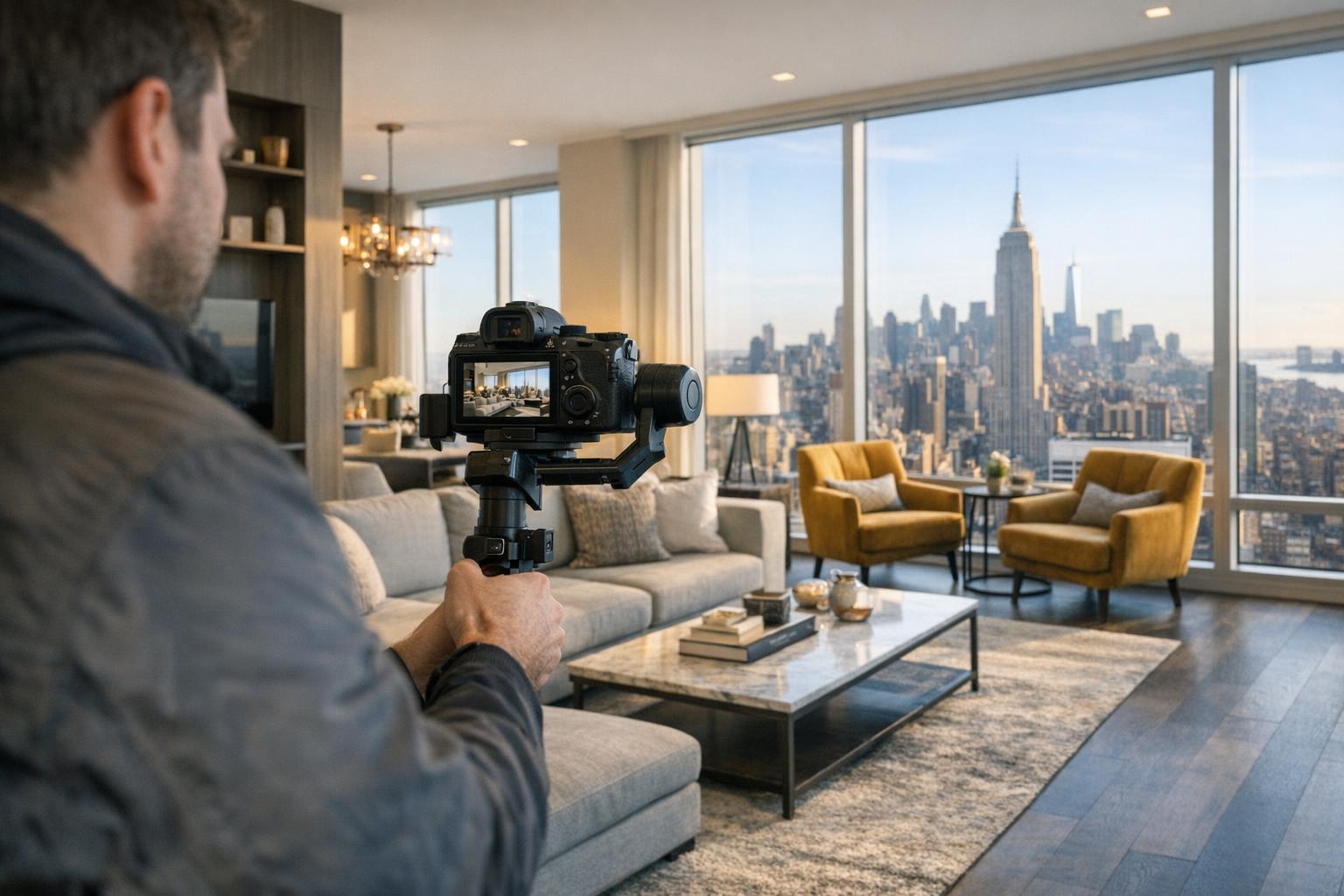
A luxurious modern living room with a panoramic view of a city skyline provides a stunning setting for an immersive 3D virtual tour.

How 3D Virtual Tours Are Transforming Manhattan Real Estate
A 3d virtual tour is now a defining expectation for many buyers and agents navigating Manhattan’s complex real estate landscape. In a city where every square foot—and how you move through it—counts, the ability to explore a property virtually has become more than a convenience; it’s often an essential part of the decision-making process.
Over the years, our experience capturing and delivering interactive tours has shown that these tools aren’t just for out-of-town buyers or luxury penthouses. Virtual walkthroughs have found a use case in almost every type of property in Manhattan, from elegant prewar co-ops to new development condos, compact rentals, and commercial spaces. Here’s how these 3D tours are reshaping the market, improving the experience for both buyers and sellers, and why professional production matters.
Beyond Still Images: Why the New York Market Needs Interactive Media
New York’s architecture is rarely basic or uniform. Navigating listings in Manhattan means confronting unique layouts—angled corridors, split-levels, creative storage solutions, and amenities tucked in unexpected corners. Still photography is critical for presenting each room’s best angles, lighting, and features, but even the sharpest photos can leave unanswered questions:
- How does the entry feel as you walk in?
- What’s the relationship between bedrooms and living or dining spaces?
- Are there quiet corners suitable for a home office?
- Where are the closets and storage really located?
- How do you access balconies or terraces?
- What route do you follow from the elevator to the apartment door?
A virtual walkthrough bridges these gaps. Instead of telling viewers what to look at and when, it lets them navigate their own way—revisiting key areas, testing how the space might work for their own routines, and evaluating details that a single photo or video pass might miss. In practical terms, it brings clarity, especially in a city where every inch of space (and its flow) has value.
What Matters in a 3D Virtual Tour
Flow, Proportion, and Spacial Context
One of the clearest advantages of an interactive tour is the ability to demonstrate flow and proportion. Buyers can see the size of a foyer, the route from kitchen to living room, or how multiple bedrooms relate to one another—especially useful in layouts that defy the typical boxy floorplan. In our experience, this is valuable in nearly every property scenario:
- Prewar homes with formal galleries or separate entertaining zones
- Lofts and studios where open space and furniture placement are crucial
- Duplexes and townhouses split across multiple levels
- Furnished rentals where usability factors into the decision
Rather than trying to mentally stitch together a series of photos, viewers experience a continuous environment, making the property feel more tangible online.
Revisit What Matters to Each Buyer
A powerful feature of 3d virtual tours is personal revisitability. Several stakeholders—partners, architects, family members, advisors—may review a listing at different times. Instead of relying on memory or one person’s impressions, everyone can return to any part of the property, examine the kitchen layout, double-check closet locations, or confirm how a balcony connects to the interior.
This self-directed exploration is particularly handy for evaluating daily practicalities: Is the bathroom accessible from the guest room? How does the living space catch light throughout the day? Does the workspace feel isolated enough for remote work?
Independent, On-Demand Exploration
Unlike traditional video tours, which follow the pace and path chosen by the agent or videographer, a virtual walkthrough puts the viewer in control. For out-of-area buyers—parents helping students, relocating professionals, or investors comparing multiple units—the opportunity to explore on their own terms (and schedules) is invaluable.
It can also save time for agents and sellers by narrowing visits to the most genuinely interested buyers, since those who tour virtually already have a strong sense of whether the property meets their needs.
Matterport NYC and the Shift to Immersive Showcasing
When people search for “matterport nyc,” they’re looking for the gold standard in 3D tour technology—one that’s scan-based and interactive rather than a stitched-together photo slideshow. Matterport’s precise spatial capture allows viewers to move naturally from room to room, check sightlines, and get a near-physical sense of each area.
At RealtaSnap, we’ve found this format especially practical when the property’s layout is a prime selling point: corner units with multiple exposures, customized renovations, split-bedroom plans, multi-level homes, and commercial interiors. The value isn’t just in visual novelty—it’s the confidence buyers gain from seeing how a space really works, on their own terms.
You can learn more details about our approach and see current offerings on our Matterport virtual tours in NYC page.
Lessons From Production: Professional Considerations and Best Practices
Preparing a Property for 3D Capture
A virtual tour records everything visible at the time of the scan. That’s why property preparation is vital. RealtaSnap always recommends:
- Decluttering visible surfaces and storage areas
- Minimizing personal items in bedrooms and bathrooms
- Making beds and staging cushions for a welcoming look
- Ensuring lights are on and windows are unobstructed (where appropriate) to allow in natural light and showcase views
- Double-checking that all areas intended for the tour are unlocked and accessible
It’s also important to plan ahead: if a building includes significant amenities, terraces, or unique storage, access needs to be coordinated with management or occupants in advance.
Professionally, the quality of a scan depends in part on clear, unobstructed pathways and spaces arranged to highlight each area’s utility. Clutter can distract from a home’s best features, and missed areas can leave buyers with unanswered questions.
Setting Realistic Expectations
A 3d virtual tour supplements but does not replace an in-person visit. While buyers can rule out unsuitable options or identify properties worth a closer look, there’s still value in experiencing the textures, acoustics, and subtle sense of place that only a physical visit provides.
Additionally, it’s critical that the virtual presentation matches the real-world space. Accurate representation means no misleading edits, speculative layouts, or omission of challenging-to-photograph rooms. Consistency across listing media helps build trust.
Floor Plans, Photos, and Video: A Complementary Mix
While immersive 3D tours answer many layout and flow questions, they work best when paired with:
- High-quality professional photography to draw attention to details and features
- Video for curated narrative and mood
- Accurate, top-down floor plans for a quick spatial overview
For agents, knowing when and how to employ each format can make a difference in how a property is perceived and how inquiries progress.
Benefits for Sellers and Listing Agents
A thoughtfully produced 3D tour delivers several concrete advantages for anyone selling or marketing a Manhattan or New Jersey property:
- Improved First Impression: Prospective buyers start their search online. A virtual walkthrough provides immediate, in-depth access, helping serious prospects focus their attention where it counts.
- No Schedule Restriction: Open house windows are often limited, and private showings might not be possible for every interested party. A virtual experience extends access to anyone, any time.
- Easier Decision-Making Among Stakeholders: Real estate decisions usually involve more than one voice. A 3D tour means partners, attorneys, and advisors can independently review and discuss the same space, using a shared visual reference.
- Greater Listing Reach: Remote, busy, or international buyers can make more informed decisions before ever setting foot in the home.
How Buyers Benefit: Confidence, Convenience, and Clarity
For buyers in Manhattan and New Jersey—where making it to every showing can quickly dominate a schedule—virtual walkthroughs help narrow choices without compromise. The ability to see if a second bedroom works as a home office, whether living areas can support a growing family, or if closets and entry storage will accommodate a downsizing move can save time and reduce friction during the search.
Perhaps most importantly, a well-produced 3D tour helps minimize mismatched expectations. When the in-person visit confirms what was already clear online, buyers and agents alike can focus on making informed, practical decisions.
Choosing and Booking a 3D Tour With RealtaSnap
RealtaSnap offers Matterport virtual tours for NYC properties for spaces up to 3,000 square feet and for larger properties from 3,001 to 6,000 square feet. Add-ons include 2D floor plans and hosting transfer, depending on your needs.
Our service area covers all five boroughs of New York City and New Jersey statewide. To book a tour, simply supply the property address and any access instructions. The capture process requires physical access, and preparation before the appointment ensures the final tour reflects the home in its best light.
To get started, book a RealtaSnap appointment online or visit www.RealtaSnap.com for more information.
FAQ
Question: What’s the difference between a 3D virtual tour and a real estate video?
Answer: A 3D virtual tour allows viewers to independently explore a space at their own pace, revisiting areas as needed. A real estate video presents the property in a predetermined sequence chosen during editing. Each serves a unique role in a listing’s presentation.
Question: Can a Matterport or other 3D tour be made from listing photos or floor plans?
Answer: No. True 3D virtual tours require an on-site scan of the property. Listing photos and floor plans are valuable assets, but they cannot be converted into an interactive Matterport-style experience.
Question: When does it make sense to add a floor plan to my virtual tour?
Answer: Floor plans are especially useful when the arrangement of rooms is unique, there are multiple bedrooms, or viewers may benefit from a quick top-down reference alongside their virtual walkthrough. RealtaSnap offers 2D floor plan add-ons for a more comprehensive marketing package.
Explore virtual tour solutions at www.RealtaSnap.com to see how you can make your listing more accessible and informative, no matter where your buyers are searching from.