How to Choose a Real Estate Photography Company in NYC
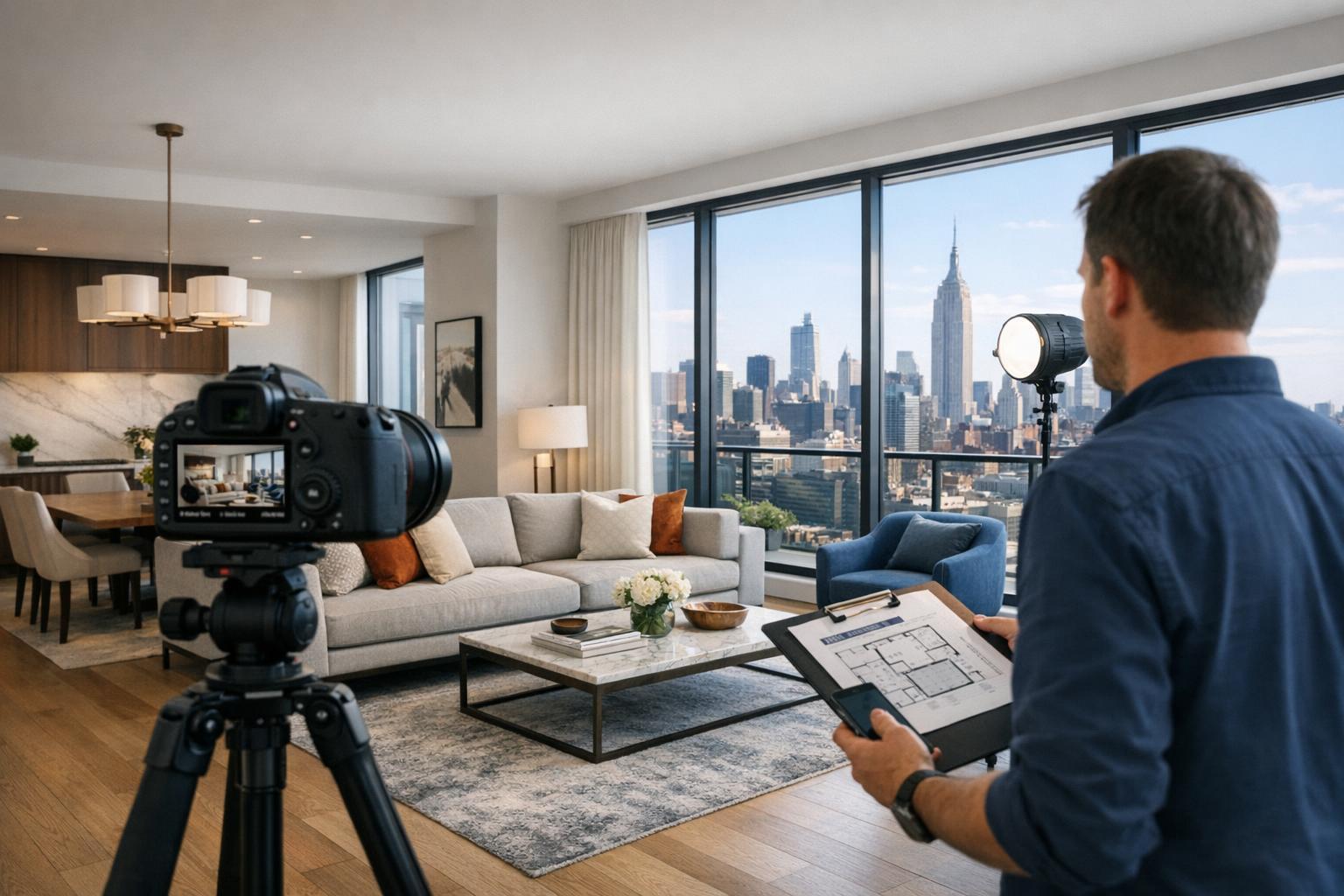
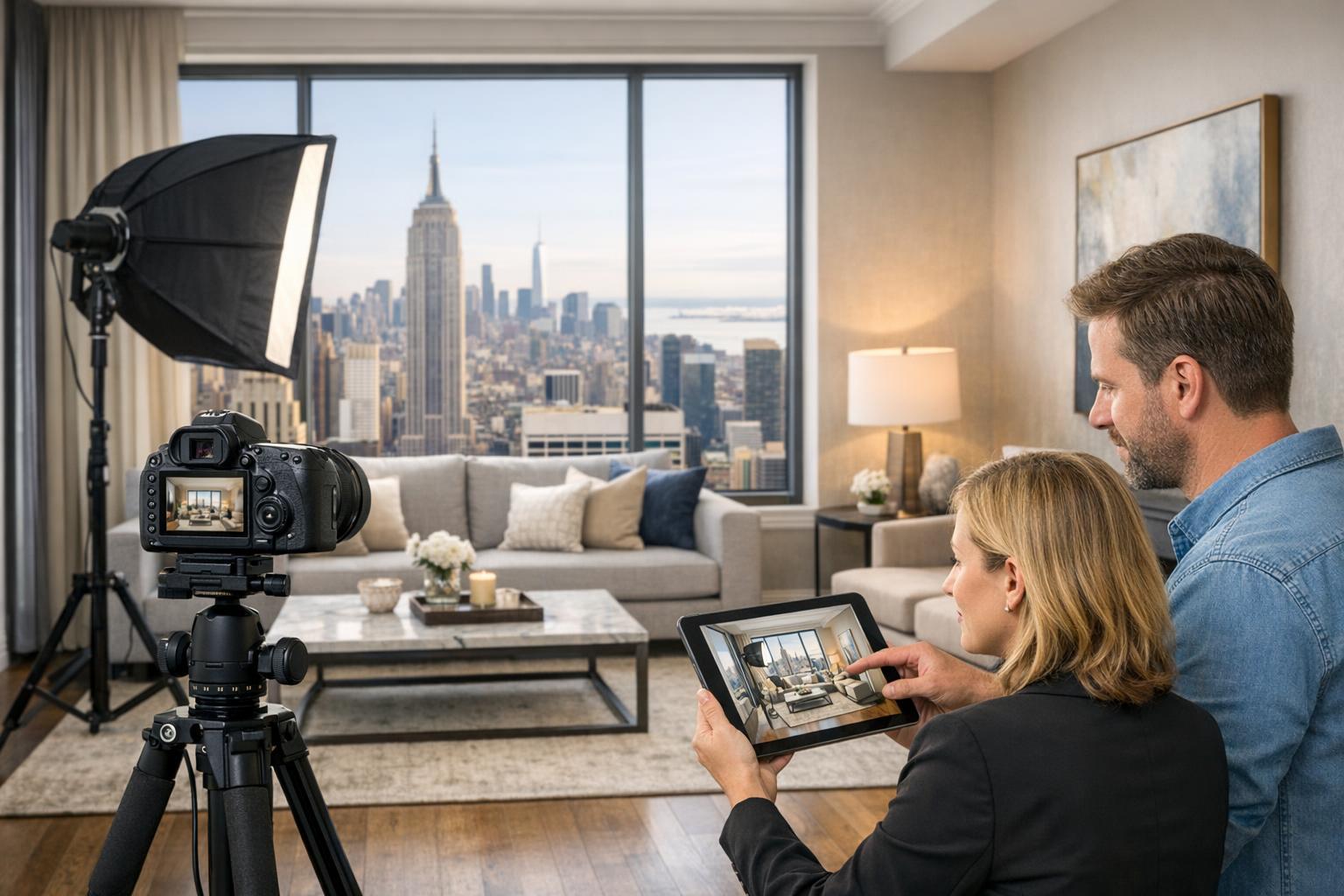
The real estate photography company NYC captures a modern interior overlooking the Empire State Building, with photographers reviewing the image on a tablet.
How to Choose a Real Estate Photography Company in NYC
Selecting a real estate photography company in NYC is a practical decision that shapes how every listing is presented—from the first photo to the final details you deliver to your clients. In a city like New York, where property types and logistical realities vary block to block, working with the right NYC property photography provider isn’t just about browsing a nice portfolio. What matters in practice is consistency, operational know-how, clear deliverables, and adaptability to each unique space.
Having worked throughout New York City, New Jersey, and the surrounding region, we’ve seen both how polished media supports property marketing and what separates a dependable real estate photography company from a collection of freelancers or generic vendors. Below, we share what’s essential for real estate professionals—whether you’re a broker, property manager, leasing specialist, or developer—when choosing a photography partner in this market.
Start With Portfolio Examples That Actually Match Your Listing
A strong online portfolio is only useful if it reflects the type of property you’re listing. In Manhattan, agents often need photos that navigate narrow interiors, competing window exposures, and sometimes minimal natural light. In Brooklyn, listings might feature brownstones or townhouses with interconnected rooms, stairs, and original details—all of which benefit from a photographer who understands sequence and flow. New Jersey homes, in contrast, typically call for wider coverage of yards, driveways, and multi-level interiors.
When reviewing a NYC real estate photography company’s work, don’t just look for “best shots” or visually striking images; pay attention to properties similar to yours in size, layout, and style. Relevant categories to check include:
- Pre-war and post-war apartments
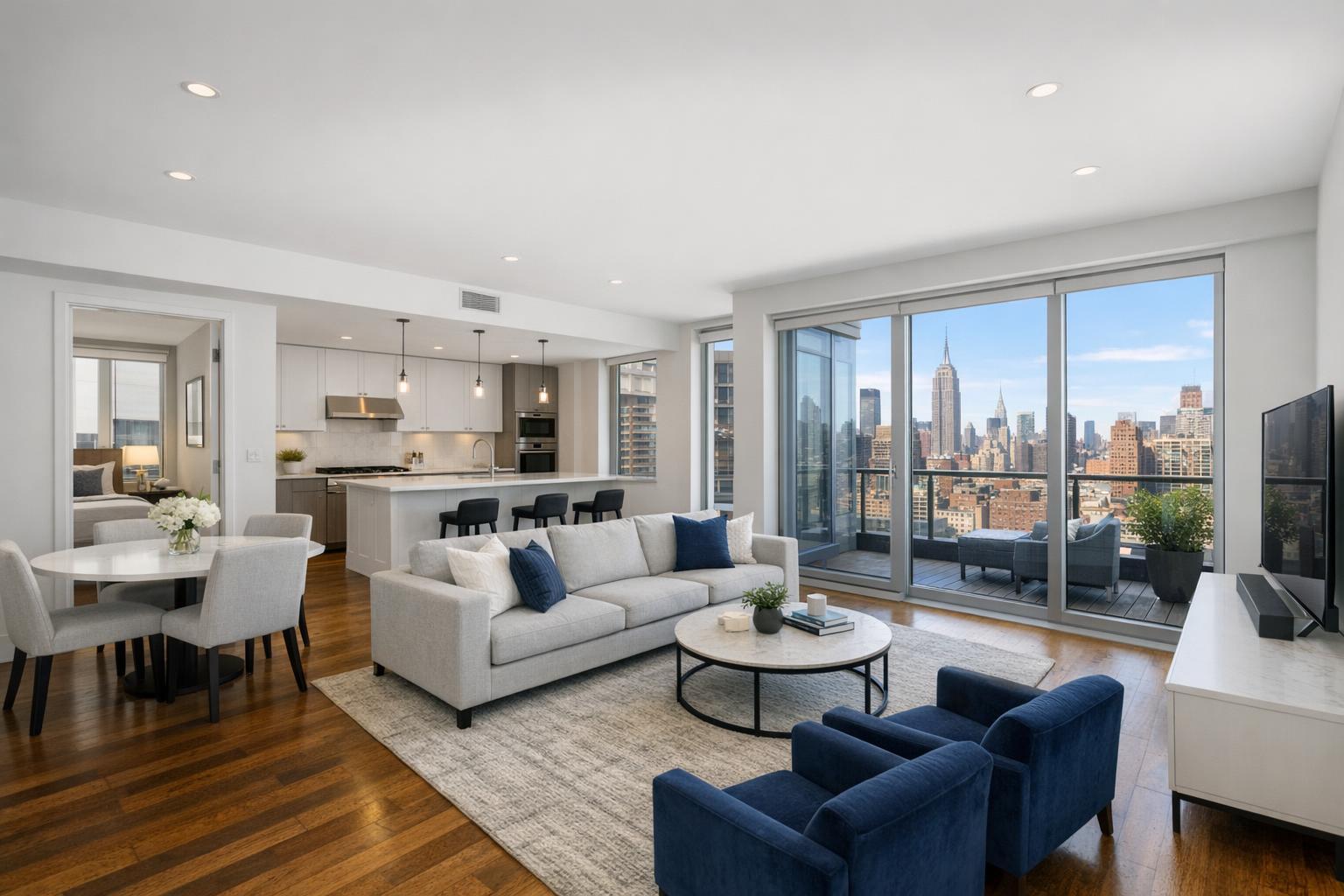
- Modern condos with city views
- Brownstones and attached homes
- Co-ops and their public/common areas
- New construction
- Multifamily and larger single-family homes
- Tenant-occupied or furnished units
- Mixed-use and commercial listings
If a provider only shows sprawling estates or vacant lofts, but your listings are typically compact apartments or occupied units, ask for representative examples. For property professionals, the real question is: Can this company consistently produce clear, honest photos for properties like yours?
Consistency and Visual Logic Trump a Few Standout Shots
A critical but sometimes overlooked aspect of NYC property photography is consistency—both within a photo set and across multiple properties. Your listing media should lead viewers through the space in a logical sequence, establishing layout and flow. Rooms should be shot from practical heights, with clean vertical lines and natural perspectives to avoid distorting scale or creating unrealistic expectations.
Things to look for:
- Room-to-room continuity: Can you tell how each area connects?
- Controlled window light: Do interior and exterior exposures feel balanced, even with bright city views and interior shadows?
- Coherent editing: Are colors, brightness, and tones consistent from one room to the next?
- Accurate representation: Are spaces left clear of distractions, or do the edits draw attention away from permanent features?
If you notice extremely bright (almost artificial-looking) images, heavy filtering, or exaggerated use of wide-angle lenses that make rooms look unrecognizable, it’s fair to question whether those photos represent what buyers or renters will experience onsite. The right NYC property photography provider will enhance the space—never mislead.
Local Logistics Are Non-Negotiable
Working in New York City means navigating building access, elevator rules, doorman comms, and tight timing—circumstances that can derail even the most capable photographer. Top-tier property media teams plan ahead for these realities. Before booking, confirm that your provider can handle:
- Access instructions (entry, unit numbers, building contacts)
- Doorman and security requirements
- Elevator reservations or freight access
- Certificate of insurance (COI) if needed
- Tenant and co-op scheduling
- Parking and equipment handling
- Roof, terrace, or amenity access
- Tight turnarounds or shifting appointments
Clear communication reduces wasted time and scheduling headaches. For buildings with special access or co-ops with amenity spaces, confirm what can be photographed and when. If a unit is occupied, agree upfront on staging and entry timing.
RealtaSnap’s online scheduling allows you to enter access notes, building details, and any special handling at the time of booking, helping ensure the onsite session goes smoothly. For details, see RealtaSnap scheduling.
Transparent Deliverables and a Defined Workflow
The definition of “real estate photography” varies, so get specifics before you book. Useful questions include:
- Number of edited, final photos included
- Difference (if any) between web and print resolution files
- Expected turnaround time for delivery
- Property website or gallery links for sharing
- Option for extra photos or special edits
- Clear process for revision requests or add-ons
A typical NYC studio or one-bedroom rarely needs 40 or 50 images, but it does benefit from intentional, non-repetitive coverage. A larger property or multifamily building merits a broader set. The actual value lies in whether the images cover what’s meaningful—unique features, spatial relationships, amenities, and views that help a viewer understand the property, not just fill a quota.
For real estate teams with multiple listings, having a consistent file-naming scheme and simple delivery process saves time and avoids confusion when preparing marketing campaigns across different platforms.
Scheduling and Turnaround: Clarity Upfront, Flexibility When Needed
Real estate moves quickly. The right NYC media partner should set clear expectations for earliest available appointments, standard turnaround (typically 24 to 48 hours for photography), and flexibility to adjust when things change due to access issues, weather, or shifting deadlines.
Ask about:
- Online vs. manual scheduling
- Rescheduling and cancellation policy
- How last-minute changes (such as tenant delays) are handled
- Whether edited files can be expedited when needed
RealtaSnap covers all five NYC boroughs and New Jersey, with online booking available for everything from basic photography to full-service media packages. Photography packages are based on the number of images desired, letting agents align coverage to property size and listing requirements. Learn more about available options on the NYC photography page.
Choosing Complementary Services
Photography anchors virtually every listing, but not every property needs additional media. The right add-ons are dictated by what would help a viewer understand or emotionally connect to the space.
- Video: Recorded walkthroughs add dimension and demonstrate flow, useful for properties with multiple floors, distinctive interiors, or amenity-rich buildings. At RealtaSnap, listing videos are filmed onsite and not made from still images.
- Floor Plans: Floor plans clarify room size and layout, especially in apartments with unique configurations or larger homes. These plans are based on onsite capture and can’t be assembled remotely from past PDFs or photos.
- 3D Virtual Tours: Interactive walkthroughs allow remote viewers to navigate spaces at their own pace. Like floor plans, they require physical scanning of the property.
- Drone: Aerial images and footage can highlight outdoor context or unique settings, but in NYC, feasibility is determined by address, airspace, weather, and roof access. Every drone shoot is approached on a case-by-case basis.
- Virtual Staging: AI or digital staging is most useful in vacant rooms. Existing furniture needs to be removed physically, or the space must be decluttered digitally before virtual staging is applied—avoiding unrealistic “staged-over-furnished” images.
Each of these tools helps solve a communication problem for a specific property, not just because they’re available.
Streamlined Checklist for Selecting a Real Estate Photography Company in NYC
To make your decision more systematic, compare NYC property photography providers using clear criteria:
- Does their portfolio include spaces like yours (by type, size, borough/location)?
- Are composition, lighting, and editing consistent across full photo sets?
- Is all media captured on site, representing actual present conditions?
- Are deliverables (image count, resolution, turnaround, add-ons) transparent?
- Will the provider accommodate your property’s unique access needs and scheduling?
- Are special requests or changes handled through a straightforward, documented process?
- Is the company familiar with your borough or region in NYC/New Jersey (e.g., Brooklyn brownstones, Jersey City condos, Bronx multifamily)?
- Are complementary services (video, floor plan, virtual tour, drone, staging) available if needed, and are they delivered according to best practices?
And always weigh reliability, communication, and the completeness of deliverables—not just price.
Property Media That Adds Real Value
Reliable real estate photography services in NYC make the complicated job of property marketing a bit easier. By focusing on providers with relevant experience, property-specific knowledge, consistent execution, and streamlined delivery, you’re investing in a smoother process—both for your own workflow and for the clients you represent.
RealtaSnap delivers listing-focused photography, video, floor plans, Matterport 3D tours, drone, AI virtual staging, and related media across New York City and New Jersey. If you need a dependable partner for your next listing, get more information or schedule anytime at www.RealtaSnap.com.
FAQ
Question: How early should I book a real estate photography session in NYC?
Answer: It’s best to schedule as soon as you have property access and staging plans confirmed. NYC logistics (building access, elevators, exterior conditions) often need extra coordination. While some sessions can be accommodated on short notice, more flexibility is available with a few days’ advance planning.
Question: How do I know how many listing photos are appropriate for my NYC apartment?
Answer: The best photo count depends on the size, layout, and distinctive details of your listing. Studios and one-bedrooms may need just 10–20 carefully chosen images, while larger spaces or multifamily buildings may call for broader coverage. Avoid ordering more images if additional angles don’t add clarity to the listing.
Question: Are floor plans and 3D tours worth adding to every property listing?
Answer: Floor plans are helpful when the layout or circulation isn’t obvious from photos alone, and are especially valuable in unique apartments or multi-level properties. 3D tours are best for listings where remote viewing or detailed virtual exploration supports interest. Both require onsite capture and can often be booked together with photography.