How to Choose a Manhattan Real Estate Photographer for Your Listing
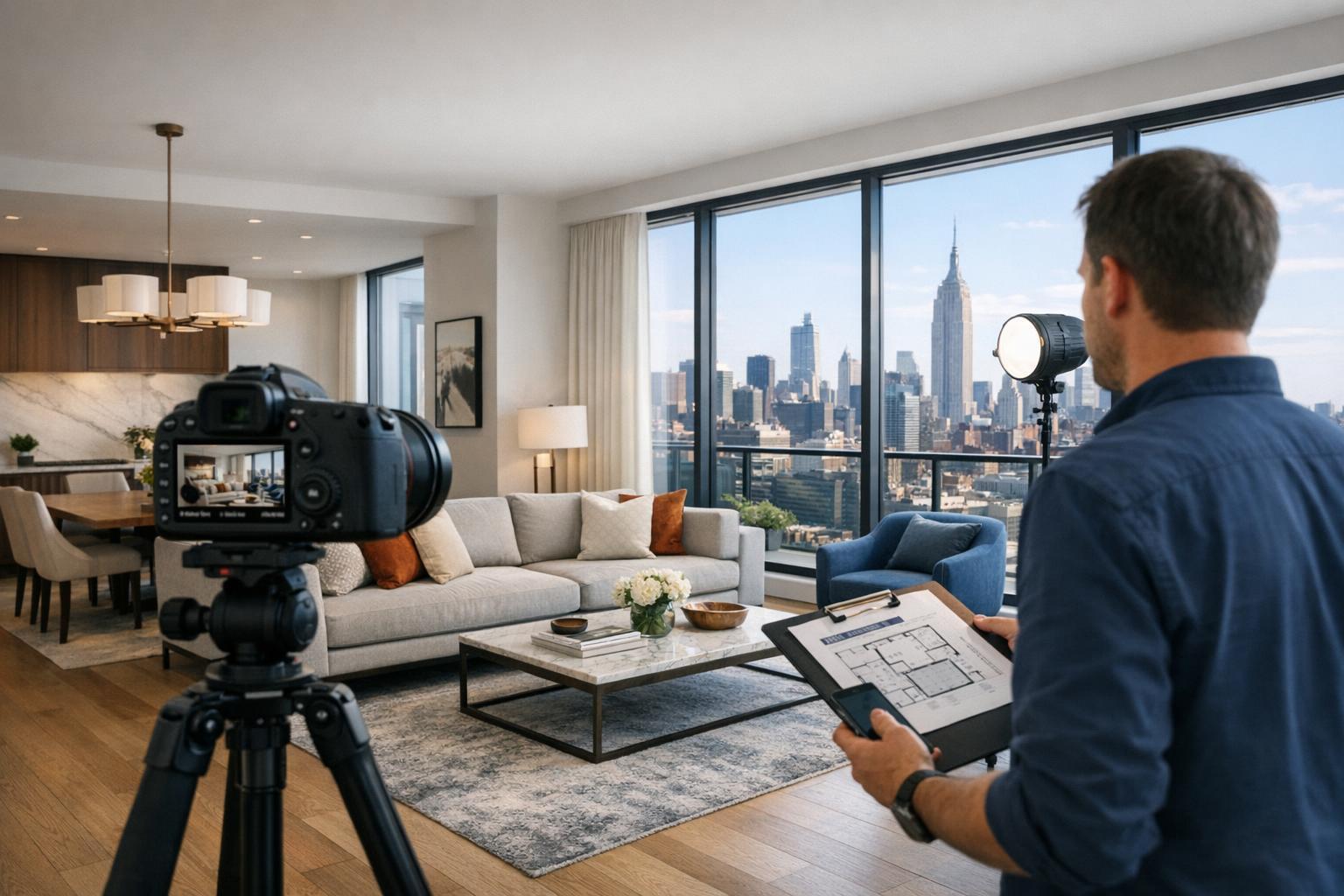
A Manhattan real estate photographer captures a luxurious living room with a stunning view of the New York City skyline, featuring the Empire State Building prominently in the background.
How to Choose a Manhattan Real Estate Photographer for Your Listing
A Manhattan real estate photographer is tasked with more than point-and-shoot skills—what’s really required is an understanding of New York’s unique property landscape and the ability to present each space as it truly exists. For agents, brokers, and property marketers in NYC, professional photography is frequently the first true impression a buyer or renter gets of a home. Done well, it reveals not only a room’s physical features but explains the layout, highlights distinctive advantages, and respects both the building and the timeline.
In this guide, we’re sharing what really matters when evaluating providers for real estate photography in NYC, including operational tips that can save you time and avoid last-minute surprises. Whether you’re listing a compact co-op, a high-floor condo with skyline views, a multi-level townhouse, or a new development, small changes in approach can have a major impact on how your listing is perceived.
Manhattan Isn’t One-Size-Fits-All: Look for Local Experience
Experience with Manhattan property types is non-negotiable. Downtown lofts, pre-war co-ops, glass-walled condos, and brownstones each call for different visual strategies. A photographer should be able to adapt—not rely on the same set of wide-angle shots regardless of property type.
Ask yourself:
- Have you seen complete galleries showing a similar apartment, condo, or townhouse?
- Do the sample images help you understand how rooms relate and how the space flows?
- Are distinguishing features like exterior views, millwork, stairways, or building amenities included—and presented in a way that makes sense for a potential buyer?
Manhattan homes rarely fit the “cookie-cutter” mold. The best photographers jump from furnished studios (where a single angle can suggest the whole layout) to larger homes with long corridors, multiple levels, or signature viewlines. Adaptability signals both expertise and respect for the neighborhood’s diversity.
Technical Mastery Meets Listing Logic
It’s not just about photography theory—it’s about solving for the conditions real listings present.
Handling Window Light and Interior Exposure
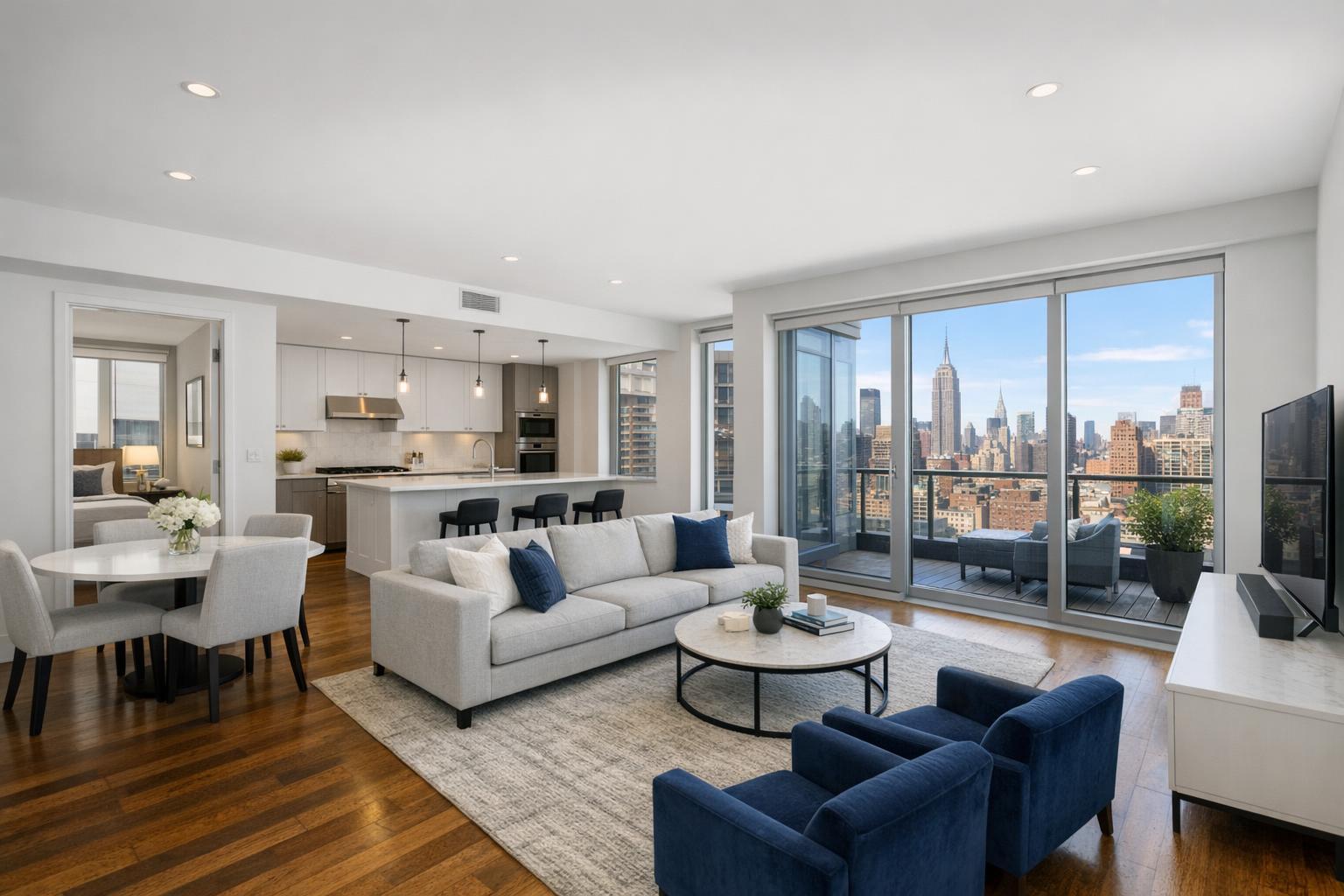
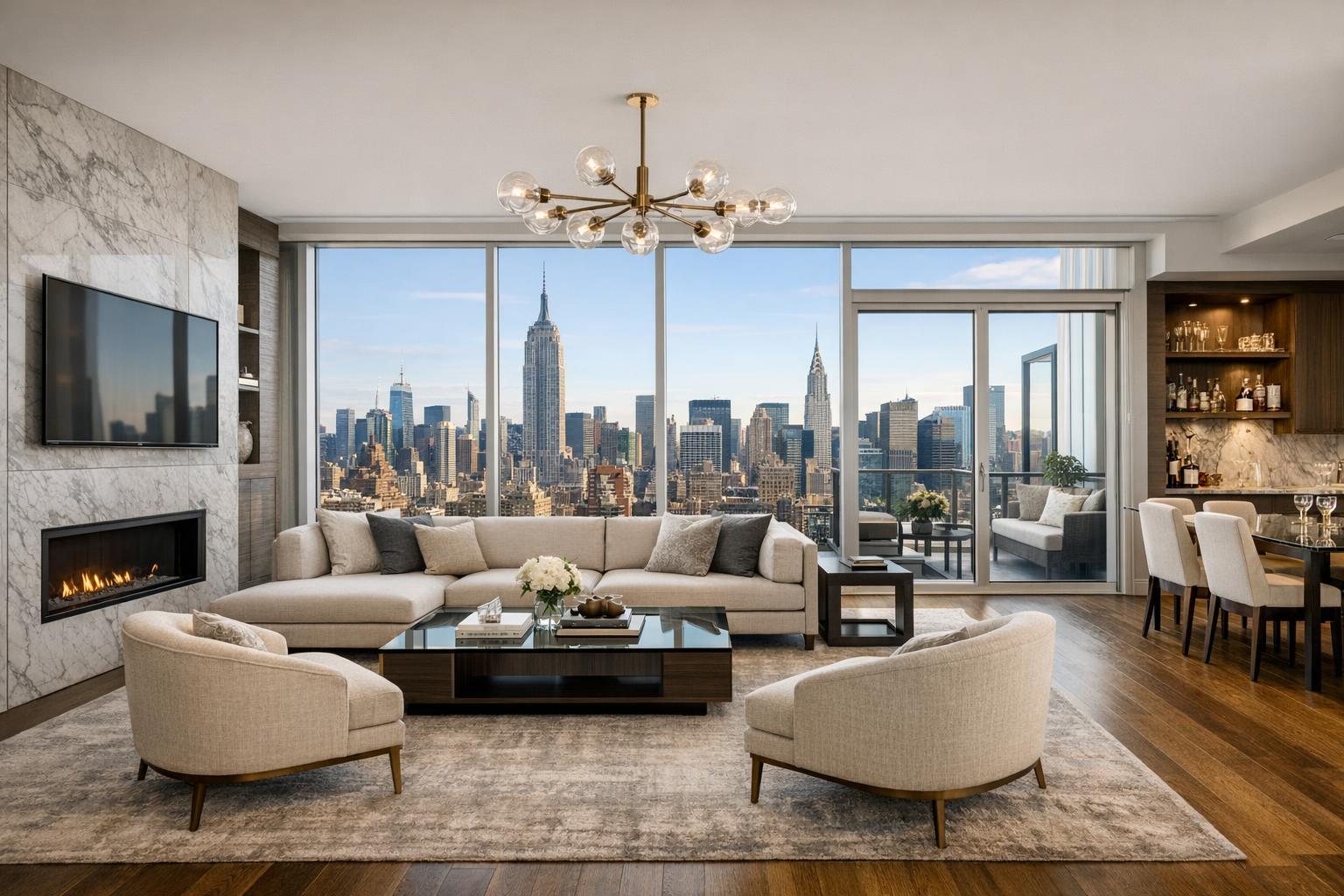
Expect New York apartments to mix very bright windows with much darker interiors. Preserving both a spectacular city or river view and a readable interior means knowing how to balance exposures, often under real-world time constraints. The goal is believable light, not an artificially brightened room or a blown-out window.
Key scenarios to review in a photographer’s work:
- Large windows or glass walls with strong exterior light
- Nighttime or twilight captures for high-rise views
- Mixed lighting (natural and artificial) rooms
- Spaces with dark finishes or unusual lighting conditions
Composure around exposure isn’t just about aesthetics; it’s essential for setting accurate expectations for buyers and renters who will eventually tour in person.
Architectural Lines and Perspective Control
Crooked lines jump out, especially in tall-windowed Manhattan apartments where verticals are everywhere. Professional images manage perspective so that walls, cabinetry, windows, and built-ins all look straight without artificially stretching the room—or making a compact living room look like a ballroom. Reliable editing should clarify, not distort.
Room Proportion and Visual Flow
Effective listing photography makes spatial relationships clear. Good composition selects angles that show not just isolated rooms, but how spaces open into each other and how the home can function day to day. This is as useful for compact studios as it is for multi-bedroom layouts. Overly tight shots, or close-ups that skip context, often make listings harder to understand.
Editing Matters: Cohesion, Not Distraction
Editing brings listing images together, providing a consistent look from room to room. Look for editing styles that respect the property:
- Consistent natural color across all images
- Reasonable window replacement, not unrealistic views
- Clean lines and steady exposure levels
- No excessive polishing or saturation
Ask providers which edits come standard and what costs extra. For instance, RealtaSnap’s editing supports a clean, professional finish while keeping the focus on what genuinely exists at the property. Major changes—like removing fixtures or reconstructing a room—require special handling and are not a part of standard photo delivery.
Plan Around Building Access (and Save Yourself Time)
NYC logistics shape every listing shoot. Agents and marketers often have limited access windows—with considerations including building security, doorman check-ins, elevator timing, vendor registration, and amenity approvals.
Coordinate these details in advance:
- Are certificates of insurance, vendor registration, or notice required?
- Who provides access if you or the resident aren’t on site?
- Are common areas (lobby, rooftop, gym) available for shooting?
- Are there elevator restrictions or loading rules?
- Occupied, staged, or still-prepping: what’s the property’s true status?
- Is there a specific time the view photographs best?
Occupied units deserve special consideration, as everyday items and clutter can pull attention from what actually sells the property. A quick “decluttering pass” rarely takes long but can make the difference between a listing that feels lived-in and one that feels market-ready.
Expect Clear Deliverables Up Front
Before you schedule, understand exactly what you’re getting—vague promises are a red flag. Useful points to clarify:
- Number of final photos included
- Editing and retouching boundaries
- How and when you’ll receive deliverables
- Usage rights or licensing terms
- Coverage approach based on the property’s size and complexity
- Delivery timeline and coordination for listing launch
- Policies for expanded services or extra-time needs
RealtaSnap’s standard photo packages are based on photo count—typically ranging from 10 to 50 images—so you can scale coverage to fit a studio, a large apartment, or an expansive townhouse. This clarity also makes it easier to prep your marketing, copy, and launch plans.
For more about available options, visit RealtaSnap’s NYC real estate photography page.
When Still Photography Isn’t Enough
Photography is the foundation for most listings, but sometimes images alone can’t answer a potential buyer’s questions about layout, movement, or options for use. Consider adding:
- Floor plans: These require on-site capture and give clear spatial context—especially important for unusual layouts, multiple levels, or properties with convertible spaces. See more at RealtaSnap Floor Plans.
- Video: Good for properties where flow and movement are a selling point; videos are always captured on site, never as slideshows from stills.
- 3D Virtual Tours: Matterport tours provide remote, interactive access and are built with on-site scanning, never from stills or old plans. Explore Matterport Virtual Tours.
- Virtual Staging: Useful for vacant rooms. Staging works best with empty spaces and is not layered on top of existing furniture. If the room contains furniture, a paid clutter removal edit is required first.
Each of these media types requires physical access and preparation—Remote creation from listing PDFs or photos is not supported.
Ask Smart Questions Before You Book
A few thoughtful questions can quickly reveal a provider’s process and expertise:
- Can I preview full galleries from similar NYC listings?
- How do you balance interior and window exposure?
- What’s your approach to keeping lines and proportions accurate?
- Any preparation tips for occupied or cluttered apartments?
- What building access or scheduling info do you need in advance?
- How many final, edited images are included by default? Are alternate edits, floor plans, or video available as add-ons?
- What happens if weather, building access, or resident schedules change last-minute?
Professionals should give confident, straightforward answers—not technical jargon or evasive policies.
Preparation and Communication: The Real Secret
The most effective listing media comes from clear priorities and good preparation, not rushed walkthroughs. For each shoot, provide a shot list of key features—living spaces, kitchen, primary bedrooms, standout finishes, and unique amenities. Discuss high-priority areas with the photographer but allow on-site expertise to guide composition and detail.
In Manhattan, take timing seriously: the direction of sunlight, the timing of access relative to doorman schedules, and the readiness of outdoor areas can all shape results.
Find a Real Partner
Choosing a Manhattan listing photographer is about more than the final images. It’s about partnering with a team that understands NYC logistics, delivers what’s promised, and provides listing media that supports your marketing efforts. RealtaSnap offers property-focused HDR photography, floor plans, video, Matterport tours, and virtual staging for listings across NYC, New Jersey, and select nearby markets. You can schedule a shoot here or start with more info at www.RealtaSnap.com.
If you’re preparing an upcoming Manhattan listing, start with what matters most: the property’s real layout, its visual strengths, and how a buyer is going to experience it. For practical, professional listing media, visit www.RealtaSnap.com.
FAQ
Question: How many photos should I order for a Manhattan apartment listing?
Answer: Match the photo count to the property’s size, layout, and main features. Studios often require fewer images than large apartments or townhouses, but coverage should be thorough enough to explain the whole home without including unnecessary duplicates.
Question: Should I schedule real estate photography before or after cleaning and staging?
Answer: Schedule after the property is cleaned, staged, and as listing-ready as possible. This includes furniture placement, cleared surfaces, working lights, and coordination with the resident in occupied apartments.
Question: Can a floor plan or Matterport virtual tour be made without on-site access?
Answer: No. Both floor plans and 3D virtual tours require on-site capture. RealtaSnap does not build these media from listing photos or old plans—physical scanning ensures accurate results.