How to Choose a Commercial Real Estate Photographer for Your Property
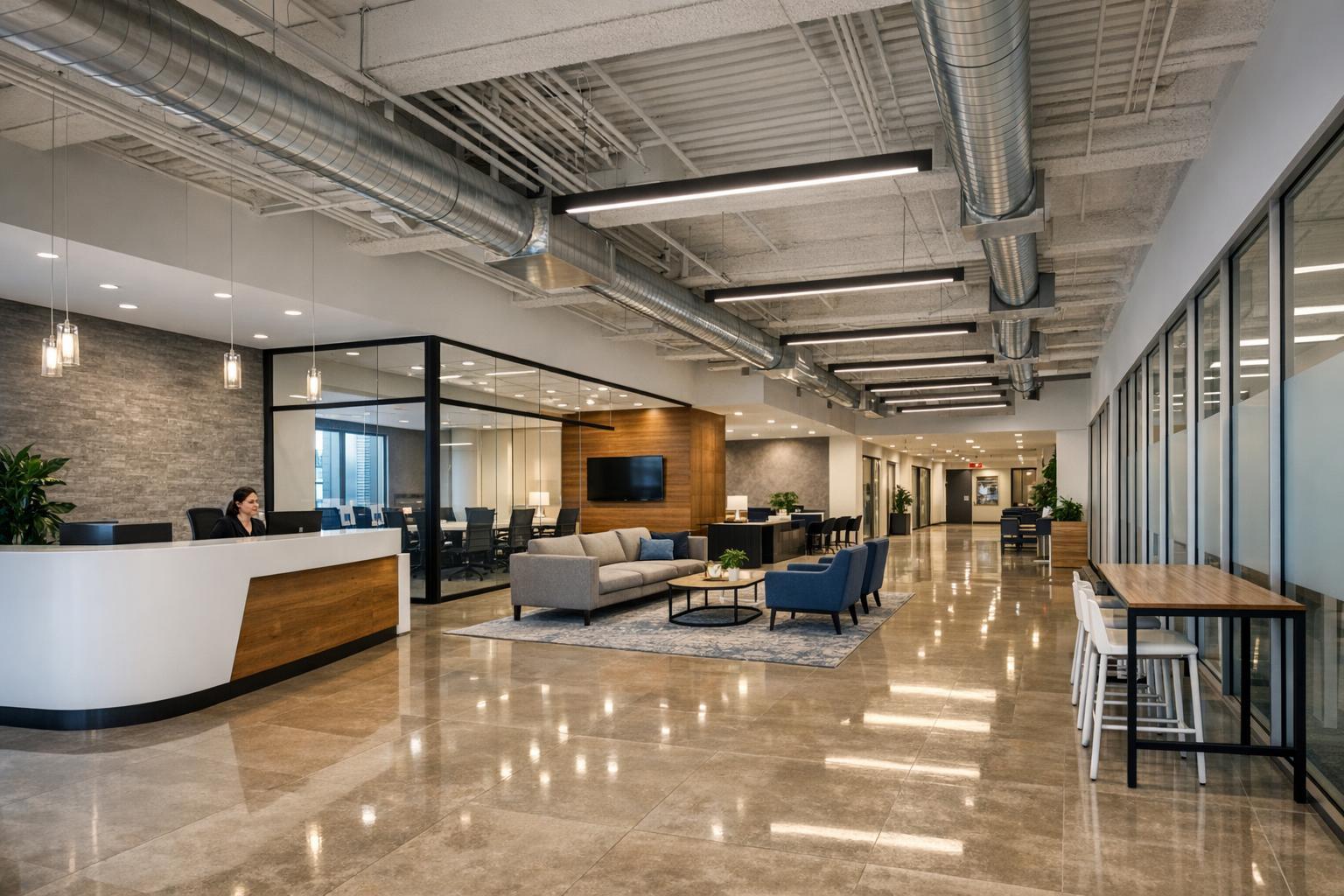
A modern office lobby showcases sleek furnishings, a reception desk, and conference rooms through high-quality commercial real estate photography.
How to Choose a Commercial Real Estate Photographer for Your Property
Commercial real estate photography is more than just a visual checklist—it’s about providing tenants, buyers, and investors with a clear understanding of the space before they ever visit. When every square foot counts and the stakes are high, the caliber and accuracy of your property’s presentation can make a tangible difference in how a listing, offering memorandum, or pitch is received.
What sets commercial property photography apart is not just the technical ability to capture sharp images. It’s the expertise to communicate layout, scale, finishes, lighting, access, and surrounding context—often in dense, complex markets like New York City and New Jersey where every angle tells a story.
Why the Commercial Approach Is Different
Residential listing photography typically leans into the emotional appeal of “home.” In contrast, commercial property photography is about clarity. It should map out the space: circulation, lobby orientation, column placements, natural light, window exposure, and even relationship to transit or neighboring businesses. An effective image set lets viewers assess not just the look, but the utility, of each area—without exaggerating or glossing over real limitations.
This matters especially in cities like Manhattan, Brooklyn, Hoboken, or Jersey City, where floor plates, window lines, lobby access, and even signage opportunities can outweigh raw aesthetics.
Clarify Your Marketing Objective
A strong commercial property shoot starts with defining your marketing purpose. The more concrete the goal, the more likely you’ll end up with media that’s both beautiful and functional.
- Who is your audience—tenants, buyers, investors, or another group?
- Is the property meant for lease, sale, a new tenant announcement, or general brand visibility?
- Which features are essential to showcase?
- Are there private, restricted, or occupied areas to consider?
- Will the shoot need to work around occupancy, privacy, or operation windows?
- Where and how soon will these images be used?
Providing your photographer with this direction up front keeps the final gallery focused and maximizes the value of your investment.
Assessing the Portfolio—and What Really Matters
Commercial property photographers should be chosen based on demonstrated experience with the asset type in question. It’s easy for a portfolio of residential interiors or stylized shots to look impressive, but commercial assignments call for a different approach.
- Office & Medical Suites: Look for portfolios that show the logical flow of a workplace: waiting areas, conference rooms, private offices, and circulation. Especially in NYC, it’s important to capture the compactness and organization of suites without distorting size or creating a misleading impression during tours.
- Retail & Restaurants: Exterior coverage is essential—facade, sidewalk presence, corners, signage, and street-level impact matter as much as interiors. Inside, important areas include sales floors, display zones, service areas, kitchen and storage, with attention to vantage and timing to avoid excessive crowding or emptiness.
- Warehouse & Industrial: Functional clarity is king. Images should make loading docks, ceiling height, bay doors, and equipment areas easily understood, keeping exposures balanced between bright dock openings and dimmer internal spaces.
- Hospitality & Mixed-Use: Success comes from showing journey and flow across guest rooms, public areas, lobbies, dining, and amenities—how one space connects to the next, and how the visitor would actually move through the property.
- New Developments & Renovations: It’s crucial to represent only what’s physically complete at the time of the shoot. If parts of the space are unfinished, under construction, or only planned, be transparent and save “future vision” for approved renderings.
What Professional Planning Looks Like
Commercial shoots rarely succeed without a plan. A detail-oriented photographer should dig into:
- Access procedures, building management approvals, and security requirements.
- The timing of natural daylight for exteriors, or quieter periods for common areas.
- Conditions inside: window treatments, lighting controls, furniture arranging, and decluttering.
- Coordination around active operations, staff, or tenant schedules.
- Special access needs (rooftops, loading docks, mechanical rooms, amenities).
This level of preparation isn’t about adding complexity. It’s about controlling for disruptions and using your scheduled access efficiently—so you don’t end up missing pivotal shots or interfering with occupants’ routines.
Technical Precision: Perspective, Light, and Editing
Professional commercial images are shaped as much in capture as in editing. Some of the operational details that separate clean, accurate images from less effective ones:
- Vertical lines should remain true, giving a professional, architectural feel.
- Balancing interior and exterior exposure—avoiding blown-out windows or underexposed interiors.
- Consistency in color and brightness across the full set.
- Controlled reflections, minimized distraction from glass or mirrors, and clear, sharp detail on finishes.
- Editing should clarify reality, not “improve” it—permanent features are kept honest, while minor distractions can be retouched if approved.
For empty commercial suites, virtual staging is an option, but it works only if the space is properly empty or minimally furnished. The goal is to give viewers one credible scenario for occupancy, not to invent possibilities that don’t exist.
When to Include Video, Floor Plans, 3D Tours, or Aerials
Photography is the foundation for most commercial listings, but the right supplemental media can help communicate aspects that aren’t obvious from stills alone:
- Video: Useful for properties where movement and flow are important—such as office arrivals, hospitality venues, or multi-point access industrial sites. Professional video is always captured on-site and provides a more tactile sense of the property than a slideshow of still images.
- Floor Plans: Especially for offices, retail, or multi-room hospitality, a floor plan helps viewers understand relationships between zones. These are based on on-site capture—not reworked PDFs or unbuilt “future” plans.
- 3D Tours: Ideal for large or multi-room properties, where potential tenants or buyers may want to walk through virtually before scheduling an in-person visit. Like floor plans, these require on-site scanning.
- Aerial (Drone) Media: Can be valuable for properties with meaningful site context—industrial sites, office campuses, or buildings where roof views matter. In the NYC and New Jersey area, drone operations are always conditional on airspace, weather, pilot discretion, and access permissions. Roof access may help feasibility, but drone flight is never guaranteed in dense urban settings.
For more on service types and when they make sense, see RealtaSnap’s real estate media services.
Questions to Ask Before Booking
The best commercial property photographers are as much collaborators as technicians. Before settling on a provider, consider these conversation starters:
- Do you have direct experience with this asset type?
- What information do you need before shooting?
- How do you coordinate around operational offices, retail business hours, or tenants?
- Can you help develop a priority shot list?
- How do you handle challenging exposures, large windows, or reflective surfaces?
- Which deliverables best fit the property?
- What preparation do you recommend on the client side?
- How do you address security, access restrictions, or other logistical challenges?
Look for focused, property-specific answers. If the response feels like a template, keep looking.
For professional commercial real estate photography across NYC or New Jersey, you want a partner who understands how to present your building—not in abstract, but as it physically exists, with all its unique selling points and practicalities.
RealtaSnap specializes in property-specific, market-ready real estate photography built around the needs of marketing professionals: clean images, accurate representation, and services like on-site capture for floor plans, 3D tours, and video as needed.
If you’re preparing to market a property, you can get started quickly by sharing your address, access, and must-have features. To schedule, visit www.RealtaSnap.com.
FAQ
Question: How many photos should I expect in a commercial real estate shoot?
Answer: It depends on the property’s size, complexity, and intended use. A small suite might call for a focused set of interiors and exteriors, while larger facilities or multi-tenant assets often require more extensive coverage. The shot list should be tailored based on the features your viewers need to evaluate.
Question: Can a commercial property be photographed while people are working inside?
Answer: Yes, but timing and coordination are important. Some listings benefit from showing an active environment, while others present better before opening or after hours. It’s always worth discussing privacy, access, and traffic patterns in advance to avoid issues during shooting.
Question: Is drone photography possible for every commercial property in NYC or New Jersey?
Answer: Not always. Drone feasibility depends on factors like airspace restrictions, weather, safety, access, and pilot discretion. Roof access may help in urban areas, but it doesn’t guarantee approval. Every case is evaluated individually once address details are provided.